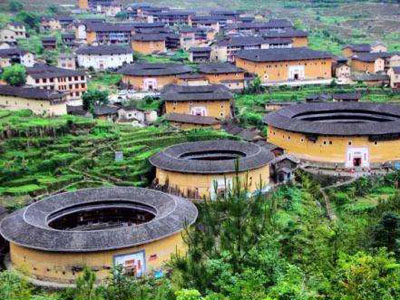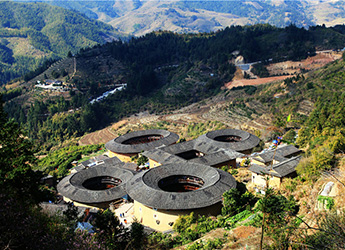
Fujian Tulou, also known as Hakka Tulou, are unique traditional earthen buildings located in the mountainous areas of Fujian Province, southeastern China. Famous for their circular or rectangular designs, strong defensive structures, and communal lifestyle, these remarkable buildings represent one of the greatest achievements of traditional Chinese rural architecture.
In 2008, 46 Fujian Tulou sites were inscribed on the UNESCO World Heritage List as outstanding examples of a unique building tradition and communal living system that developed in harmony with the surrounding environment.
Among all Fujian Tulou areas, Yongding Tulou is one of the most famous destinations, attracting travelers who want to experience Hakka culture, ancient architecture, and rural life in southern China.
What Is Fujian Tulou?
A Tulou is a large enclosed earthen building traditionally used as a residence and defensive structure by Hakka communities in Fujian.
Most Tulou buildings are:
* Circular, square, or rectangular in shape
* Built with thick rammed earth walls
* Usually three to five stories high
* Designed to accommodate dozens of families
A typical Tulou can house up to 80 families, with hundreds of residents living together in one building. The massive outer walls surround shared spaces such as:
* Ancestral halls
* Storage rooms
* Wells
* Kitchens
* Living areas
* Public activity spaces
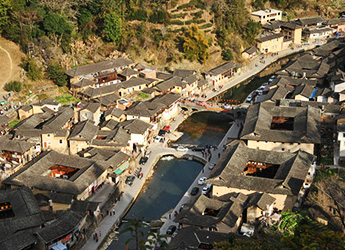 Because of their fortress-like appearance, Tulou are sometimes described as “earth castles” or “fortified villages in the mountains.”
History of Fujian Tulou
The construction of Fujian Tulou began during the Song and Yuan dynasties and reached its peak during the late Ming Dynasty, Qing Dynasty, and the Republic of China period.
These unique dwellings were mainly built by the Hakka people, a Han Chinese ethnic subgroup known for migration, strong family traditions, and communal living practices.
Tulou buildings are mainly distributed in:
* Yongding County
* Nanjing County
* Pinghe County
* Hua’an County
* Zhangpu County
* Wuping County
* Shanghang County
Among these areas, Yongding Tulou in Longyan City is one of the most popular destinations for visitors.
Unique Construction of Hakka Tulou
The construction techniques of Fujian Tulou are rarely seen anywhere else in the world. Unlike ordinary houses, Tulou were built mainly from locally available materials, including:
* Raw earth
* Sand
* Lime
* Glutinous rice
* Brown sugar
* Bamboo strips
* Wooden materials
These materials were carefully mixed, compressed, and layered to create extremely strong walls.
The thick earthen walls provide excellent:
* Heat insulation in summer
* Warmth during winter
* Protection against strong winds
* Resistance to earthquakes
* Security for residents
Although built centuries ago, many Tulou structures remain well preserved today, demonstrating the remarkable wisdom of traditional Chinese architecture.
Yongding Tulou: The Best Place to Experience Hakka Culture
Located in western Fujian Province, Yongding County is one of the best places to explore Fujian Tulou.
The area is home to hundreds of Tulou buildings, including many famous examples of Hakka architecture.
Popular Yongding Tulou attractions include:
Chengqi Lou
Known as the “King of Tulou,” Chengqi Lou is one of the largest and most famous circular Tulou buildings. Built during the Qing Dynasty, it features multiple rings and has been home to many generations of Hakka families.
Zhencheng Lou
Often called the “Prince of Tulou,” Zhencheng Lou combines traditional Chinese architecture with Western decorative influences. It is one of the most beautifully designed Tulou buildings.
Gaobei Tulou Cluster
This UNESCO-listed area includes several impressive Tulou structures and offers visitors a comprehensive view of Hakka communal architecture.
The Cultural Meaning of Tulou
For the Hakka people, Tulou are more than simple houses—they represent family unity, tradition, and community values.
A single Tulou could accommodate several generations of one family, creating a close relationship between relatives and neighbors. The central courtyard often served as a place for:
* Family ceremonies
* Festivals
* Education
* Community activities
A Tulou reflects the traditional Hakka philosophy of harmony between:
* Heaven
* Earth
* People
The building’s design demonstrates how humans adapted to nature while creating a safe and sustainable living environment.
Architectural Wisdom of Fujian Tulou
The genius of Tulou lies in its combination of practicality and cultural meaning.
The circular design improves:
* Natural ventilation
* Lighting
* Temperature control
* Community interaction
The thick outer walls act like a natural protective barrier, helping residents defend against natural disasters and social conflicts in historical times.
At the same time, the shared living structure strengthened family bonds and preserved Hakka traditions for generations.
Visiting Fujian Tulou
A visit to Fujian Tulou offers travelers a chance to explore one of China’s most fascinating cultural landscapes. Walking through ancient earthen buildings, meeting local residents, and discovering Hakka traditions provide a unique experience far beyond ordinary sightseeing.
For travelers interested in UNESCO World Heritage Sites, traditional Chinese architecture, rural culture, and authentic local experiences, Fujian Tulou—especially Yongding Tulou—is an unforgettable destination.