China Exploration
  • China Exploration
  • 86-28-86270775
  • info@chinaexploration.com
  • Tour Code Search
  • HOME
  • China Tours
    • Top 10 China Tours
        Top 10 China Tours
    • Classic China Tours
        Classic China Tours
    • Yangtze Cruise Tour
        Yangtze Cruise Routes

        Yangtze Cruise Routes

        Yangtze Cruise Calendar

        Yangtze Cruise Calendar

    • Join-in Group Tours
        Join-in Group Tours
    • Short Stay Tours
        144 hours VISA free tours

        144 hours VISA free tours

        Less than 7 days tours

        Less than 7 days tours

    • Family Tours
        Family Tours
  • Adventure Tours
    • Overland Off-road Tours
        Overland Off-road Tours
    • Culture & Folklore Tours
        Culture & Folklore Tours
    • Wildlife Exploration Tours
        Wildlife Exploration Tours
    • Trekking & Hiking Tours
        Trekking & Hiking Tours
    • Eco-Tour
        Eco-Tour
    • M.I.C.E. & Event
        M.I.C.E. & Event
    • School and Education Tours
        School and Education Tours
  • DESTINATIONS
      BeijingBeihaiChengduChongqingChangshaChaozhouDaliDalianDunhuangDatongEnshiFuzhouGuilinGuiyangGuangzhouHaerbinHangzhouHohhotHulun BuirHongKongHuangshanJilinJiangxiJinanJinggangshanJiuzhaigouKashgarKaifengKailiKunmingLanzhouLijiangLuoyangNanchangNanjingPutuoshanPingyaoQinghaiQingdaoQinhuangdaoSanyaShanghaiShenyangShandongSuzhouShenzhenShangrilaTibetTianshuiTianjinTaiyuanUrumqiWuyishanWutaishanWudangshanWuhanXiamenXishuangbannaXi'anXiningXinjiangXingyiYinchuanYichangYunnanZhangjiajieZhanjiangZhangye Explore All Destinations>>
  • Customized your trip
  • TRAVEL GUIDE
    • Travel to China
    • China Visa and Permit
    • Chinese Attractions
    • Chinese Culture
    • China Nature Reserve
    • China City Guide
    • China Maps
    • China Travel News
    • China Hotel
    • FAQS
  • About Us
    • Contact Us
    • Our Team
    • Our Glory
    • Olympic Torch Bearer
    • Feedback
    • Photo Album
    • Travel Story
    • Travel Video
    • Teams and Condition
    • Insurance Policy
    • Site Map
  • China Tours
  • Top 10 China Tours
  • Classic China Tours
  • Join-in Group Tours
  • Short Stay Tours
  • Family Tours
  • Adventure Tours
  • Overland Off-road Tours
  • Culture & Folklore Tours
  • Wildlife Exploration Tours
  • Trekking & Hiking Tours
  • Eco-Tour
  • M.I.C.E. & Event
  • School and Education Tours
  • DESTINATIONS
  • Beijing Tours
  • Beihai Tours
  • Chengdu Tours
  • Chongqing Tours
  • Changsha Tours
  • Chaozhou Tours
  • Dali Tours
  • Dalian Tours
  • Dunhuang Tours
  • Datong Tours
  • Enshi Tours
  • Fuzhou Tours
  • Guilin Tours
  • Guiyang Tours
  • Guangzhou Tours
  • Haerbin Tours
  • Hangzhou Tours
  • Hohhot Tours
  • Hulun Buir Tours
  • HongKong Tours
  • TRAVEL GUIDE
  • Travel to China
  • China Visa and Permit
  • Chinese Attractions
  • Chinese Culture
  • China Nature Reserve
  • China City Guide
  • China Maps
  • China Travel News
  • Hotel Booking
  • FAQS
  • About Us
  • Contact Us
  • Our Team
  • Our Glory
  • Olympic Torch Bearer
  • Feedback
  • Photo Album
  • Travel Story
  • Travel Video
  • Terms And Condition
  • Insurance Policy
  • sitemap
Home > TRAVEL GUIDE > China Attractions > Yunnan Attractions
Kunqu Opera
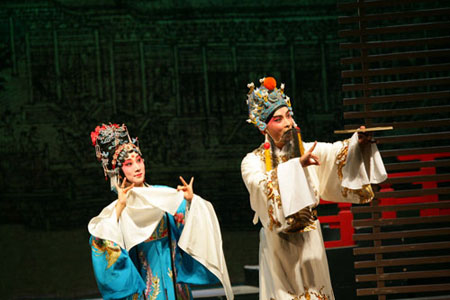
Kunqu Opera performance in China
Kunqu Opera is one of the oldest forms of traditional Chinese opera still performed today. With a history of more than 600 years, it is widely regarded as the “mother of Chinese opera” because of its profound influence on many later opera styles, including Peking Opera and Sichuan Opera.
Known for its elegant melodies, poetic lyrics, graceful movements, and refined performance techniques, Kunqu Opera represents one of the highest achievements of traditional Chinese performing arts.
In 2001, UNESCO officially recognized Kunqu Opera as a Masterpiece of the Oral and Intangible Heritage of Humanity, highlighting its outstanding cultural value and the importance of preserving this ancient art form.
 
Origin and History of Kunqu Opera
Kunqu Opera, also known as Kunshan Opera (Kunshanqiang), originated in the Kunshan area near Suzhou in Jiangsu Province during the late Yuan Dynasty (1271–1368).
As one of the earliest forms of Chinese opera, Kunqu developed in the lower Yangtze River region and gradually spread throughout China. Because of its sophisticated musical style and literary quality, it became especially popular among scholars and artists during the Ming Dynasty (1368–1644).
During the reign of Emperor Jiajing in the Ming Dynasty, musician Wei Liangfu reformed Kunqu music by combining different regional musical styles. His innovations transformed Kunqu into a softer, smoother, and more expressive art form.
After these reforms, Kunqu Opera became famous for its:
* Elegant melodies
* Clear and precise singing techniques
* Beautiful poetic language
* Graceful body movements
* Sophisticated musical accompaniment
It became the dominant theatrical style in China for several centuries.
 
The Unique Artistic Features of Kunqu Opera
Kunqu Opera is famous for the close combination of music, literature, singing, acting, and dance. Every movement, gesture, and expression follows carefully developed artistic traditions.
The performances are known for their graceful movements, especially the use of long silk sleeves, which create elegant visual effects during dances and gestures.
Kunqu Opera is often called the “watermill song” because of its gentle melodies and flowing musical style. Unlike many modern forms of entertainment, Kunqu emphasizes atmosphere, poetry, emotion, and artistic expression rather than dramatic action alone.
The language of Kunqu performances is based on classical Chinese poetry and traditional literary expressions, giving the art form exceptional literary value.
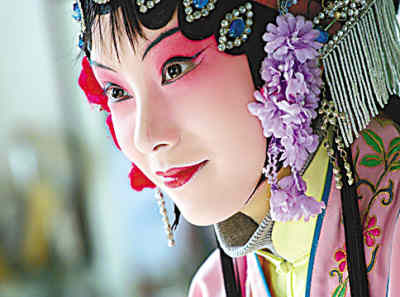
 
Kunqu Opera performance in ChinaMusic and Instruments of Kunqu Opera
Kunqu Opera has its own distinctive musical system and melodies. The orchestra traditionally includes a variety of Chinese instruments, such as:
* Dizi – a horizontal bamboo flute that often leads the melody
* Xiao – a vertical bamboo flute with a soft and elegant sound
* Sheng – a traditional mouth organ
* Pipa – a four-stringed Chinese lute
* Percussion instruments such as drums and clappers
The combination of these instruments creates the delicate and emotional sound characteristic of Kunqu Opera.
Many other Chinese opera styles later borrowed elements from Kunqu’s music, performance techniques, and stage traditions.
 
Kunqu Opera and Famous Classical Plays
Among the most famous Kunqu Opera works is The Peony Pavilion, written by Tang Xianzu during the Ming Dynasty. Tang Xianzu is often regarded as one of China’s greatest playwrights and is sometimes compared to Shakespeare because of his influence on Chinese literature.
The Peony Pavilion tells the romantic and tragic story of Du Liniang, a young woman who dreams of meeting her ideal love. After falling ill because she cannot realize her dream, her story continues through a mysterious encounter with Liu Mengmei, eventually leading to a dramatic reunion.
With its beautiful poetry, emotional depth, and artistic style, The Peony Pavilion remains one of the masterpieces of Chinese classical literature and Kunqu Opera.
 
Challenges Facing Kunqu Opera
Despite its artistic importance, Kunqu Opera experienced a decline from the 18th century onward. Its complex language, slow rhythm, and sophisticated performance style made it increasingly difficult for modern audiences to appreciate.
In the mid-20th century, many traditional Kunqu arias and performances disappeared, and the number of active performers decreased significantly.
The development of modern entertainment and changing cultural habits created additional challenges for the survival of this ancient art form.
 
The Revival of Kunqu Opera
Since UNESCO recognized Kunqu Opera as an Intangible Cultural Heritage in 2001, efforts have been made to preserve and revive this traditional art.
Classical works have been restored and adapted for modern audiences, while performances have been introduced to universities and cultural institutions across China.
The renewed production of The Peony Pavilion by contemporary writer Bai Xianyong helped introduce Kunqu Opera to a younger generation. The performance received enthusiastic responses from students and audiences, proving that this ancient art form still has strong emotional appeal today.
 
Preservation and Future Development
China has established professional Kunqu Opera theaters, research institutions, and training programs to protect this important cultural heritage.
Preservation projects include:
* Recording performances by experienced Kunqu artists
* Publishing historical Kunqu texts
* Restoring traditional plays
* Training new generations of performers
* Promoting Kunqu Opera among younger audiences
These efforts aim to ensure that Kunqu Opera continues to be performed and appreciated in the future.
 
Experiencing Kunqu Opera
For travelers interested in Chinese history, literature, music, and traditional culture, watching a Kunqu Opera performance is a unique cultural experience.
With its poetic stories, beautiful costumes, delicate movements, and unforgettable melodies, Kunqu Opera offers a window into the artistic traditions of ancient China.
Although it originated more than 600 years ago, Kunqu Opera continues to represent the elegance and creativity of Chinese civilization and remains one of the world’s most treasured forms of intangible cultural heritage.

Related Tours
 
Beijing Opera Night Show
Chinese Mandarin Learning Tour
China Train Tour
China Festival Tours
18 Days Ancient China Culture Tours
28 Days All China Around Exploration
Popular China Tours

More Attractions

  • The Old Town of Lijiang
    The Old Town of Lijiang
    Explore Lijiang Old Town, a UNESCO World Heritage Site in Yunnan. Discover Naxi culture, Do......
  • Lijiang Ancient Town
    Lijiang Ancient Town
    Explore Lijiang, Yunnan, including UNESCO-listed Lijiang Old Town, Mufu Palace, Black Drago......
  • Shangri-la tour
    Shangri-la tour
    Explore Shangri-La in Yunnan, China. Discover Tibetan culture, Songzanlin Monastery, Dukezo......
  • Dali City
    Dali City
    Dali tour is important part of Yunnan tour.Attractions in Dali included the old town, Erhai......

Recommended Tours

1 Day Chengdu Giant Panda and Leshan Buddha Day Trip

Explore Chengdu Panda Base and Leshan Giant Buddha in one day, and enjoy a traditional Xiba tofu banquet and discover Sichuan’s famous creature and Buddhist heritage.......

1 Day Best Chengdu Tours of Sanxingdui and Giant Panda Garden

Explore Chengdu’s highlights in one day with a visit to the Giant Panda Base and Sanxingdui Museum. See adorable pandas and discover the mysterious 3,000-year-old Shu civilization with an expert loca......

1 Day Chengdu Harmoney Tours of Mt Qingchengshan and Dujiangyan Dam

Explore Mount Qingcheng and Dujiangyan near Chengdu, discovering Taoist culture, mountain scenery and a 2,000-year-old ancient irrigation system.......

2 Days Leshan Giant Buddha and Emei Mountain Tours

Classic two days tours to west Chengdu, where Leshan Giant Buddha and Mt Emeishan are both world class top tour destinations, and also visit a local old town. ......

3 Days Chengdu Emeishan and Leshan Giant Buddha Tour

Explore the best of Chengdu and Sichuan on this 3-day private tour. Visit Chengdu Panda Base, Kuanzhai Alley, Wangjianglou Bamboo Park, Leshan Giant Buddha, Luocheng Ancient Town, and Mount Emei with a......

3 Days Three Kingdoms Tour in North Chengdu

Explore Sichuan’s ancient history and culture on a 3-day private tour from Chengdu. Visit the Giant Panda Base, Sanxingdui Museum, Jianmen Pass, Zhaohua Ancient Town, and Langzhong Ancient Town to di......

Popular China Packages
  • Top 10 China Tours
  • Yangtze Cruise Tours
  • China Short Trips
  • Tibet Tours
  • Sichuan Tours
  • Yunnan Tour
  • Guilin Tour
  • Xiamen Tours
Adventure Tours
  • Overland Off-road Tours
  • Culture & Folklore Tours
  • Wildlife Exploration Tours
  • Trekking & Hiking Tours
  • Eco-Tour
  • M.I.C.E. & Event
  • School and Education Tours
China Travel Guide
  • Travel to China
  • China Visa and Permit
  • China Attractions
  • Chinese culture
  • China Nature Reserves
  • City Guide
  • China Maps
  • China Travel News
  • FAQS
Follow Us
Keep me updated
  • Stay up-to-date with the latest news direct to your inbox.

Address: 35th, Yangguang Business Center, Jinjiang District, Chengdu, Zip610065, China
About us | Contact us | Teams and Condition | Customer Center | Site Map
TEL: 028-86270775 E-mail: info@chinaexploration.com
Working hours:9:00AM-6:00PM(GMT+8)),Copyright(2003-2026) 蜀ICP05000963号 China Exploration Tour

  • Email: info@chinaexploration.com
  • Telephone: 86-28-86270775