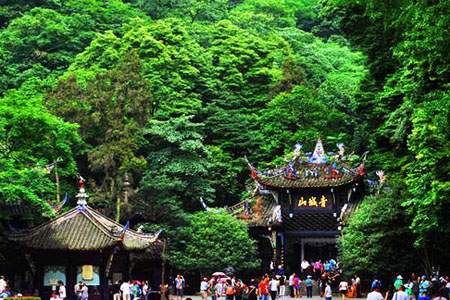
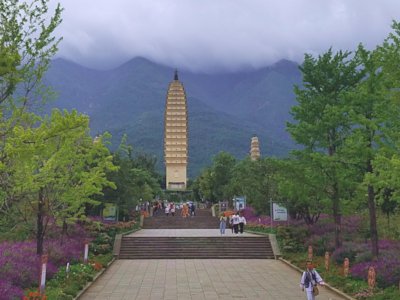
 The Chongsheng Temple and Three Pagodas is one of the most significant Buddhist sites in the history of the ancient Dali Kingdom and the most famous cultural landmark in Dali. Known for its magnificent Three Pagodas, the temple represents the peak of Buddhist architecture in ancient Yunnan and has become a symbol of Dali.
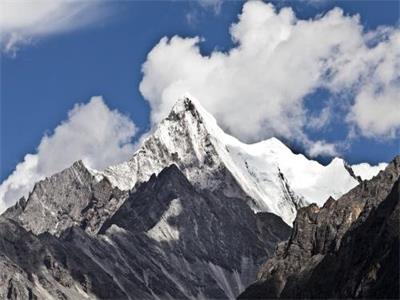
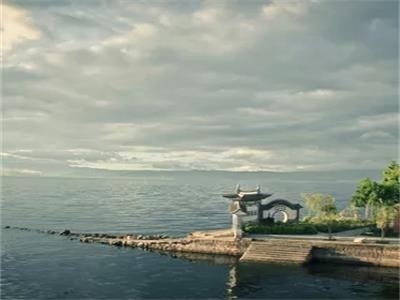
Located about 1 kilometer north of Dali Ancient Town, Chongsheng Temple stands between the majestic Cangshan Mountains and the beautiful Erhai Lake. Surrounded by mountains, lake, and traditional Bai ethnic landscapes, it is one of the most popular attractions in Yunnan Province.
History of Chongsheng Temple
Chongsheng Temple was originally built during the Nanzhao Kingdom (8th–9th century) and reached its golden age during the Dali Kingdom (937–1253).
During this period, Dali was known as the “Land of Buddhism,” and Chongsheng Temple became the religious center of the kingdom. Buddhism played an important role in local politics and culture, with Guanyin (Avalokiteshvara), the Bodhisattva of Compassion, worshipped as the temple’s principal deity.
The influence of Buddhism was so strong that nine of the twenty-two emperors of the Dali Kingdom eventually became Buddhist monks at Chongsheng Temple, making it a unique royal Buddhist monastery in Chinese history.
The Three Pagodas of Dali
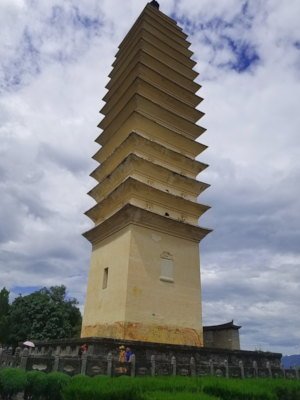
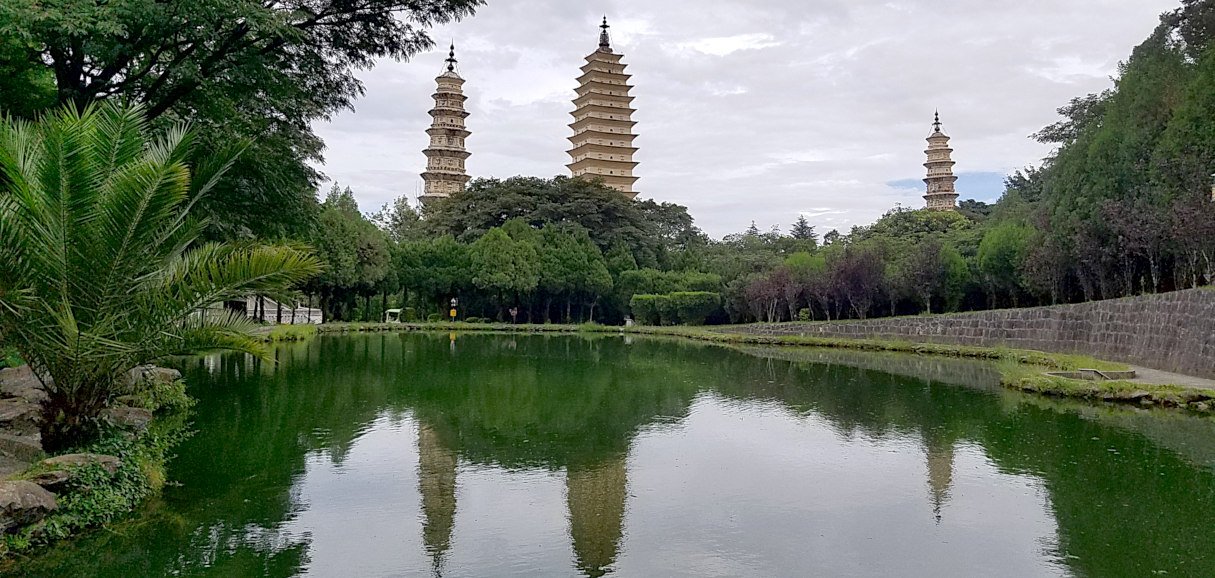
The Three Pagodas are the most famous feature of Chongsheng Temple and one of China’s best-preserved Buddhist architectural treasures.
The structure consists of:
* A central pagoda
* Two smaller pagodas standing symmetrically on both sides
The tallest central pagoda, known as Qianxun Pagoda, was built during the Tang Dynasty period of the Nanzhao Kingdom and reaches approximately 69 meters in height. The square-shaped brick pagoda features a distinctive architectural style influenced by Tang Dynasty Buddhist traditions.
The two smaller pagodas were built later during the Dali Kingdom period, creating the balanced and iconic composition seen today.
For more than a thousand years, the Three Pagodas have survived earthquakes, wars, and social changes, becoming a lasting symbol of Dali’s Buddhist heritage.
The Five Great Treasures of Chongsheng Temple
In ancient times, Chongsheng Temple was famous for its Five Great Treasures:
1. The Three Pagodas
2. The Nanzhao Great Bell
3. The Bronze Guanyin Statue Bringing Rain
4. The Golden Three Saints Statue
5. The Imperial plaque inscribed with “Capital of Buddhism”
Unfortunately, most of these treasures were lost or destroyed over the centuries due to wars and natural disasters. The Three Pagodas remain as the greatest surviving masterpiece of the original temple complex.
A Center of Buddhist Exchange
Chongsheng Temple was not only a religious center but also an important place for cultural exchange between different regions of Asia.
Historical records show that in 1056 AD, the King of Myanmar visited Chongsheng Temple twice to worship the Buddha’s Tooth Relic. The ruler of the Dali Kingdom also presented the temple with valuable Buddhist treasures, including a jade Buddha statue.
These events demonstrate the temple’s important role in the Buddhist world of ancient Southeast Asia.
Visiting Chongsheng Temple Today
Today, Chongsheng Temple and the Three Pagodas offer visitors a unique combination of:
* Ancient Buddhist architecture
* Dali Kingdom history
* Bai ethnic culture
* Mountain and lake scenery
* Traditional religious heritage
Standing in front of the Three Pagodas with Cangshan Mountain behind and Erhai Lake in the distance provides one of the most iconic views in Yunnan.
For travelers exploring Dali, Chongsheng Temple is an essential destination to experience the region’s history, spirituality, and architectural beauty.