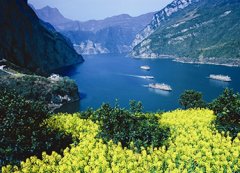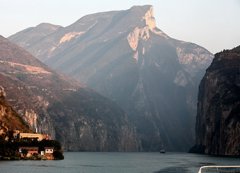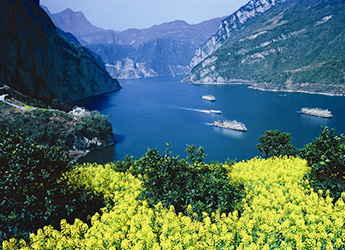
Xiling Gorge (Xiling Xia) is the longest and historically the most challenging section of the famous Three Gorges along the Yangtze River. Stretching approximately 76 kilometers (47 miles) from Xiangxi to Yichang in Hubei Province, it is renowned for its spectacular cliffs, deep valleys, turbulent waters, and rich cultural legends.
Located between the western and eastern sections of the Yangtze River, Xiling Gorge was once considered one of the most dangerous waterways in China. Before major navigation improvements in the 1950s, the gorge was filled with hidden reefs, powerful currents, and dangerous whirlpools that posed serious risks to passing boats. Today, thanks to modern engineering projects including the Three Gorges Dam, visitors can safely enjoy its breathtaking natural scenery by cruise.
As one of the three major sections of the Three Gorges, together with Qutang Gorge and Wu Gorge, Xiling Gorge offers travelers a fascinating combination of dramatic landscapes, ancient history, and legendary stories.
Stunning Landscapes and Famous Scenic Sections
Xiling Gorge consists of several smaller gorges and historic sites, each with unique natural features and cultural stories.
Military Books and Precious Sword Gorge (Bingshu Baojian Gorge)
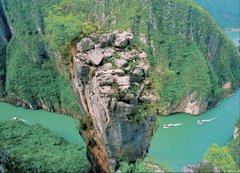
At the western entrance of Xiling Gorge lies the 4-kilometer-long Military Books and Precious Sword Gorge. The name comes from two unusual rock formations: one resembles a stack of ancient books, while another looks like a sword standing vertically on the cliff.
According to legends from the famous Chinese historical novel Romance of the Three Kingdoms, these formations are connected with Zhuge Liang, the brilliant military strategist of the Shu Kingdom. It is said that Zhuge Liang once hid his military writings and sword here for future generations.
Rice Granary Gorge (Micang Gorge)
Further along the river is Rice Granary Gorge, named after a large split rock where fine river sand accumulates and slowly passes through a small opening below. Local legends associate this mysterious natural formation with Zhuge Liang’s hidden granary.
Xin Tan Rapid
Xin Tan Rapid was historically one of the most dangerous areas of the Yangtze River. Created by landslides in the 16th century, the rapid once caused numerous shipwrecks due to its strong currents and submerged rocks.
Before modern navigation improvements, cargo boats often had to unload their goods and rely on teams of trackers to pull vessels through this dangerous section. Today, the waters are much calmer, allowing cruise ships to pass safely.
 Kongling Gorge and Ox Liver & Horse Lungs Gorge
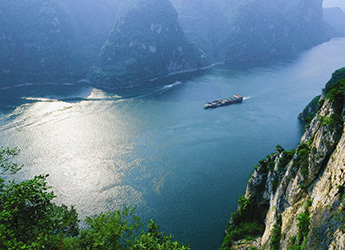
The middle section of Xiling Gorge features the impressive Kongling Gorge, famous for its steep cliffs and powerful rapids. In the past, Kongling Shoal was regarded as one of the most dangerous points on the Yangtze River, with many historical shipwrecks caused by hidden rocks.
Nearby is Ox Liver and Horse Lungs Gorge, named after unusual yellow rock formations along the cliffs that resemble animal organs. Some of these formations have changed over time due to natural erosion and human activities.
Yellow Ox Gorge and Huangling Temple
Yellow Ox Gorge (Huangniu Gorge) is one of the most picturesque parts of Xiling Gorge. The cliffs here are said to resemble a man riding an ox, giving the gorge its name.
Along the river stands the ancient Huangling Temple, dedicated to Yu the Great (Dayu), the legendary hero credited with controlling China’s ancient floods. The temple is believed to have origins dating back to the Spring and Autumn Period, although the current buildings mainly date from later dynasties.
The temple houses statues of Dayu and valuable stone inscriptions. The nearby Yellow Ox Spring was once praised for its clear water and was considered one of the finest sources for brewing tea in ancient China.
Lantern Shadow Gorge: A Natural Version of Journey to the West
After Huangling Temple, visitors enter Bright Moon Gorge and Lantern Shadow Gorge. Lantern Shadow Gorge is especially famous for its unique mountain silhouettes.
At sunset, four peaks on the mountainside appear to resemble characters from the classic Chinese novel Journey to the West:
* Xuanzang, the Buddhist monk
* Sun Wukong (the Monkey King)
* Zhu Bajie (Pigsy)
* Sha Wujing (Sandy)
When illuminated by evening sunlight, these natural rock formations create a spectacular scene resembling a traditional Chinese shadow puppet show.
Xiling Gorge and the Three Gorges Dam
The eastern end of Xiling Gorge is closely connected with the world-famous Three Gorges Dam project. Visitors can take side trips to view the dam’s ship locks, ship lift system, and exhibitions explaining this massive engineering achievement.
Before the construction of the Three Gorges Dam, the Gezhouba Dam near Yichang was China’s largest hydropower project. Today, it remains an important part of the Yangtze River’s navigation and energy system.
As the river reaches Nanjin Pass (Southern Crossing Pass), Xiling Gorge comes to an end, marking the completion of the magnificent Three Gorges journey.
Travel Experience of Xiling Gorge
A Yangtze River cruise through Xiling Gorge is one of the best ways to experience this legendary landscape. Travelers can admire towering cliffs, ancient temples, historic legends, and modern engineering achievements all within one unforgettable journey.
For visitors interested in Chinese history, natural scenery, and cultural heritage, Xiling Gorge is an essential highlight of the Yangtze River and one of China’s most impressive scenic destinations.