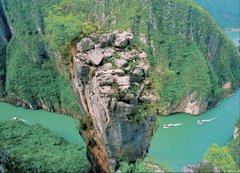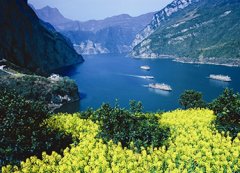
Located about 8 kilometers from the historic Baidi City, Qutang Gorge is the shortest but arguably the most dramatic section of the famous Three Gorges on the Yangtze River. Stretching from Baidi City to Daxi Town, this spectacular gorge lies within Chongqing Municipality and is renowned for its towering cliffs, narrow waterways, and breathtaking natural scenery.
Although Qutang Gorge is only about 8 kilometers long, it impresses visitors with its extraordinary landscape. The steep mountains rise sharply from both sides of the river, while powerful currents rush through the narrow channel, creating a magnificent scene of nature’s power and beauty.
Kuimen Gate – The Symbol of Qutang Gorge
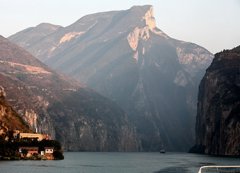
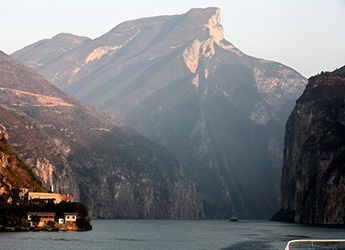
At the entrance of Qutang Gorge, the Yangtze River suddenly becomes narrower, with enormous cliffs standing on both sides like two majestic guardians. These cliffs form a natural gateway known as Kuimen Gate (Kui Gate), one of the most iconic landscapes of the Three Gorges.
Because of Kuimen Gate’s imposing appearance, Qutang Gorge is also known as Kui Gorge. The surrounding peaks soar dramatically into the sky, with many mountains reaching heights of 1,000 meters and some rising to around 1,500 meters.
At its narrowest point, the river channel is only about 100 meters wide. When traveling by boat through this section, visitors can experience the overwhelming feeling of being surrounded by towering mountains that seem to touch the clouds, creating a deep canyon-like landscape.
The famous view of Kuimen Gate has long inspired Chinese poets and artists. It is also featured on the back of the Chinese 10-yuan banknote, making it one of the most recognizable natural landmarks in China.
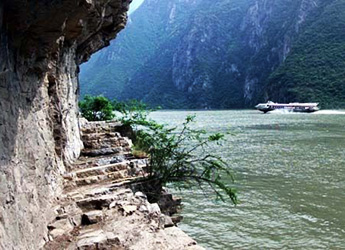 Historical Relics Along Qutang Gorge
Beyond its magnificent scenery, Qutang Gorge is also rich in historical and cultural treasures. Ancient inscriptions, cliff carvings, and historic sites along the riverbanks provide evidence of the long relationship between the Yangtze River and Chinese civilization.
Some cultural relics were affected by rising water levels after the construction of the Three Gorges Dam, while many important sites were carefully preserved, relocated, or protected. The famous cliff inscriptions on the Fenbi Wall and sections of ancient plank roads represent valuable historical remains of the Three Gorges region.
Today, ongoing conservation and exploration efforts continue to reveal new attractions and enhance the tourism potential of Qutang Gorge.
Iron Lock Pass – A Historic Military Defense Site
Among the historical sites of Qutang Gorge, Iron Lock Pass is a rare example of an ancient military defense system built along the Yangtze River.
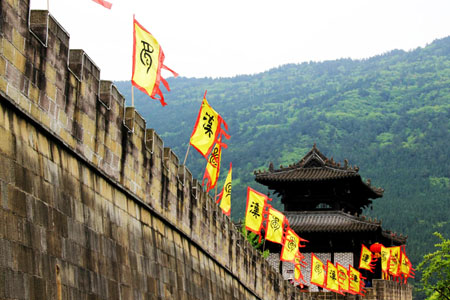
Located near the meeting point of Caotang River and the Yangtze River, Iron Lock Pass contains two iron pillars standing on a reef, each rising several meters above the water. Across the river, holes carved into the cliff walls show where iron chains were once attached.
During the Southern Song Dynasty (1127–1279), General Xu Zongwu established this defensive system in 1264 to resist Mongol invasions. Seven iron chains were stretched across the river, creating a powerful barrier that made passage extremely difficult.
The origins of this river defense system can be traced back to the Tang Dynasty (618–907). During peaceful periods, similar structures were sometimes used as checkpoints where merchants traveling along the Yangtze were required to pay taxes.
Although Iron Lock Pass does not have the scale of the Great Wall of China or the artistic beauty of the Mogao Caves, it remains an important symbol of Yangtze River history and military culture.
With its dramatic landscapes, legendary Kuimen Gate, and fascinating historical heritage, Qutang Gorge is an essential highlight for travelers exploring the Three Gorges and Yangtze River cruise routes.