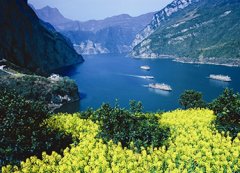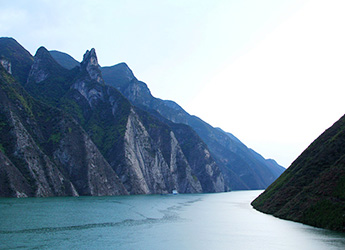
Wu Gorge (Wu Xia), also known as Da Gorge, is the second section of the famous Three Gorges of the Yangtze River. Stretching approximately 45 kilometers (28 miles) from Wushan County to Guandukou, it lies between Qutang Gorge to the west and Xiling Gorge to the east.
Famous for its deep valleys, peaceful atmosphere, mist-covered mountains, and graceful scenery, Wu Gorge is often regarded as the most elegant and enchanting part of the Three Gorges. The towering cliffs, winding river, and mysterious peaks create a landscape that has inspired countless poets and artists throughout Chinese history.
As the Yangtze River leaves Qutang Gorge and passes the wide valley of the Daning River, it gradually enters the magnificent scenery of Wu Gorge. Here, the river becomes quieter, the mountains rise higher, and the scenery becomes more dramatic and poetic.
The Twelve Peaks of Wu Gorge
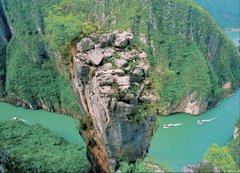
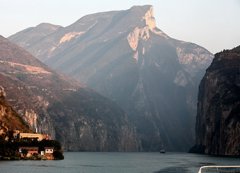
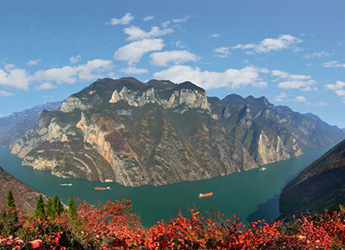
The most famous attraction of Wu Gorge is the Twelve Peaks of Wushan, located along both sides of the Yangtze River. These uniquely shaped mountains rise dramatically from the riverbanks, often surrounded by clouds and mist.
Among them, Goddess Peak (Shennu Peak) is the most celebrated. Its shape is said to resemble a graceful young woman standing beside the river, creating one of the most iconic views of the Three Gorges.
The combination of steep cliffs, floating clouds, and reflections on the river gives Wu Gorge a dreamlike atmosphere, making it one of the most beautiful sections of the Yangtze River cruise route.
Historic Towns and Cultural Heritage
Several historic towns are located around Wu Gorge, including Wushan, Badong, and Zigui. These areas are rich in Chinese history and cultural traditions.
Zigui: Home of Qu Yuan
Zigui is especially famous as the hometown of Qu Yuan, one of China’s greatest ancient poets and the creator of many famous works of classical Chinese literature.
The region is also associated with Wang Zhaojun, one of the four famous beauties of ancient China. Because of its connection with these legendary figures, Zigui attracts many visitors interested in Chinese history and culture.
 The Daning River and the Mini Three Gorges
At the western entrance of Wu Gorge, the Daning River flows through a landscape filled with unusual peaks and dramatic cliffs. Famous mountains such as Longmen Peak, Bawu Peak, and Dicui Peak rise steeply from the river, creating a spectacular natural scene.
This section is known as the Minor Three Gorges (Lesser Three Gorges) and is famous for its clear waters, narrow valleys, green mountains, and peaceful environment. Many travelers consider it one of the most beautiful side trips during a Yangtze River cruise.
Historical Sites in Wu Gorge
Beyond its natural beauty, Wu Gorge is also home to many historic sites and cultural relics.
Kongming Stele
The Kongming Stele is one of the famous cultural attractions in the Three Gorges region. According to local tradition, the inscriptions on the stele are connected with Zhuge Liang, one of the most respected military strategists in Chinese history.
The stele reflects the deep connection between Wu Gorge and China’s ancient legends and historical stories.
Autumn-Wind Pavilion
The Autumn-Wind Pavilion is another notable historic site associated with Kou Zhun, a famous prime minister of the Northern Song Dynasty.
At the age of 19, Kou Zhun served as governor of Badong County. During his three years in office, he wrote numerous poems inspired by the scenery of Wu Gorge and built a pavilion where he could enjoy the landscape, compose poetry, and drink with friends.
Over time, the pavilion became a symbol of good fortune and career success. In the past, officials often visited the site before taking new positions, hoping for prosperity and achievement. Today, it remains a cherished cultural landmark for local residents.
Travel Experience of Wu Gorge
A cruise through Wu Gorge offers travelers a perfect combination of natural beauty and cultural discovery. The peaceful river, mysterious peaks, ancient legends, and historic sites make it one of the most memorable destinations along the Yangtze River.
For visitors exploring China’s Three Gorges, Wu Gorge provides an unforgettable journey through breathtaking landscapes and thousands of years of Chinese history.