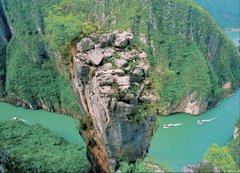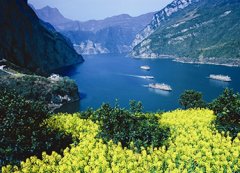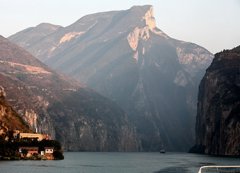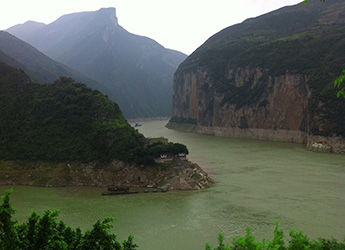
Kuimen Gate (Kui Gate), also known as Kui Men, is the western entrance of Qutang Gorge, the first and shortest section of China’s famous Three Gorges along the Yangtze River. Located at the foot of the historic Baidi City, Kuimen is one of the most iconic natural landmarks of the Three Gorges region and has long been celebrated by Chinese poets, artists, and travelers.
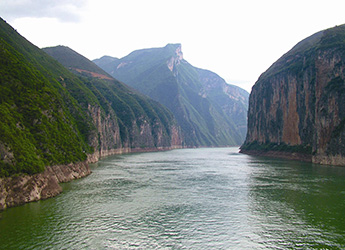
The towering cliffs on both sides of the Yangtze River rise like giant stone gates, forming a dramatic natural passage. Because the mountains resemble a massive doorway, the site was named Kuimen, meaning “Kui Gate.” It is also known as Qutang Pass, serving as the western gateway of the Three Gorges where the upper reaches of the Yangtze River enter the narrow canyon.
The Most Powerful Scenery of Qutang Gorge
Kuimen is famous for its steep cliffs, powerful currents, and breathtaking landscapes. The cliffs on both riverbanks rise hundreds of meters high, while the narrowest section of the river is less than 50 meters wide.
As the Yangtze River rushes through this narrow passage, the water becomes deep and turbulent, creating powerful waves and roaring sounds. Standing before Kuimen, visitors can experience the dramatic contrast between the towering mountains and the fast-flowing river, making it one of the most impressive landscapes in the Three Gorges.
Because of its extraordinary scenery, Kuimen has long been described as “the most magnificent gorge under heaven.” Five large Chinese characters carved into the cliff, “Kuimen Tianxia Xiong” (Kuimen is the most magnificent under heaven), express the admiration of generations for this spectacular natural wonder.
A Landscape Celebrated by Chinese Poets
Kuimen has inspired countless poems throughout Chinese history. The famous Song Dynasty poet Lu You once praised the scenery of Kuimen in his writings, describing the lively customs and beautiful landscapes of the area.
 The great Tang Dynasty poet Du Fu also wrote about the danger and grandeur of Qutang Gorge, comparing its steepness and powerful currents with other famous mountain passes.
Later, modern Chinese poet Chen Yi described Kuimen as the gateway where the Three Gorges narrow the Yangtze River and guide its powerful flow toward the sea.
History and Name Origin of Kuimen
Qutang Gorge extends from Baidi City to Daxi Town in Wushan County, covering approximately 8 kilometers. Although it is the shortest of the Three Gorges, it is considered the most dramatic and imposing.
The gorge consists mainly of two sections: Fengxiang Gorge and Cuokai Gorge. In ancient times, the area around present-day Fengjie County was known as Kuizhou, which gave rise to the name “Kuimen” and the alternative name Kui Gorge for Qutang Gorge.
For centuries, Kuimen served as an important transportation route and strategic gateway into and out of the Sichuan Basin. The deep river, narrow channel, and powerful currents made it both a natural wonder and a significant geographic landmark.
Today, Kuimen remains one of the highlights of a Yangtze River cruise, offering visitors a spectacular introduction to the beauty, history, and cultural heritage of the Three Gorges.