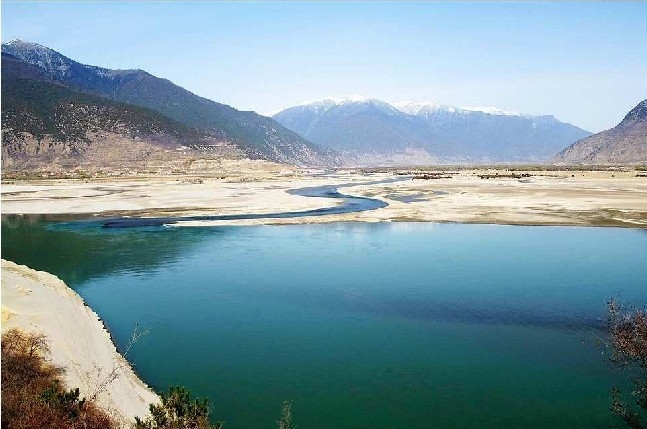
The Yarlung Tsangpo River (also spelled Yarlung Zangbo River) is one of the most remarkable rivers in the world. Flowing across the southern part of the Tibetan Plateau, it is recognized as the highest major river system on Earth and plays an essential role in Tibet’s natural environment, history, and culture.
Originating from glaciers in the Himalayas, the river travels through some of the most spectacular landscapes in Tibet before continuing into India, where it becomes the Brahmaputra River and eventually flows toward the Bay of Bengal.
Geography and Scale of the Yarlung Zangbo River
The Yarlung Zangbo River is an international river system with a total length of approximately 2,057 kilometers within China. It is among the longest rivers in China and has one of the largest drainage basins in the country.
Key facts about the river:
* Length in China: about 2,057 km
* Drainage area: approximately 240,480 square kilometers
* Water system: Indian Ocean drainage basin
* Annual water flow to neighboring countries: about 140 billion cubic meters
The river ranks among China’s largest rivers in terms of length, basin area, and water volume, following major waterways such as the Yangtze River and Pearl River.
Source and Journey Across Tibet
The Yarlung Zangbo River begins from the glaciers of the Himalayas, traditionally considered to originate near the Gyamanezong Glacier in the northern foothills of the Himalayan Mountains.
From its source, the river flows eastward through southern Tibet, passing through areas including Nyingchi before making one of the most dramatic turns in its journey.
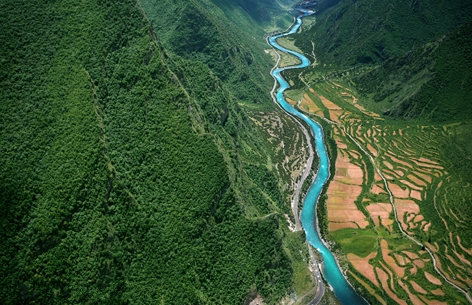
Near the eastern Himalayas, the river bends sharply south through a spectacular canyon region and crosses the international border into India. There, it is known as the Brahmaputra River, eventually joining the Ganges River system and flowing into the Bay of Bengal.
Natural Wonders Along the River
The Yarlung Zangbo River is famous for its extraordinary landscapes, including:
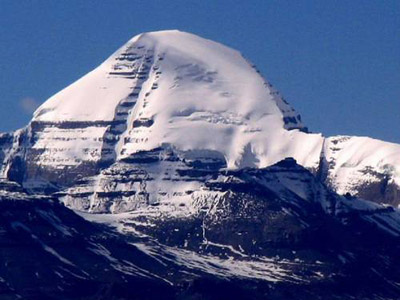
* Snow-covered Himalayan peaks
* Deep river valleys
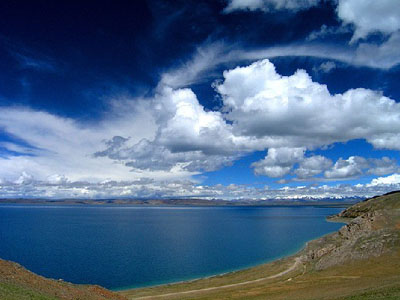
* Vast Tibetan grasslands
* Forest-covered mountains
* Glaciers and waterfalls
* One of the deepest river canyons in the world
The dramatic contrast between the high plateau, snow mountains, and rushing river creates some of Tibet’s most breathtaking scenery.
The lower reaches of the river near Nyingchi are particularly famous for their rich vegetation and mild climate, making the region known as the “Jiangnan of Tibet.”
Cultural Importance of the Yarlung Zangbo River
For Tibetans, the Yarlung Zangbo River is more than a natural waterway. It is closely connected with Tibetan civilization and traditional beliefs.
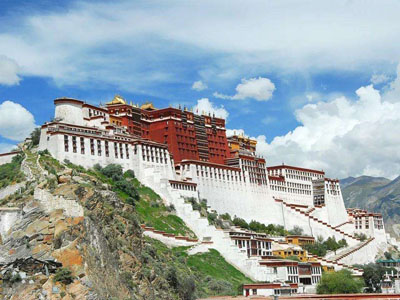
The river valley was the birthplace of the ancient Tibetan kingdom and has witnessed the development of Tibetan culture, agriculture, and Buddhism for centuries. Many important historical sites and monasteries are located along its banks.
The fertile valleys created by the river have long supported local communities, providing water resources and farmland in the high-altitude Tibetan environment.
Visiting the Yarlung Zangbo River
Travelers can experience the beauty of the Yarlung Zangbo River through several scenic areas in Tibet, including:
* The Yarlung Tsangpo Grand Canyon near Nyingchi
* The river valleys around Lhasa and Shannan
* Himalayan viewpoints along the southern Tibet routes
Whether viewed from mountain passes, valley roads, or riverside villages, the Yarlung Zangbo River offers visitors an unforgettable glimpse of Tibet’s dramatic landscapes and ancient heritage.