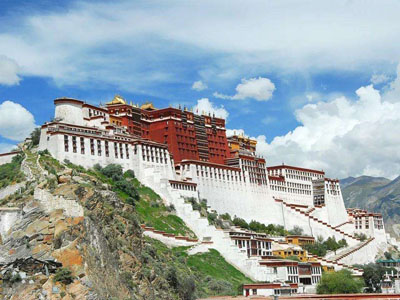
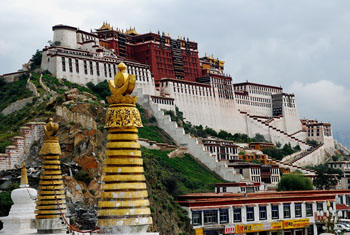
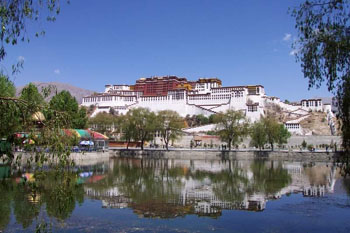
 Potala Palace, located on Moburi (Potala) Mountain in Lhasa, Tibet Autonomous Region, is the most famous landmark in Tibet and one of the world’s greatest architectural masterpieces. Known as the “Pearl on the Roof of the World,” the palace represents the spiritual, cultural, and historical heart of Tibet.
Originally built in the 7th century during the reign of King Songtsen Gampo of the Tubo Kingdom, the palace was constructed to celebrate his marriage with Princess Wencheng of the Tang Dynasty. Over the centuries, Potala Palace underwent numerous expansions and renovations. In 1645, under the leadership of the Fifth Dalai Lama with support from the Qing Dynasty government, large-scale reconstruction began. After the Fifth Dalai Lama moved from Drepung Monastery to Potala Palace in 1653, it became the center of Tibetan political and religious administration.
The Potala Palace complex covers a vast area and consists mainly of the Red Palace and the White Palace, along with numerous chapels, halls, courtyards, and gardens. The main structure rises 13 stories high, reaching about 110 meters in height and extending approximately 360 meters in width. The palace contains thousands of Buddhist statues, murals, scriptures, and precious cultural relics.
The Red Palace is the spiritual center of Potala Palace and houses important Buddhist halls and the sacred stupas of several Dalai Lamas. Among them, the stupa of the Fifth Dalai Lama is especially remarkable, covered with gold and decorated with precious jewels. The White Palace served as the residence and administrative center of successive Dalai Lamas. Another important site is the Qingsha Hall, where Qing Dynasty officials responsible for Tibetan affairs participated in major religious ceremonies, including the enthronement of Dalai Lamas.
Cultural Heritage of Potala Palace
Built on a mountain slope more than 4,000 meters above sea level, Potala Palace demonstrates the extraordinary achievements of Tibetan architecture. Its design perfectly combines religious symbolism, palace functions, and harmony with the natural landscape.
A Masterpiece of Tibetan Architecture
Potala Palace consists of the Red Palace, White Palace, and surrounding structures built during different historical periods. Despite being expanded over centuries, all parts blend naturally with the mountain terrain, creating a magnificent and unified architectural masterpiece.
 Integration of Palace and Buddhist Temple Architecture
Potala Palace is considered one of the finest examples of combining Tibetan Buddhist temple architecture with royal palace design. It served both as a sacred Buddhist center and as the administrative headquarters of Tibet.
Exquisite Artistic Treasures
Beyond its impressive scale, Potala Palace is famous for its exceptional artistic decorations. Visitors can admire delicate murals, sculptures, carvings, thangka paintings, and religious artifacts preserved throughout the palace. These artworks reflect the highest achievements of Tibetan craftsmanship.
Historical and Religious Importance
For centuries, Potala Palace was the center of both religious and political authority in Tibet. It is closely associated with important historical figures, including Songtsen Gampo, Princess Wencheng, and successive generations of Dalai Lamas.
Potala Palace and Tibetan Buddhism
The name “Potala” originates from the Sanskrit word referring to Mount Potalaka, the sacred mountain believed in Tibetan Buddhism to be the residence of Avalokiteshvara (the Bodhisattva of Compassion). Because Potala Mountain in Lhasa was considered spiritually connected to this sacred place, the palace was named Potala.
The vertical structure of the palace also reflects Tibetan Buddhist philosophy. The highest section, the Red Palace, represents the spiritual realm, while the lower White Palace reflects the connection between religious practice and worldly life. The grand scale and symbolic design express the Buddhist belief in spiritual transformation and enlightenment.
Jokhang Monastery and Princess Wencheng’s Legacy
Another important Buddhist landmark in Lhasa is Jokhang Temple, located in the center of the old city. According to Tibetan tradition, when Princess Wencheng arrived in Lhasa in the 7th century, the area was believed to be a vast lake. After observing the landscape, she concluded that the land resembled a mythical female demon and proposed building a temple to suppress negative forces and bring peace and prosperity.
With the support of King Songtsen Gampo, construction of Jokhang Temple began, and the temple soon became the spiritual heart of Tibet. As more monks gathered there, Lhasa gradually developed into an important religious and cultural center.
Jokhang Temple | The Spiritual Center of Tibet
Built around 647 AD, Jokhang Temple is located in the center of Lhasa and is regarded as the oldest surviving wooden-and-stone Buddhist structure in Tibet. Covering an area of approximately 25,100 square meters, the temple includes prayer halls, scripture rooms, and sacred chapels.
The most treasured object inside Jokhang Temple is the Jowo Rinpoche statue of Sakyamuni Buddha, traditionally believed to have been brought to Tibet by Princess Wencheng from the Tang Dynasty. This statue remains one of the most sacred Buddhist images for Tibetan pilgrims.
In front of Jokhang Temple stands the Tang-Tibet Alliance Monument, which records the historical relationship between the Tang Dynasty and Tibet. Nearby is a willow tree traditionally believed to have been planted by Princess Wencheng. Together, these relics symbolize more than a thousand years of cultural exchange between Han Chinese and Tibetan peoples.