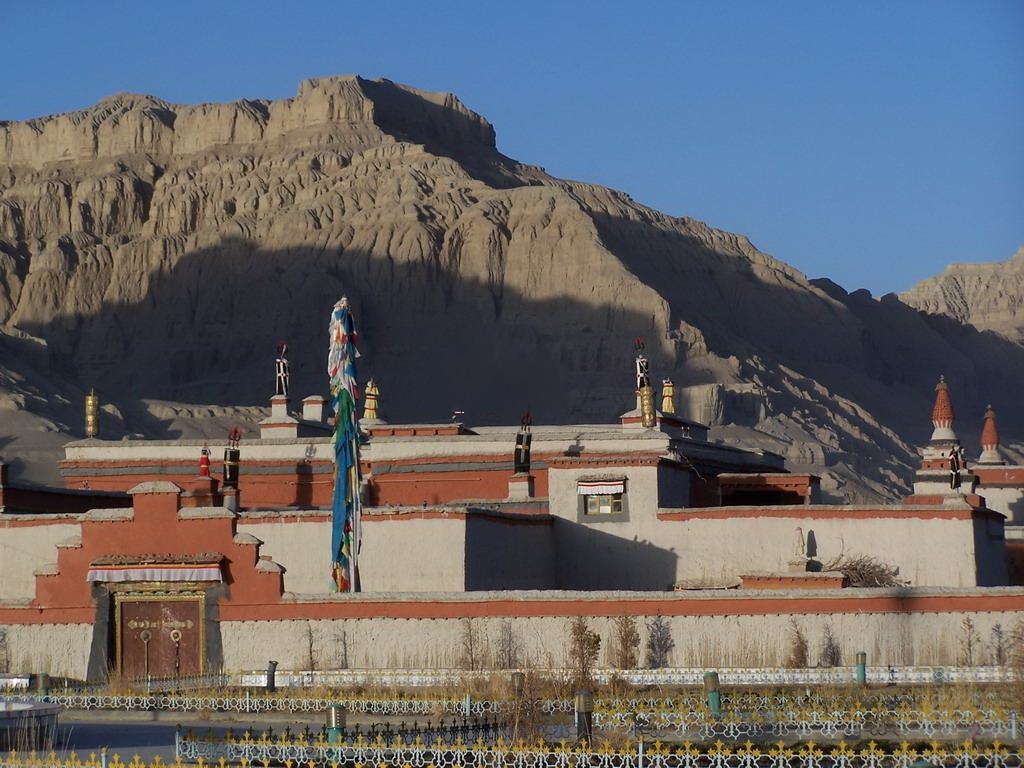
Tholing Monastery (Tuolin Monastery) is one of the most important historical and cultural sites in Ngari Prefecture, western Tibet. The name “Tholing” means “hovering in the sky forever” in Tibetan, reflecting the monastery’s lofty location and spiritual significance. Situated in Zanda County, the monastery was the earliest major Buddhist temple in the Ngari region and played a crucial role in the revival and spread of Buddhism in Tibet.
Founded in 996 by the second king of the Guge Kingdom, Tholing Monastery became the religious and cultural center of the kingdom during its golden age. It served as an important place for Buddhist scripture translation, religious ceremonies, and scholarly exchanges, greatly contributing to the development of Tibetan Buddhism. In the mid-11th century, the renowned Indian Buddhist master Atisha (Atiśa Dipamkara Śrijnana) stayed at the monastery, where he taught Buddhism and helped strengthen Buddhist traditions in western Tibet.
In 1076, a major religious ceremony was held at Tholing Monastery to commemorate Atisha after his passing. Over the following centuries, the monastery experienced periods of prosperity and decline but remained an important symbol of Tibetan Buddhist heritage. On the occasion of its 1,000th anniversary, Tholing Monastery was officially recognized as a nationally protected cultural heritage site.
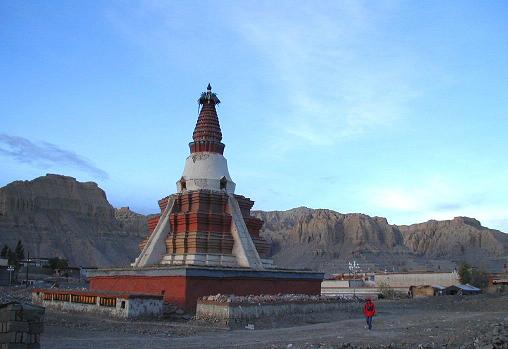
The architecture and artwork of Tholing Monastery reflect a unique blend of Tibetan, Indian, Nepalese, and Ladakhi influences. Inspired by the design of Samye Monastery, Tibet’s first Buddhist monastery, the complex includes grand halls, monk residences, and pagodas. The most notable structures are the Jiasha Hall, Red Hall, White Hall, and the famous 108 Pagodas.
The Jiasha Hall is the main and most iconic building of Tholing Monastery. Viewed from above, its layout resembles the Chinese character “亚”. The central hall represents Mount Meru, the sacred cosmic mountain in Buddhist cosmology, while the surrounding halls symbolize the four continents. The pagodas at the four corners represent the Four Heavenly Kings who protect Buddhist teachings. The hall houses a statue of the Buddha and preserves exquisite murals showcasing the artistic style of the ancient Guge Kingdom.
The Red Hall was traditionally used as a gathering place for monks. Its well-preserved murals depict numerous Buddhist stories, with the Sixteen Vajra Dancers mural on the porticos being one of the most remarkable examples of Tibetan Buddhist art.
The White Hall is another important structure where a statue of Shakyamuni Buddha is enshrined. Although many original sculptures have disappeared, the remaining murals still feature important historical figures, including Guge kings, Atisha, and other Buddhist masters.
One of the most spectacular attractions near Tholing Monastery is the 108 Pagodas beside the Xiangquan River. These earthen pagodas stretch in an orderly line for hundreds of meters along the riverbank. At sunset, the golden sunlight reflecting on the yellow pagodas creates a magnificent scene and has become one of the most iconic views of western Tibet.
With its ancient history, extraordinary murals, unique architecture, and connection to the Guge Kingdom, Tholing Monastery is a must-visit destination for travelers exploring Ngari Tibet and the ancient Buddhist heritage of the Tibetan Plateau.