Ta’er Monastery (Kumbum Monastery) is one of the most important Tibetan Buddhist monasteries in China and a major spiritual center of the Gelugpa (Yellow Hat) School of Tibetan Buddhism. Located in Huangzhong District, Qinghai Province, about 25 kilometers southwest of Xining, the monastery is one of the most popular cultural and religious attractions on the Qinghai-Tibet Plateau.
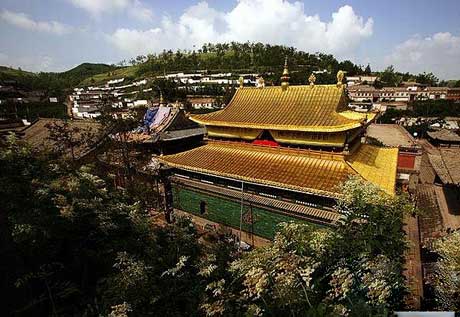
The monastery sits on the hillside above the Huangshui River Valley, surrounded by mountains and traditional Tibetan landscapes. Its location combines the natural beauty of Qinghai with the rich cultural heritage of Tibetan Buddhism, making it an essential stop for travelers exploring the region.
Ta’er Monastery was founded in 1577 in honor of Tsongkhapa (1357–1419), the founder of the Gelugpa School of Tibetan Buddhism. Although it was established more than 150 years after Tsongkhapa’s death, the monastery was built at the place traditionally believed to be his birthplace and has since become one of the most sacred sites of the Gelugpa tradition.
The name “Kumbum” comes from the Tibetan words meaning “100,000 images” or “100,000 sacred symbols.” According to local legend, after Tsongkhapa’s birth, a miraculous sandalwood tree grew at the site where his blood had fallen. It was said that the tree produced 100,000 leaves, each bearing an image of Buddha. Another version of the legend tells that the bark of the tree contained countless sacred impressions, giving rise to the name Kumbum.
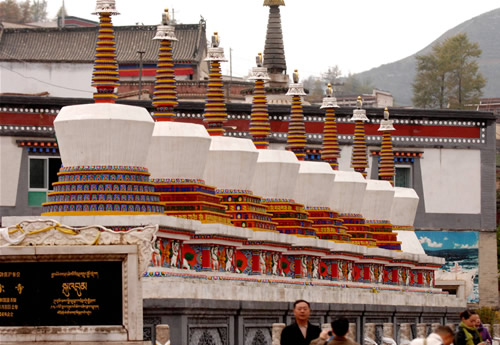
Covering an area of about 14.4 hectares, Ta’er Monastery is a large architectural complex featuring a unique combination of Tibetan and Han Chinese architectural styles. The monastery includes magnificent Buddhist halls, scripture halls, stupas, monk residences, and several Buddhist colleges where monks study philosophy, scriptures, and religious practices.
Among the monastery’s most famous treasures are the “Three Wonders of Kumbum”:
* Butter sculptures – delicate artworks made from colored butter, featuring Buddhist figures, flowers, and religious scenes.
* Murals – exquisite paintings created with traditional Tibetan techniques.
* Thangka paintings – detailed scroll paintings depicting Buddhas, Buddhist stories, and religious teachings.
The monastery also houses many important religious buildings, including the Great Hall of Golden Tiles, Dajinwa Temple, and the memorial stupa dedicated to Tsongkhapa. These structures reflect the artistic achievements and spiritual traditions of Tibetan Buddhism.
For centuries, Ta’er Monastery has served not only as a place of worship but also as an important center for Buddhist education. Numerous renowned scholars and lamas have studied here, contributing to the preservation and development of Tibetan Buddhist philosophy.
Today, Ta’er Monastery attracts pilgrims, historians, and travelers from around the world. With its sacred legends, impressive architecture, and remarkable Buddhist artworks, it offers visitors a deep insight into the history, culture, and spirituality of Tibetan Buddhism.