Shalu Monastery is one of the most historically significant Buddhist monasteries in Tibet, located about 20 kilometers south of Shigatse. Founded in 1040 by Chetsun Sherab Jungnay, the monastery is famous for its remarkable combination of Tibetan Buddhist traditions, Yuan Dynasty Chinese architectural influences, and exquisite ancient murals.
The name “Shalu” means “new bud” in Tibetan. According to legend, when Chetsun Sherab Jungnay sought guidance from his teacher about where to build a monastery, he was instructed to shoot an arrow and establish the monastery at the place where it landed. The arrow struck a newly sprouted bud, and the monastery was named Shalu in honor of this auspicious sign.
During the 14th century, Shalu Monastery reached its golden age under the leadership of Buton Rinpoche (1290–1364), one of the greatest Buddhist scholars in Tibetan history. Buton was renowned for his extensive knowledge of Buddhist philosophy and literature. He compiled a vast collection of Buddhist scriptures, including the Kangyur and Tengyur, as well as numerous commentaries and religious treatises. His teachings attracted thousands of monks, making Shalu an important center of Buddhist learning.
Under Buton Rinpoche’s influence, the Shalupa tradition (also known as Butonpa) developed. This tradition became known for advanced Buddhist practices and meditation techniques. Historical records describe practitioners who were able to endure extreme cold without heavy clothing and perform extraordinary physical feats through intensive spiritual training.
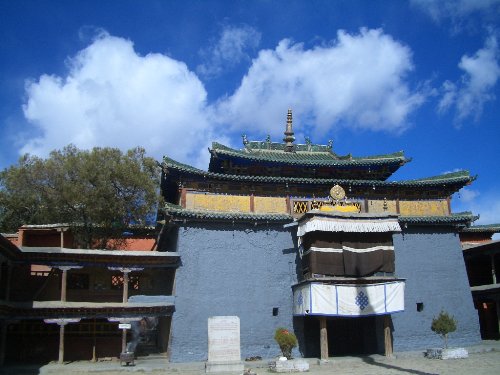
Shalu Monastery is also unique for its architectural style. In 1329, the monastery was severely damaged by an earthquake. It was rebuilt in 1333 with support from the Yuan Dynasty imperial court. During the reconstruction, many Han Chinese craftsmen participated in the project, resulting in a rare architectural fusion of Tibetan Buddhist design and Yuan Dynasty Chinese styles.
The central building of the monastery is Shalu Lakhang, which is surrounded by other halls and chapels. The ground-floor main hall, known as the Tschomchen, houses statues of Sakyamuni Buddha and his disciples. The surrounding chapels preserve important Buddhist scriptures, including the Tengyur and Kangyur, two of the most important collections of Tibetan Buddhist texts.
The upper floors feature distinctive blue glazed Chinese-style roofs, reflecting the influence of Yuan Dynasty architecture. These chapels contain statues of Sakyamuni Buddha, Buton Rinpoche, and the Arhats—enlightened beings in Buddhist tradition who have attained spiritual realization.
One of the greatest treasures of Shalu Monastery is its collection of ancient murals. Covering large areas of the monastery walls, these delicate paintings mainly depict stories from the life of Buddha. The murals are considered outstanding examples of Tibetan Buddhist art and provide valuable insight into medieval Tibetan religious culture.
The monastery also preserves four important religious treasures:
* The Sutra Board – A 700-year-old wooden printing board containing Buddhist scriptures. It is believed that the inscription brings blessings and good fortune.
* The Brass Holy Water Urn – A sacred vessel containing holy water believed to purify human impurities. The water is traditionally replaced every 12 years.
* Chetsun Sherab Jungnay’s Stone Basin – A personal relic of the monastery’s founder.
* The Stone Tablet with “Om Mani Padme Hum” – A sacred stone carving discovered during the original construction of the monastery, featuring the famous Buddhist mantra and carved stupas.
With its rare architectural style, priceless murals, ancient scriptures, and connection to some of Tibet’s greatest Buddhist scholars, Shalu Monastery is a must-visit cultural attraction near Shigatse for travelers interested in Tibetan history, art, and spirituality.