Samye Monastery is one of the most important Buddhist monasteries in Tibet and is widely regarded as the first monastery in Tibet to include the complete Buddhist community of monks, teachings, and religious rules. Located at the foot of Mount Hepo Ri on the northern bank of the Yarlung Tsangpo River in Dranang (Zhanang) County, Shannan Prefecture, the monastery is about 38 kilometers from Tsetang and is a key attraction of the Yarlung Valley.
Construction of Samye Monastery began in 762 AD under the reign of King Trisong Detsen of the Tubo Kingdom and was completed in 779 AD. As the first formally established Buddhist monastery in Tibet, it played a crucial role in the development and spread of Tibetan Buddhism.
The monastery is especially famous for the Samye Debate, a historic discussion between Indian Buddhist scholars and Chinese Buddhist practitioners regarding Buddhist teachings and meditation methods. This important event helped shape the future direction of Tibetan Buddhism and established the Indian Buddhist tradition as the dominant influence in Tibet.
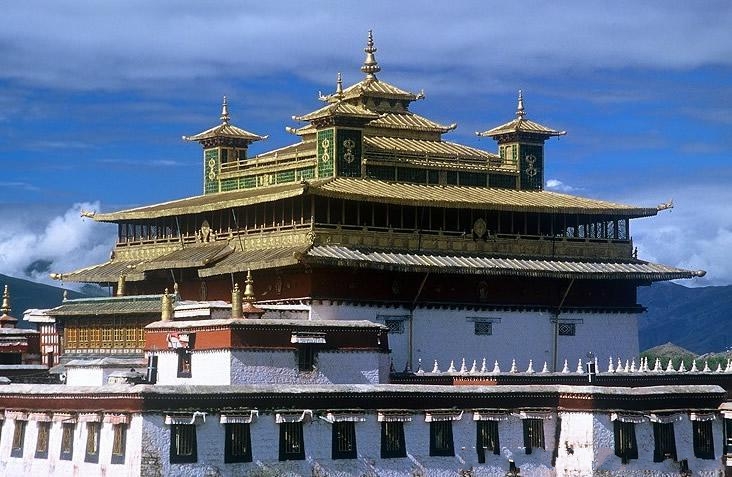
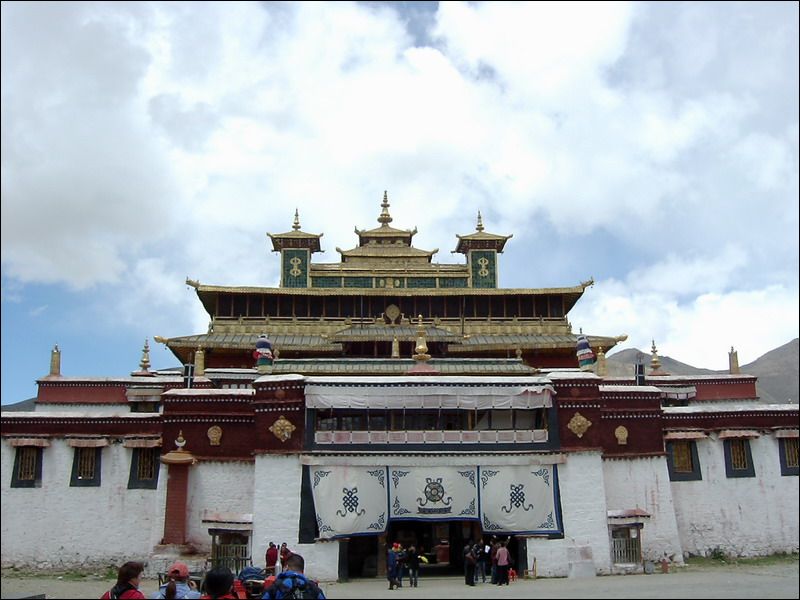
Inspired by the design of Odantapuri Monastery in Bihar, India, Samye Monastery was built according to Buddhist cosmological principles. The layout represents the Buddhist universe, with the central Utse Hall symbolizing Mount Meru, the sacred mountain at the center of Buddhist cosmology. After expansions throughout different dynasties, the monastery developed into a large complex covering more than 4,900 square meters.
The architectural style of Samye Monastery is unique, combining elements of Tibetan, Han Chinese, and Indian architecture. The magnificent Utse Hall, the monastery’s main building, is the best example of this cultural fusion. In front of the hall stands a stone stele erected in honor of King Trisong Detsen’s dedication to Buddhism.
Samye Monastery preserves many valuable cultural relics. Among them are a pair of white marble statues featuring a simple design and Tang Dynasty artistic style, considered among the monastery’s finest surviving stone sculptures. The monastery also houses an ancient bronze bell engraved with Tibetan inscriptions, traditionally believed to be the earliest cast bell in Tibet.
Throughout history, Samye Monastery experienced periods of destruction and restoration. It suffered damage during the reign of Langdarma, an ancient Tibetan king who opposed Buddhism and ordered the destruction of many Buddhist institutions. Later conflicts and historical changes also affected the monastery, but it has survived as an important symbol of Tibetan Buddhist heritage.
Today, Samye Monastery attracts travelers, pilgrims, and scholars from around the world. With its ancient history, unique architecture, and profound religious significance, it remains one of the most important cultural landmarks for understanding the origins of Tibetan Buddhism.