Sakya Monastery (Sakya Kloster) is one of the most important Buddhist monasteries in Tibet and the spiritual center of the Sakya School (Sakyapa) of Tibetan Buddhism. Located in Sakya County, southwest of Shigatse, the monastery is renowned for its magnificent architecture, vast collection of Buddhist scriptures, ancient murals, and precious Thangka paintings. Because of its extraordinary cultural treasures, it is often known as the “Second Dunhuang.”
The history of Sakya Monastery dates back to 1073, when Khon Konchog Gyalpo, the founder of the Sakya School, built a white palace on a grey clay hill beside the Chun Qu River. The local people named it “Sakya,” meaning “grey soil” in Tibetan, giving the monastery and the Buddhist tradition its name.
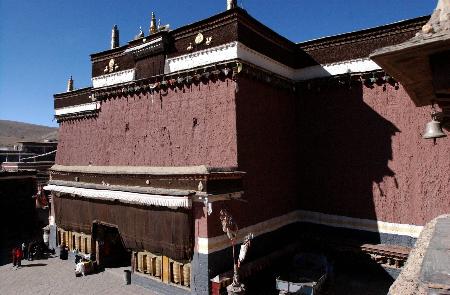
Originally, Sakya Monastery consisted of the Northern Monastery and Southern Monastery. The Northern Monastery was the original site, but today only ruins remain. The Southern Monastery, built as a massive fortress, became the main center of the Sakya tradition. Construction began in 1268 under the leadership of Benqen Sagya Sangbo following the instructions of Choygal Phakpa, the fifth leader of the Sakya lineage.
The Southern Monastery features distinctive fortress-like architecture, with thick walls painted in red, white, and grey, symbolizing three important Buddhist figures: Manjusri Bodhisattva, Avalokiteshvara Bodhisattva, and Vajradhara. This unique architectural style reflects the religious identity and historical power of the Sakya School.
One of the greatest treasures of Sakya Monastery is its enormous collection of Tibetan Buddhist scriptures. The monastery houses around 40,000 volumes of ancient texts, making it one of the most important repositories of Tibetan Buddhist literature. A remarkable wooden bookshelf measuring about 57 meters long and 11 meters high contains thousands of valuable scriptures.
Among these treasures, the most famous is Burde Gyaimalung, considered one of the largest Buddhist scriptures in the world. This enormous manuscript records Tibetan religion, history, philosophy, literature, agriculture, and traditional knowledge. Sakya Monastery also preserves 21 volumes of Sanskrit Buddhist scriptures written on Pattra leaves, decorated with colorful illustrations and regarded as priceless cultural treasures.
Sakya Monastery is also famous for its exceptional collection of murals and Thangka paintings. Most murals date back to the Yuan Dynasty (1271–1368) and depict important historical and religious scenes, including portraits of Sakya masters, the meeting between Phakpa and Kublai Khan, and various Buddhist mandalas. The monastery contains more than 3,000 Thangkas, including many precious works from the Song, Yuan, and Ming dynasties.
The highlight of any visit is the Main Chanting Hall (Lakhang Chenmo), one of the largest halls in Tibetan monasteries. Covering approximately 5,800 square meters, it can accommodate thousands of monks chanting Buddhist scriptures together. The hall houses statues of Dipamkara Buddha, Sakyamuni Buddha, Maitreya Buddha, and the five founding masters of the Sakya tradition.
Forty massive vermilion pillars support the ceiling of the chanting hall, and four of the largest pillars each have their own legendary stories. According to tradition, one pillar was gifted by Kublai Khan, while others were brought by a wild yak, a tiger, and the Sea God. The second floor preserves 63 beautifully painted mandalas, among the best-preserved artworks in the monastery.
In addition to scriptures and artworks, Sakya Monastery contains numerous historical relics, including imperial seals, Buddhist statues, porcelain, embroidery, and artifacts from the Song and Yuan dynasties. Among the most treasured objects is a black wooden box containing a white conch shell trumpet, which was presented by Kublai Khan.
With its extraordinary collection of Buddhist scriptures, ancient art, and historical treasures, Sakya Monastery is one of the most significant cultural destinations in Tibet. It offers visitors a unique opportunity to explore the history, architecture, and spiritual heritage of Tibetan Buddhism.