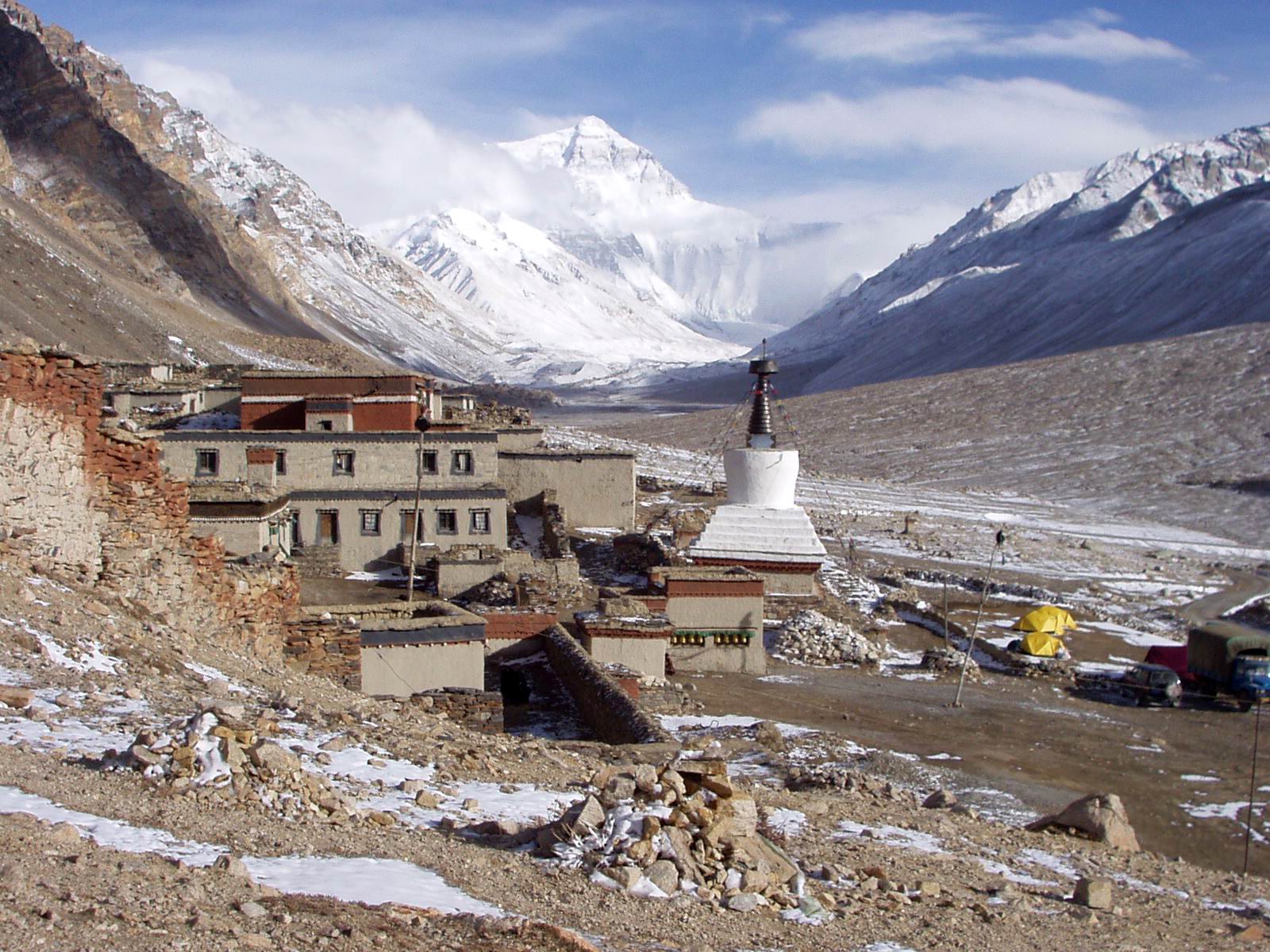
Rongbuk Monastery (Rongpu Monastery) is one of the most spectacular Buddhist monasteries in Tibet, located in Dingri County, Shigatse Prefecture, near the northern base of Mount Everest (Qomolangma), the highest mountain in the world. Sitting at an altitude of around 5,000 meters above sea level, Rongbuk Monastery is widely recognized as the highest monastery in the world.
Surrounded by the majestic Himalayas, Rongbuk Monastery offers one of the closest viewpoints of Mount Everest accessible to visitors. From the monastery, Everest rises dramatically above the surrounding peaks like a giant pyramid reaching toward the sky. On clear days, the famous “flag cloud” phenomenon can often be seen above the summit, where clouds stretch horizontally from the peak and create a breathtaking natural spectacle.
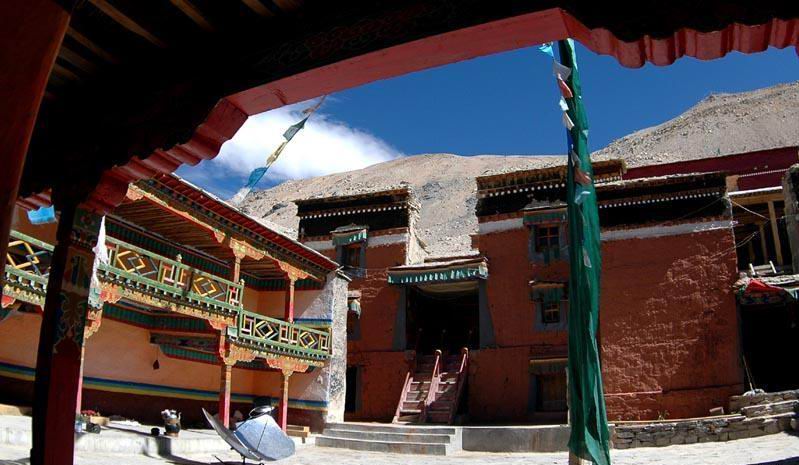
Originally built in 1899 by a local Tibetan lama, Rongbuk Monastery belongs to the Nyingma tradition of Tibetan Buddhism. Although the monastery was once a much larger complex, only part of the original structure remains today. The five-story building now has two floors in active use, including the main prayer hall where sacred statues of Sakyamuni Buddha and revered Buddhist masters are enshrined. The colorful murals inside the monastery are especially valuable examples of Tibetan Buddhist art.
Unlike many traditional monasteries, Rongbuk is unique because both monks and nuns have historically lived and practiced Buddhism in the same monastery area. The monastery continues to serve as an important spiritual center for local Tibetans living in the Everest region.
Rongbuk Monastery is also famous for its traditional Buddhist festivals. During the Saga Dawa Festival, held on the 15th day of the fourth month of the Tibetan calendar, religious ceremonies and masked dances are performed to commemorate the birth, enlightenment, and passing of Sakyamuni Buddha. Another important ceremony takes place on the 29th day of the twelfth month of the Tibetan calendar, when monks wearing elaborate masks perform rituals to drive away negative forces and pray for peace.
Beyond its religious significance, Rongbuk Monastery is a gateway to some of the most magnificent natural landscapes on Earth. A short distance from the monastery lies the Rongbuk Glacier, the largest glacier system on the northern slope of Mount Everest. Formed by several glaciers flowing down from the Himalayas, the glacier feeds the Rongbuk River, whose icy waters pass near the monastery.
Today, Rongbuk Monastery is not only a sacred Buddhist site but also one of the most popular destinations for travelers, photographers, and mountaineering enthusiasts visiting Mount Everest. With its combination of ancient Tibetan culture, dramatic Himalayan scenery, and unparalleled views of the world’s highest peak, Rongbuk Monastery is an unforgettable highlight of any Tibet journey.