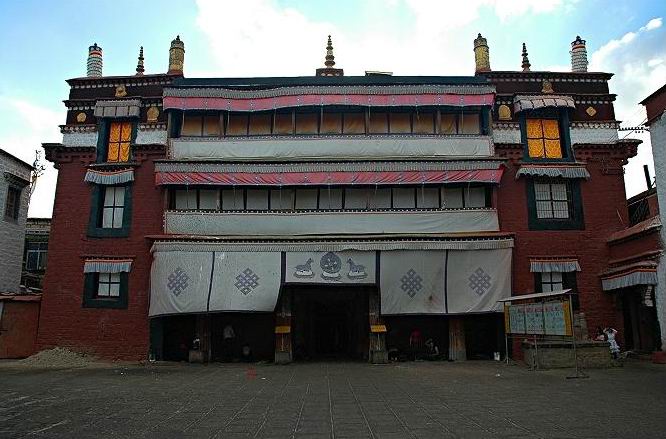
Ramoche Temple (Xiao Zhaosi Temple) is one of the oldest and most important Buddhist temples in Lhasa, Tibet. Often regarded as the “sister temple” of Jokhang Temple, Ramoche Temple was built around the same period and has played an important role in the religious history of Tibetan Buddhism. Located in the northern part of Lhasa’s old city, the temple is a significant cultural and architectural landmark.
According to Tibetan tradition, Ramoche Temple was originally built to house the highly revered Jowo Rinpoche statue, which was brought to Tibet by Princess Wencheng of the Tang Dynasty when she traveled to Lhasa in the 7th century. The statue was believed to have been transported in a wooden cart along the ancient route through Lhagang before arriving in Tibet.
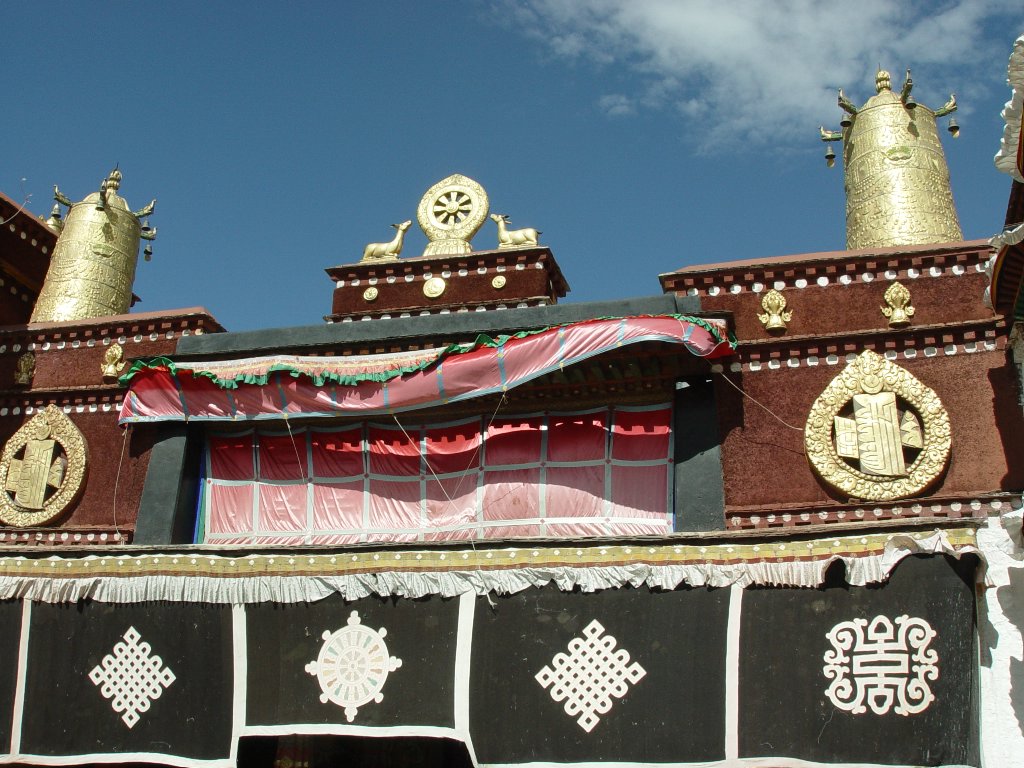
Unlike Jokhang Temple, which features a predominantly Tibetan architectural style, Ramoche Temple was originally designed with strong Chinese architectural influences. This reflects the historical connections between Tibet and the Tang Dynasty during the period of Princess Wencheng.
During the reign of Mangsong Mangtsen (649–676), political tensions between Tibet and the Tang Dynasty led to concerns about possible conflict. According to tradition, Princess Wencheng secretly moved the Jowo Rinpoche statue from Ramoche Temple to Jokhang Temple for protection. Later, during the early 8th century, another important Buddhist statue, Jowo Mikyo Dorje, was enshrined at Ramoche Temple. This small bronze Buddha statue, depicting Buddha at the age of eight, was traditionally believed to have been created by the legendary artisan Vishvakarman and brought to Tibet by Nepalese Princess Bhrikuti.
Throughout history, Ramoche Temple experienced several periods of destruction and reconstruction. The temple suffered damage during Mongol invasions, and the original structure was eventually destroyed by fire. The present three-story building was reconstructed in 1474, preserving the temple’s role as an important center of Tibetan Buddhism.
Later, Ramoche Temple became the main assembly hall of the Gyuto Tantric College (Upper Tantric College of Lhasa), one of the most important institutions of Tibetan Buddhist tantric studies. At its peak, the temple housed around 500 monks and maintained a close connection with Yerpa, a famous meditation site outside Lhasa that served as a summer retreat for monks.
Although Ramoche Temple suffered severe damage during the Cultural Revolution, restoration efforts have helped preserve this historic Buddhist site. Today, visitors can admire its unique combination of Tibetan and Chinese architectural styles, experience its peaceful religious atmosphere, and explore one of Lhasa’s most important historical temples.
With its deep connection to Princess Wencheng, the Jowo statues, and the development of Tibetan Buddhism, Ramoche Temple remains an essential cultural attraction for travelers exploring Lhasa’s spiritual heritage.