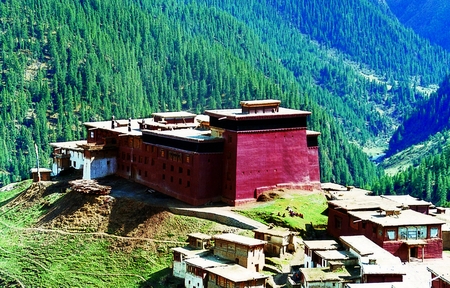
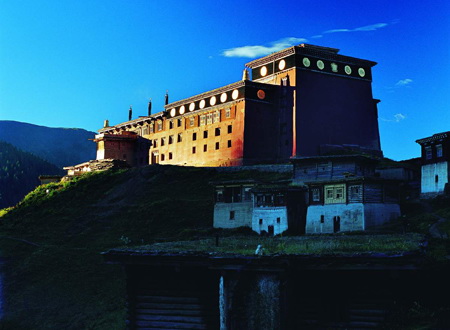
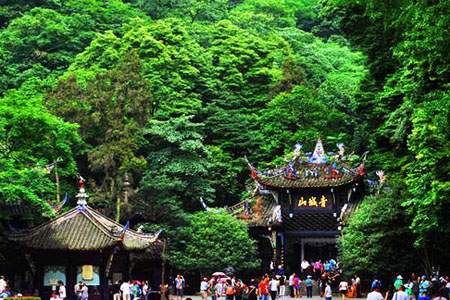
Located in a secluded forested valley on the eastern bank of the Jinsha River between Dege County and Baiyu County, Palpung Monastery (also known as Babang Monastery) is one of the most important religious and cultural sites of the Karma Kagyu School of Tibetan Buddhism in the Kham region.
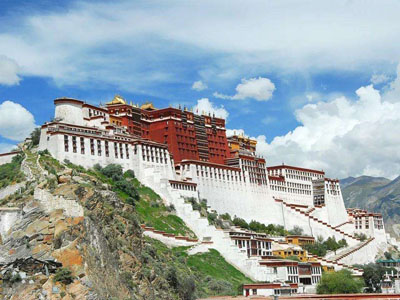
Surrounded by dense forests and mountains, the monastery lies more than an hour’s drive from the nearest main road, preserving a peaceful and remote atmosphere. Famous for its grand architecture, exquisite craftsmanship, and rich Buddhist heritage, Palpung Monastery is often called the “Little Potala Palace” because of its magnificent appearance and artistic value.
History of Palpung Monastery
Palpung Monastery was originally founded in the 12th century and has traditionally served as one of the most important teaching centers of the Karma Kagyu tradition.
For centuries, the monastery attracted young Buddhist scholars from across the Tibetan regions who came to study philosophy, meditation, and religious teachings. Together with Tsurphu Monastery near Lhasa, Palpung is regarded as one of the most sacred monasteries of the Karma Kagyu school.
The monastery played a significant role in preserving Tibetan Buddhist knowledge and training generations of religious practitioners. Its influence extended throughout the Kham region and beyond.
Architectural Wonder: The “Little Potala Palace”
The main complex of Palpung Monastery is renowned for its impressive scale and sophisticated design. Built according to traditional Tibetan architectural principles, the monastery combines religious symbolism, artistic decoration, and practical monastic functions.
Its highlights include:
* Large-scale temple halls
* Intricately designed wooden structures
* Elaborate murals and Buddhist artworks
* Exquisite carvings and traditional craftsmanship
The impressive layout and majestic appearance of the monastery have earned it comparisons with the famous Potala Palace, the former residence of the Dalai Lamas in Lhasa.
Preservation and Restoration
Like many Tibetan cultural sites, Palpung Monastery experienced serious damage during the 20th century. The monastery suffered from neglect during the Cultural Revolution, and a major earthquake in 1993 further weakened parts of the historic structure.
Due to its enormous architectural and cultural importance, restoration became a challenging project requiring significant expertise and financial support. In recognition of its global heritage value, the World Monuments Fund listed Palpung Monastery among the world’s 100 most endangered monuments in its 1998–1999 program.
With support from international organizations and the Chinese government, restoration work was carried out to protect this extraordinary example of Tibetan architecture and ensure its survival for future generations.
Visiting Palpung Monastery
A journey to Palpung Monastery offers travelers a rare opportunity to explore the remote beauty of Kham Tibet. The road to the monastery passes through spectacular mountain landscapes, forests, and valleys along the Jinsha River, making the journey itself part of the experience.
Visitors can admire the monastery’s unique architecture, learn about Karma Kagyu Buddhist traditions, and experience the peaceful atmosphere of one of Tibet’s most remarkable hidden treasures.
For travelers interested in Tibetan Buddhism, traditional architecture, and off-the-beaten-path destinations, Palpung Monastery is one of the most rewarding cultural sites in western Sichuan.