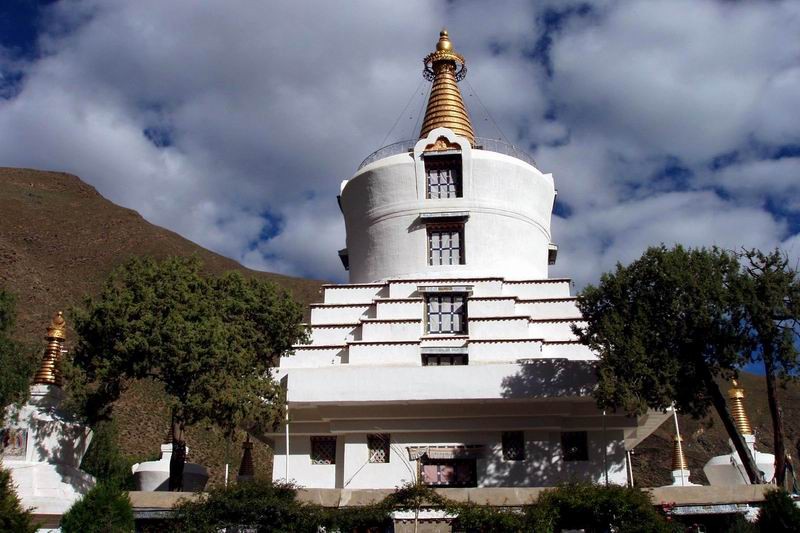
Located in Zaqi District, east of the Zanang River in Zhanang County, Mindroling Monastery is one of the most important monasteries of the Nyingma School (Nyingmapa) of Tibetan Buddhism. Covering an area of more than 100,000 square meters (119,599 square yards), it is regarded as one of the six major monasteries of the Nyingma tradition.
Originally founded in the late 10th century, Mindroling Monastery has undergone several renovations throughout history while preserving its unique religious traditions, architectural style, and cultural significance. Surrounded by mountains and built facing east, the monastery combines peaceful natural surroundings with profound Buddhist heritage.
Architecture and Main Buildings
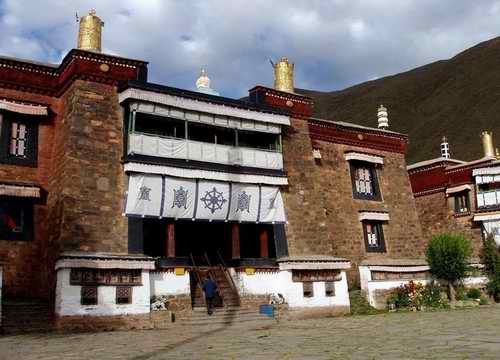
The largest building in Mindroling Monastery is Guihuakang Hall, while the most important religious structure is the Lakhang Buddhist Hall.
The three-story Lakhang Buddhist Hall is the spiritual center of the monastery:
* First floor: The Main Assembly Hall, where important Buddhist ceremonies and gatherings are held.
* Second floor: Five smaller Buddhist halls and monks’ living quarters.
* Third floor: Two additional Buddhist halls used for religious activities.
The walls of the main hall are decorated with detailed Buddhist murals depicting various deities and protective figures. Many of these figures appear with multiple heads and arms and have powerful, even frightening expressions. In Tibetan Buddhist belief, these fierce-looking deities are not symbols of evil but guardian figures who protect the monastery and Buddhism from negative forces.
Center of Tibetan Buddhist Learning
Mindroling Monastery has traditionally been an important center for Buddhist education and cultural studies. Unlike many other Tibetan monasteries that focus mainly on religious practices, Mindroling places special emphasis on:
* Astronomy studies
* Tibetan calendar calculation
* Buddhist philosophy
* Compilation and preservation of Tibetan scriptures and texts
The monastery has played an important role in maintaining Tibetan intellectual traditions and preserving ancient knowledge.
Unique Traditions of the Nyingma School
One distinctive feature of Mindroling Monastery is its unique monastic tradition. Unlike many Tibetan Buddhist monasteries where monks traditionally remain unmarried, monks at Mindroling have historically been permitted to marry and have families.
The succession system of abbots is also distinctive. Leadership inheritance is not restricted only to direct father-and-son relationships; succession through son-in-law and father-in-law relationships has also been accepted. This tradition provides valuable insight into the historical development, evolution, and social structure of the Nyingma School.
Visiting Mindroling Monastery
For travelers interested in Tibetan Buddhism, history, and culture, Mindroling Monastery offers a deeper understanding of the Nyingma tradition. Its ancient architecture, colorful murals, religious ceremonies, and unique customs make it one of the most culturally significant monasteries in Tibet.
A visit here provides an opportunity to explore not only a sacred Buddhist site but also a living center of Tibetan philosophy, astronomy, and traditional knowledge.