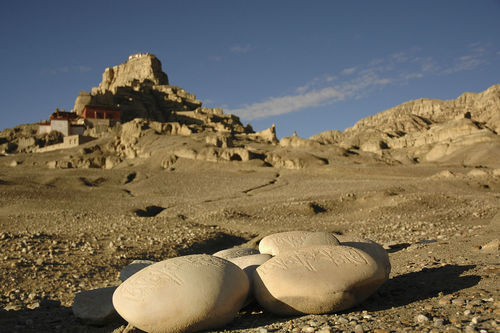
The Ruins of Guge Kingdom are one of the most remarkable historical sites in Tibet, located in Zanda County, Ngari Region (Ali), Tibet Autonomous Region. Often described as the “Pompeii of Tibet” or the “Old Summer Palace of Tibet,” these ancient ruins preserve the remains of a mysterious kingdom that once flourished for more than 700 years in western Tibet.
Founded around the 10th century, the Guge Kingdom was established by descendants of the former Tibetan Tubo royal family after the collapse of the Tubo Empire. At its peak, the kingdom controlled an important region of western Tibet and was ruled by a succession of about 16 kings. With powerful armies and prosperous trade networks, Guge became an important political, economic, and cultural center on the Tibetan Plateau.
The Guge Kingdom played a particularly significant role in the revival and development of Tibetan Buddhism. The kingdom actively supported Buddhist teachings, invited religious masters from India, and became a major center for Buddhist translation, study, and artistic development. Many Buddhist traditions spread from Guge to other parts of Tibet, greatly influencing Tibetan religious culture. The kingdom was also an important hub for trade between Tibet, India, Ladakh, and Central Asia.
However, the kingdom declined in the 17th century due to internal conflicts and external invasions. A struggle for power within the royal family eventually led one faction to seek military assistance from Ladakh (in present-day Kashmir). The invading army defeated Guge, bringing an end to the once-powerful kingdom. Although the kingdom disappeared from history, its magnificent ruins continue to reveal its former glory.
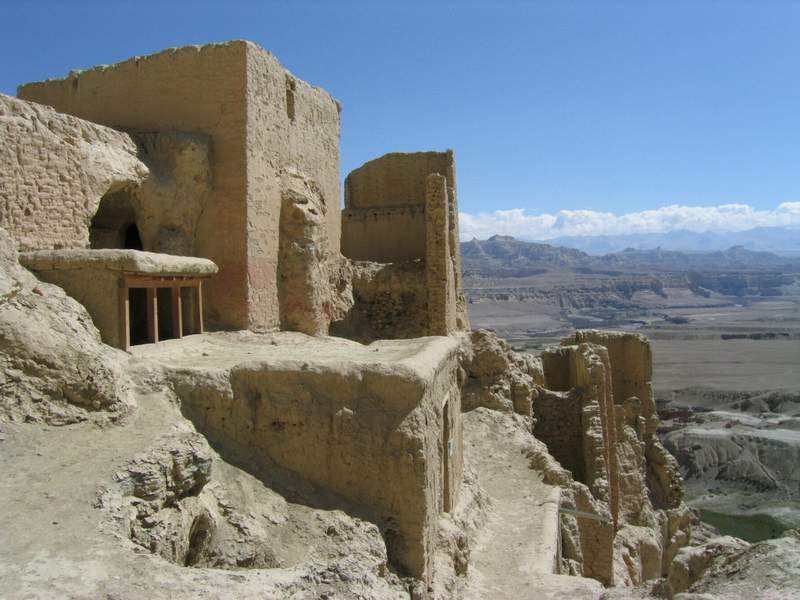
The Ruins of Guge Kingdom stretch across the slopes of a mountain more than 300 meters high. Archaeological discoveries have revealed more than 400 rooms, 800 caves, fortresses, secret passages, pagodas, weapon storage areas, granaries, and burial sites. Most residential structures have lost their roofs over time, leaving behind impressive earthen walls that create a dramatic landscape against the barren Tibetan plateau.
The entire site was designed as a highly defensive mountain city. Surrounded by city walls and corner fortresses, the palaces, temples, and residences were arranged from the summit down the mountainside. Narrow secret paths connected different areas, while the highest point was reserved for royal buildings, reflecting the authority and status of the Guge rulers.
The most valuable parts of the ruins are the surviving White Temple, Red Temple, Samsara Temple, Imperial Palace, and Assembly Palace. These buildings contain remarkable Buddhist murals, sculptures, and inscriptions. The murals mainly depict scenes of Sakyamuni Buddha, royal families, Buddhist masters, and religious stories, providing important information about the history and artistic achievements of the Guge Kingdom.
The murals of Guge are considered among the finest examples of Tibetan Buddhist art. The paintings feature sophisticated colors, delicate lines, and detailed religious imagery comparable to the famous Mogao Caves in Dunhuang. Particularly impressive are the Esoteric Buddhist murals depicting male and female deities, as well as images of Dakinis surrounding the sacred paintings.
The ruins also preserve many exquisite Buddhist statues, including precious gold and silver sculptures. Among them, the famous “Silver Eyes of Guge” is regarded as one of the finest examples of Guge Buddhist sculpture.
Listed as a National Key Cultural Relic Protection Site, the Guge Kingdom Ruins are a fascinating destination for travelers interested in Tibetan history, archaeology, Buddhist art, and the mysteries of ancient civilizations. Standing among the vast landscapes of Ngari, the ruins offer a rare glimpse into the lost glory of one of Tibet’s most extraordinary kingdoms.