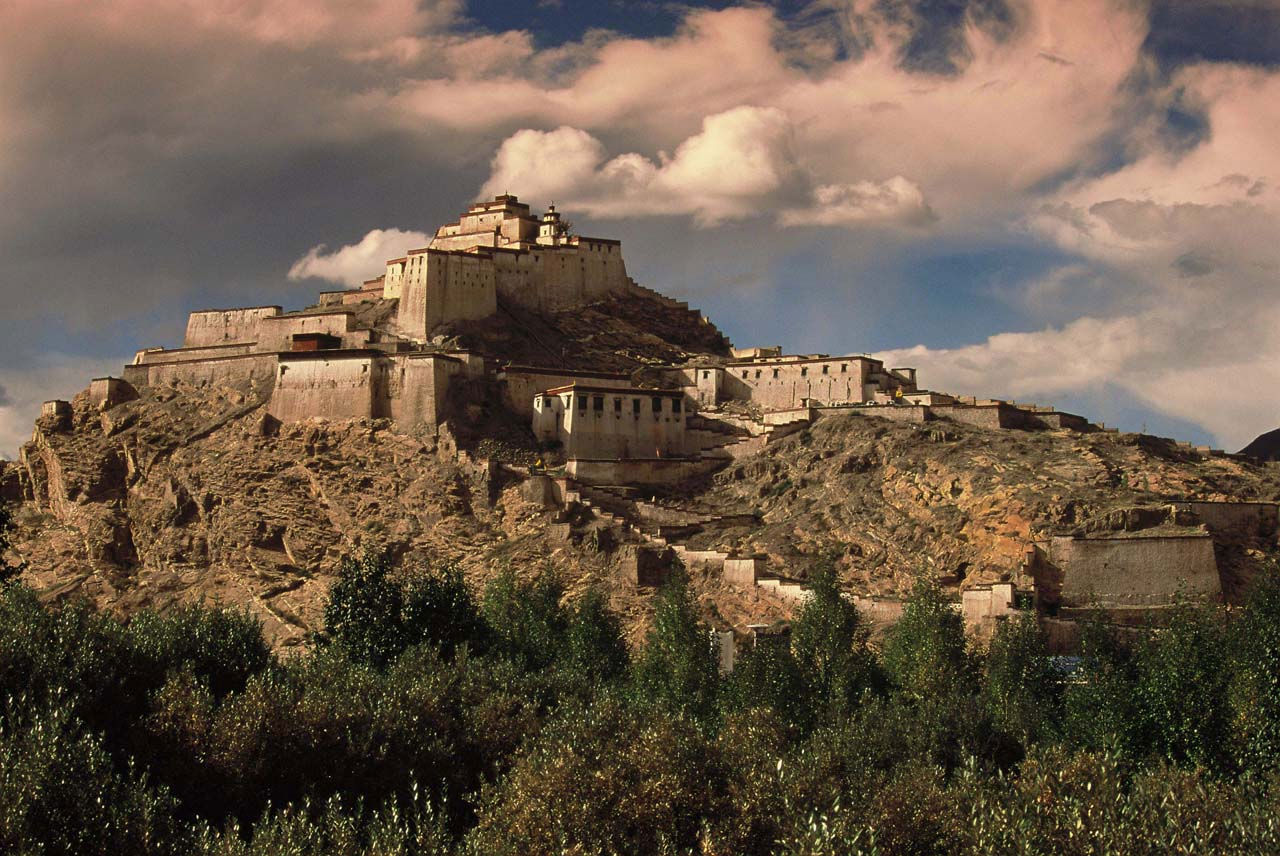
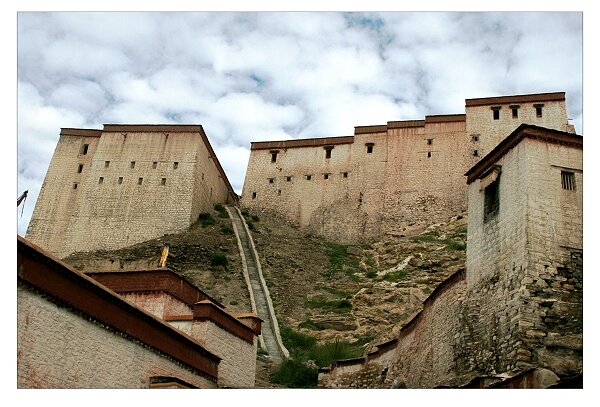
Located on Dzong Hill in the center of Gyantse County, Dzong Fortress is one of the most important historical sites in Tibet. Known for its heroic resistance during the 1904 British invasion of Tibet, the fortress represents the courage, determination, and spirit of the people of Gyantse.
Standing above the historic town, Dzong Fortress offers visitors not only a chance to learn about Tibet’s modern history but also spectacular panoramic views of Gyantse’s traditional streets, surrounding farmland, and Himalayan landscapes.
History of Dzong Fortress
Dzong Fortress is best known for the fierce battle that took place here in 1904, when British forces launched an expedition into Tibet and reached Gyantse. Local Tibetan defenders used the fortress on Dzong Hill as their stronghold, resisting the invasion with limited weapons, including traditional firearms, swords, and bows and arrows.
Despite facing a much stronger opponent equipped with advanced military technology, the Gyantse defenders continued their resistance. During the battle, the fortress was heavily damaged by bombardment, and its supply depot was destroyed. Even after their ammunition ran out, the defenders continued fighting with stones rather than surrendering.
According to local accounts, some remaining soldiers chose to jump from the cliff rather than surrender, making the site a symbol of bravery and sacrifice. Today, a monument on Dzong Hill commemorates the defenders and preserves the memory of this historic event.
Scenic Views from Dzong Hill
Rising approximately 125 meters above Gyantse town, Dzong Fortress stands at an altitude of around 4,020 meters. The location provides one of the best viewpoints in the city.
From the top of Dzong Hill, visitors can enjoy a bird’s-eye view of Gyantse, where traditional Tibetan houses, colorful prayer flags, and surrounding farmland create a peaceful highland scene. The contrast between the historic fortress, the quiet town, and the distant mountains offers a unique travel experience.
Opposite Dzong Hill is Pelkhor Chode Monastery, one of Tibet’s most significant Buddhist sites. The monastery’s colorful architecture adds to the beauty of Gyantse’s landscape. Nearby, the Nianchu River flows gently through the valley, nourishing the surrounding agricultural land.
Visiting Dzong Fortress
Today, Gyantse is a peaceful town where traditional Tibetan culture continues to thrive. Visiting Dzong Fortress allows travelers to explore an important chapter of Tibetan history while appreciating the remarkable scenery of the Tibetan Plateau.
The fortress is an ideal stop when traveling through western Tibet, especially when combined with visits to Pelkhor Chode Monastery and the famous Kumbum Stupa. From its historic walls and mountain viewpoints, visitors can experience both the cultural heritage and natural beauty of Gyantse.