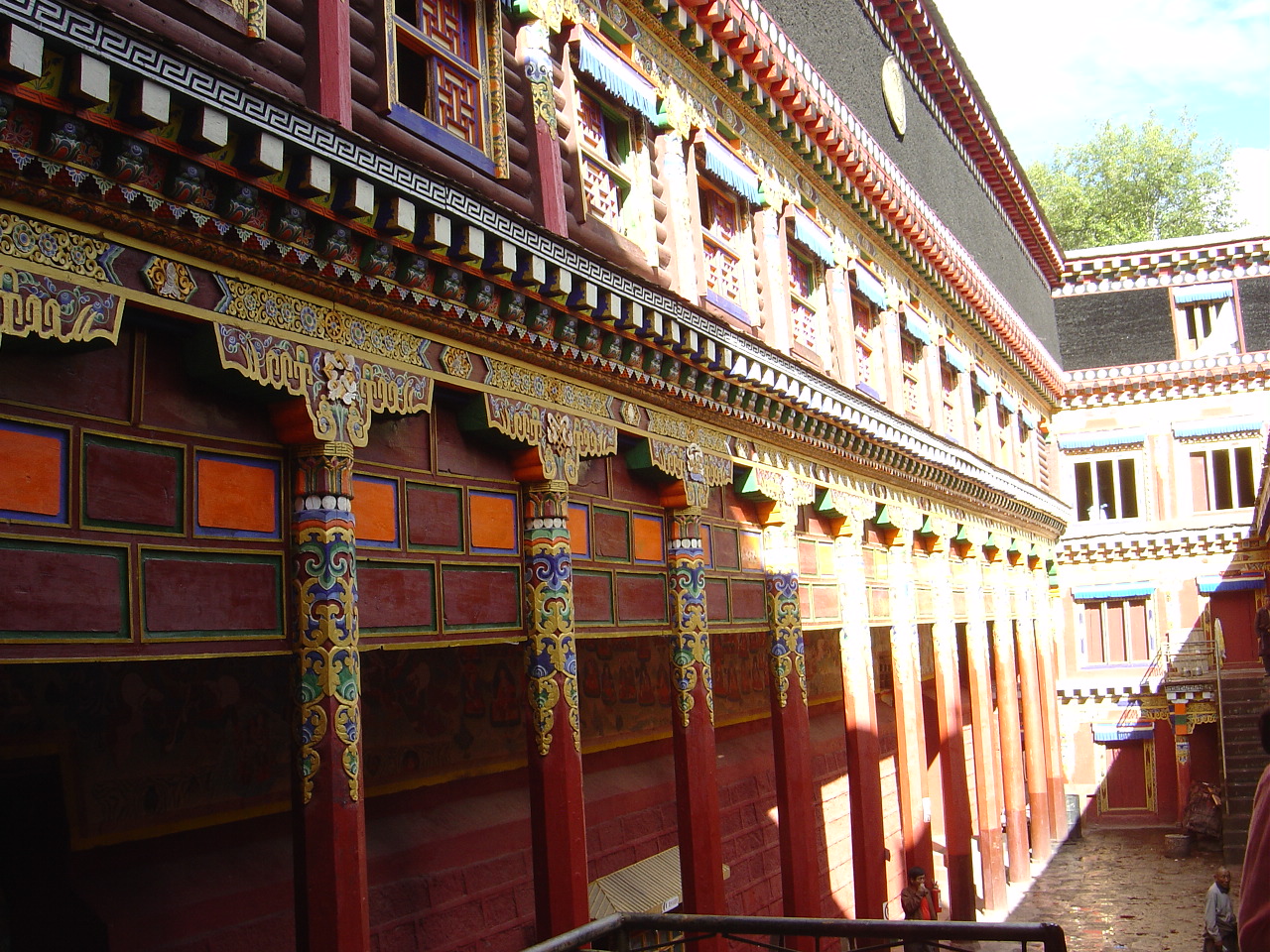
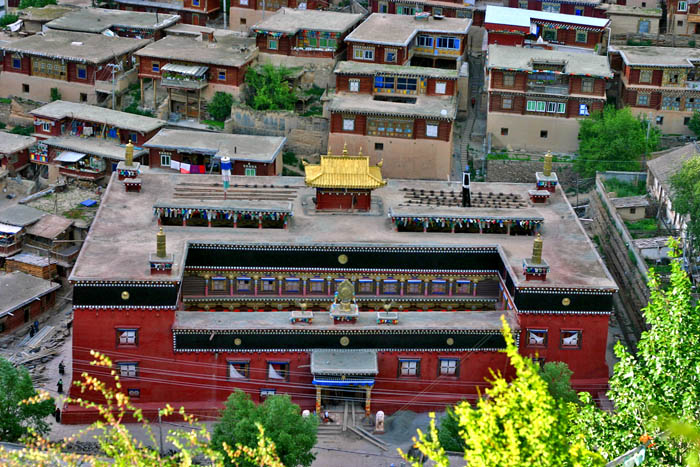
Located in Dege County, the remote western region of Sichuan Province, the Dege Scripture Printing House is one of the most important centers for Tibetan cultural preservation. Surrounded by snow-capped mountains and isolated from the outside world for centuries, Dege has preserved many traditional Tibetan customs, religious practices, and artistic skills.
Known as the “Encyclopedia of Tibetan Culture,” the Dege Scripture Printing House is the largest traditional Tibetan woodblock printing center in China. It houses an enormous collection of Tibetan literary works and preserves centuries-old printing techniques that remain in use today.
History of Dege Scripture Printing House
Construction of the Dege Scripture Printing House began in 1729 during the Qing Dynasty, although traditional woodblock printing had already developed in the region in the early 18th century with support from local leaders.
Over the centuries, the printing house became one of the most important institutions for Tibetan Buddhist scholarship and cultural preservation. Its collection covers a wide range of subjects, including:
* Buddhist scriptures and philosophical texts
* Tibetan medicine
* Astronomy and mathematics
* History and literature
* Traditional arts and sciences
The printing house is believed to preserve around 70 percent of Tibet’s traditional literary heritage, making it an invaluable archive of Tibetan civilization.
Despite historical challenges, including a period of closure from 1958 to 1979, the Dege Scripture Printing House resumed operation in 1979. Today, it continues producing traditional woodblock prints and remains an active center for Tibetan cultural transmission.
Traditional Tibetan Woodblock Printing Techniques
One of the greatest features of the Dege Scripture Printing House is that its traditional printing methods have been preserved almost completely. Unlike modern printing factories, the entire process is still carried out by hand.
The woodblocks used for printing are traditionally made from red birch, a type of wood valued for its durability and suitability for fine engraving. Before carving, the wood must undergo several preparation processes, including:
* Smoking
* Boiling
* Drying under sunlight
* Polishing
Skilled craftsmen then carve Tibetan characters and illustrations into the woodblocks with remarkable precision. The deep and elegant engravings allow the blocks to be used repeatedly for generations.
Handmade Tibetan Paper Production
The printing house also maintains the traditional process of making Tibetan paper. The paper is produced from the roots of the daphne plant and requires multiple stages of preparation, including washing, steaming, drying, and polishing.
The finished paper is strong, durable, highly absorbent, and resistant to insect damage, making it suitable for preserving important Buddhist texts for centuries.
A Living Heritage of Tibetan Culture
The Dege Scripture Printing House represents much more than an ancient printing workshop. It is a living museum of Tibetan civilization, preserving religious knowledge, traditional craftsmanship, and historical documents that might otherwise have disappeared.
The production of traditional woodblock prints requires great skill, patience, and time. Due to the complexity and cost of the process, protecting this unique cultural heritage has become increasingly important.
Visiting Dege Scripture Printing House
For travelers exploring western Sichuan’s Tibetan regions, the Dege Scripture Printing House is an essential cultural destination. Visitors can observe craftsmen practicing traditional printing techniques, explore ancient Buddhist texts, and gain a deeper understanding of Tibetan history, religion, and art.
Combined with Dege’s spectacular mountain scenery and rich Tibetan traditions, the printing house offers a rare opportunity to experience one of the most authentic cultural treasures of the Kham Tibetan region.