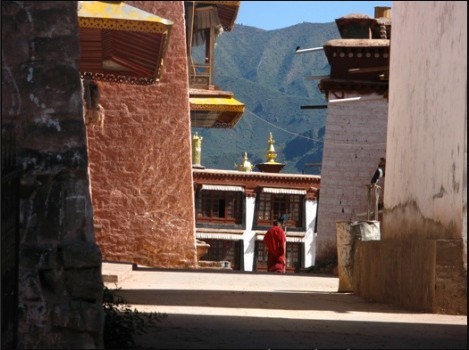
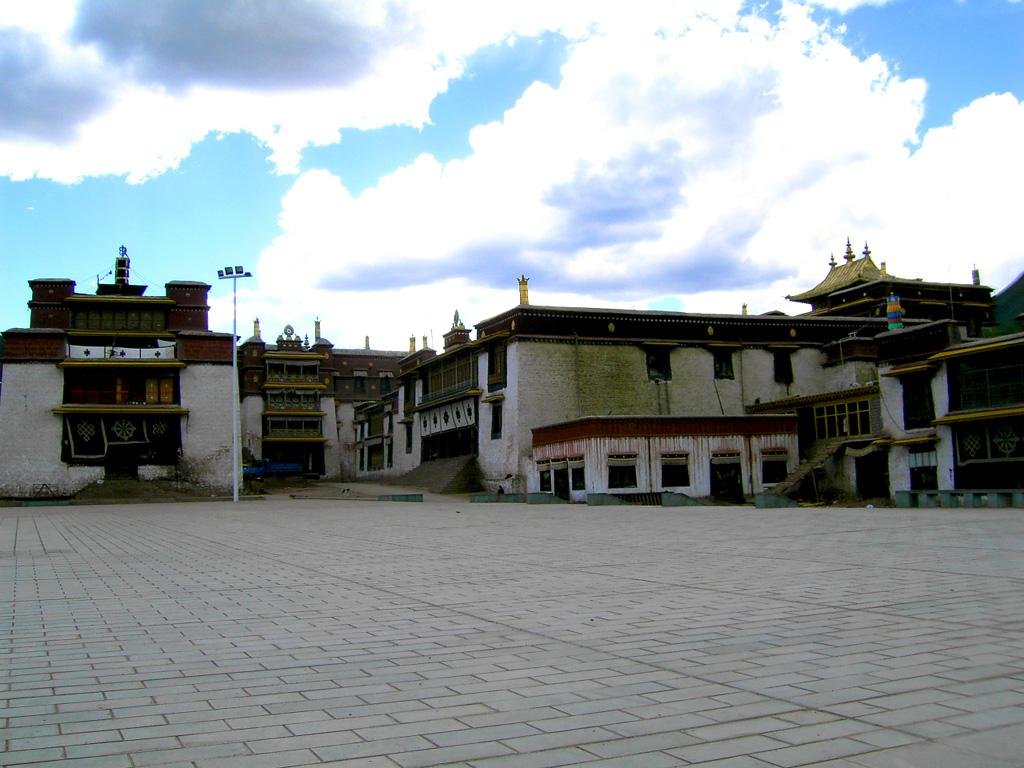
Located on a hill overlooking Chamdo, Chambaling Monastery (also known as Qiangbalin Temple) is one of the most important monasteries of the Gelug School of Tibetan Buddhism in eastern Tibet. Perched on a rocky terrace between the Lancang River, Ngom Qu River, and Tsarchu River, the monastery enjoys a spectacular location surrounded by layered mountains and deep valleys.
Founded in the Ming Dynasty in 1437 by Sherab Sangpo, a disciple of Tsongkhapa, Chambaling Monastery became the largest Gelug monastery in the Chamdo region. With its well-preserved statues, murals, and Tibetan Buddhist paintings, it remains an important center for religious study and Tibetan cultural heritage.
History of Chambaling Monastery
According to Tibetan Buddhist tradition, Tsongkhapa passed through the Chamdo area during his journey into Tibet and predicted that a great monastery would eventually be built here and Buddhism would flourish.
Following this prophecy, Sherab Sangpo, one of Tsongkhapa’s disciples, established Chambaling Monastery in 1437 (the second year of the Zhengtong period of the Ming Dynasty). The monastery was built on a rocky hill between the Ngom Qu and Tsarchu Rivers and was designed to resemble a flying eagle preparing to land.
The monastery’s name comes from its principal religious statue of Jampa Buddha (Maitreya Buddha), which is considered its most important sacred object.
Over time, Chambaling developed into the largest Gelug monastery in the Chamdo region. According to historical records, it once included five major colleges:
* Lingtod College
* Lingme College
* Nupling College
* Kuchuk College
* Chagra Khapa College
At its peak, the monastery controlled more than 130 affiliated monasteries throughout the Kham Tibetan region and was home to thousands of monks.
Connection with the Qing Dynasty
Chambaling Monastery maintained close relations with successive Qing Dynasty emperors. During the reign of Kangxi Emperor, the monastery supported Qing military campaigns and received imperial recognition.
The Sixth Phagpalha Living Buddha was granted the title “Nuomenhan” by Emperor Kangxi and received a bronze seal. Emperor Kangxi also personally inscribed the name “Ganden Chambaling Monastery” for the temple.
During this period, Chambaling reached its historical peak, with thousands of monks, numerous branch temples, and five major scripture colleges. The Third Phagpalha Living Buddha once served as the monastery’s spiritual leader.
Architecture and Cultural Treasures
Built according to the natural shape of the mountain, Chambaling Monastery blends harmoniously with the surrounding landscape. Looking down from Tamala Pass, the monastery appears like a sacred complex surrounded by mountain ranges and river valleys.
The monastery is famous for its rich collection of:
* Tibetan Buddhist statues
* Murals and frescoes
* Thangka paintings
* Religious scriptures
* Traditional Buddhist artifacts
These artworks reflect the artistic achievements of Tibetan Buddhism and preserve centuries of religious history.
Religious Life at Chambaling Monastery
Like many major Tibetan monasteries, Chambaling once supported a large monastic community. The monastery provided daily necessities such as butter, tsampa (roasted barley flour), and brick tea for monks, while remaining profits were distributed among the monastic community.
Despite its historical influence and wealth, monastery leaders were expected to follow strict religious rules and maintain a simple lifestyle. Monks followed a disciplined daily schedule, beginning Buddhist studies in the morning, attending discussions in the afternoon, and reviewing their studies in the evening.
Today, the monastery continues to function as an important center for Buddhist learning, with a management committee responsible for religious affairs, construction, security, and administration.
Scenic Views and Chamdo Landscape
Because Chambaling Monastery is located at the highest point of Chamdo town, it offers excellent panoramic views of the surrounding area. Visitors can overlook the meeting point of the Lancang River, Ngom Qu River, and Tsarchu River.
The dramatic landscape of mountains, rivers, and valleys makes Chambaling not only a religious destination but also a spectacular viewpoint for travelers exploring eastern Tibet.
Guqing Religious Dance Festival
One of the highlights of Chambaling Monastery is the traditional Gucing (Guching) religious dance, performed during the Tibetan New Year celebrations.
During the ceremony, monks wear elaborate costumes and perform sacred dances representing Buddhist teachings and spiritual protection. The performance is considered one of the most impressive religious festivals on the Tibetan Plateau and offers visitors a unique opportunity to experience Tibetan traditions.
Visiting Chambaling Monastery
As one of the most significant monasteries in the historic Kham region, Chambaling offers travelers a rare combination of Tibetan Buddhism, history, architecture, and natural scenery.
A visit here allows travelers to explore an important spiritual center, admire ancient Buddhist artworks, and enjoy breathtaking views of Chamdo’s mountain landscapes.