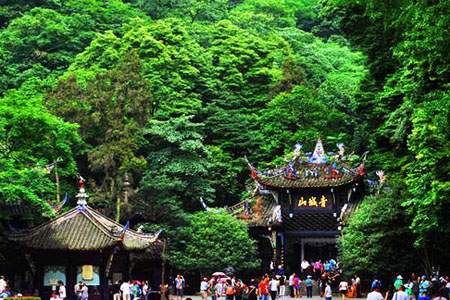
Located about 25 kilometers (16 miles) southwest of downtown Taiyuan, Shanxi Province, Jinci Temple (晋祠, Jin Ancestral Temple) is one of the most important historical and cultural attractions in northern China. Combining ancient architecture, religious heritage, traditional sculptures, and beautiful natural scenery, Jinci Temple offers visitors a fascinating journey through more than 1,000 years of Chinese history.
Surrounded by ancient trees, flowing springs, elegant pavilions, stone bridges, and historic halls, the temple is renowned as one of the rare surviving ancestral temples in China. Its harmonious combination of architecture and landscape makes it a masterpiece of traditional Chinese garden design.
History of Jinci Temple
The history of Jinci Temple can be traced back to the Western Zhou Dynasty (1046–771 BC). According to historical records, King Cheng of Zhou granted his younger brother, Yu, the land of Tang. Yu became a wise ruler who successfully developed the region, and after his death, his descendants built a temple in his honor.
Over centuries, Jinci Temple was continuously expanded and renovated, becoming an important cultural and religious site. It reflects the development of Chinese architecture, sculpture, and garden design from ancient times to later dynasties.
Architectural Highlights of Jinci Temple
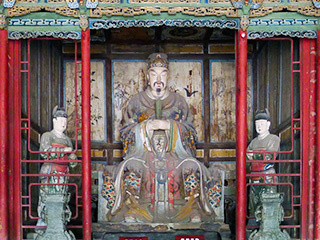
Among the many historic buildings in Jinci Temple, the most famous is the Saint Mother Hall (Shengmu Hall), built during the Song Dynasty (960–1279). It is considered one of the finest examples of ancient Chinese wooden architecture.
The hall is especially famous for its detailed wooden structures, elegant design, and the collection of Song Dynasty colored clay sculptures. Inside the hall are 43 lifelike statues of maidservants, each displaying different expressions, movements, and personalities. These sculptures are regarded as masterpieces of Chinese ancient art because of their realistic appearance and delicate craftsmanship.
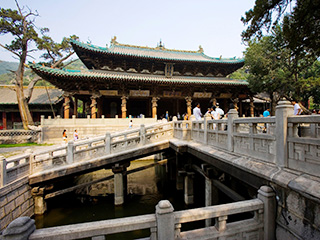
Another remarkable attraction is the Flying Bridge Across the Fish Pond (Yuzhao Feiliang). Built during the Song Dynasty, this unique cross-shaped bridge is one of the few surviving ancient bridges of its kind in China. It provides valuable insight into the development of traditional Chinese bridge construction.
The Offerings Hall is another important structure, showcasing the architectural style and craftsmanship of ancient China.
 Three Wonders of Jinci Temple
Jinci Temple is famous for its “Three Wonders”:
1. Song Dynasty Maidservant Sculptures
Located inside Saint Mother Hall, the colorful clay sculptures of maidservants are among the greatest artistic treasures of Jinci Temple. Each figure has a distinctive pose and facial expression, portraying activities such as serving, dancing, and daily household work with remarkable realism.
2. Zhou Cypress
The ancient Zhou Cypress is believed to date back thousands of years. With its huge trunk and flourishing branches, it represents the vitality and longevity of nature and has become an iconic symbol of Jinci Temple.
3. Never Aging Spring
The Never Aging Spring (Nanlao Spring) is a famous natural feature of the temple. The clear spring water has flowed continuously for centuries and is considered one of the most beautiful scenic elements within the temple complex.
Cultural Significance
Jinci Temple was once closely connected with imperial culture and has been regarded as an elegant royal-style garden. Throughout history, emperors, officials, and scholars left numerous inscriptions and stone tablets here, creating a valuable collection of Chinese calligraphy and historical records.
Among them, the most famous is the inscription written by Emperor Taizong of the Tang Dynasty in 646 AD. It is preserved in the Zhen Guan Bao Han Pavilion and is considered an important example of imperial calligraphy. Emperor Taizong was one of China’s greatest rulers, and his reign became known as the “Prosperity of Zhenguan,” a period of political stability and cultural development.
Visiting Jinci Temple
For travelers interested in Chinese history, ancient architecture, traditional art, and peaceful landscapes, Jinci Temple is one of the best cultural attractions near Taiyuan. A visit here provides a rare opportunity to experience the beauty of ancient Chinese temples and understand the historical roots of Shanxi Province.