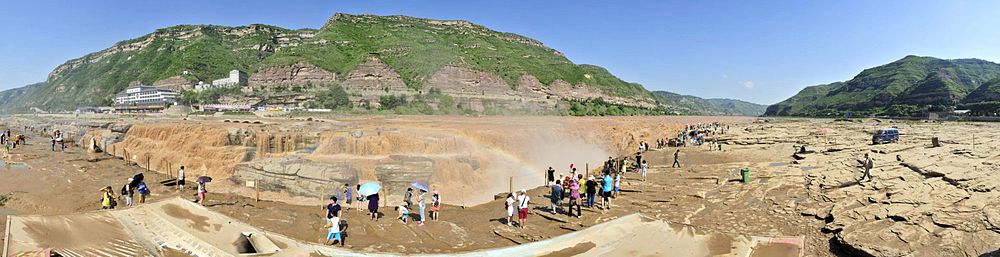
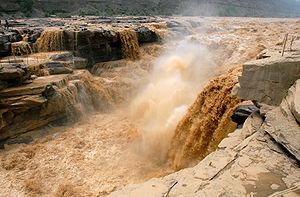
 Hukou Waterfall (壶口瀑布, Hǔkǒu Pùbù) is the largest waterfall on the Yellow River and one of the most spectacular natural attractions in China. It is located at the junction of Shanxi Province and Shaanxi Province, within the dramatic Jinxia Grand Canyon of the middle reaches of the Yellow River.
Known as the “Yellow River’s Great Waterfall,” Hukou Waterfall is the second-largest waterfall in China after Huangguoshu Waterfall. Its powerful water flow, thunderous sound, and magnificent scenery make it one of the most impressive landscapes along the Yellow River.
The waterfall is located approximately 165 kilometers west of Fenxi City in Shanxi Province and about 50 kilometers east of Yichuan County in Shaanxi Province.
The Formation and Features of Hukou Waterfall
The name Hukou, meaning “flask mouth” or “kettle mouth,” comes from the unique shape of the waterfall.
As the Yellow River flows through the Jinxia Grand Canyon, the mountains on both sides force the wide river channel to suddenly narrow. The water accelerates through the narrow opening before plunging dramatically over the cliff, creating the appearance of water pouring from a giant teapot.
The waterfall is:
* Over 20 meters high
* Usually around 30 meters wide
* Expanded to about 50 meters wide during flood seasons
The powerful current creates huge waves, mist, and a roaring sound that can be heard from a great distance.
Natural Wonders Around Hukou Waterfall
The Moving Stone (Guishi)
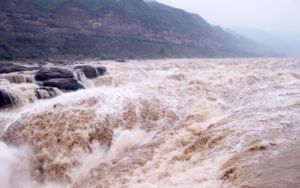 Below the waterfall lies a mysterious stone known as Guishi (Ghost Stone).
According to local observation, this unusual rock appears to move up and down with changes in the Yellow River’s water level. Even when the river volume changes dramatically, the stone remains partially visible, making it one of the fascinating natural features of Hukou Waterfall.
Rainbow Over the Yellow River
About 3 kilometers downstream from the waterfall stands a huge rock in the middle of the river. When the Yellow River reaches this point, the water divides into two streams, rushing around both sides of the rock before joining again.
Beneath the waterfall is Qilangwo Bridge, which connects Shanxi and Shaanxi provinces. On sunny days, sunlight reflects through the mist created by the waterfall, often forming a beautiful rainbow over the roaring Yellow River.
This spectacular scene has become one of the most photographed views of Hukou Waterfall.
A Famous National Scenic Attraction
In 1991, Hukou Waterfall was selected as one of China’s “40 Best National Scenic Spots.”
Because of its remote location in the Loess Plateau region, Hukou Waterfall was once difficult for visitors to reach. However, improvements in transportation and tourism facilities have greatly increased its popularity.
The number of visitors grew rapidly, from around 20,000 tourists in 1994 to more than 100,000 visitors in 1996, making Hukou Waterfall one of the most famous natural attractions in northern China.
Best Time to Visit Hukou Waterfall
The appearance of Hukou Waterfall changes throughout the year:
* Spring and summer: The river carries more water, creating a powerful and dramatic waterfall.
* Autumn: Clear weather and strong water flow provide excellent photography opportunities.
* Winter: Ice formations along the river create a unique frozen landscape.
For the most spectacular views, the flood season from late spring to summer is often considered the best time to experience the waterfall’s immense power.
Travel Experience
Standing beside Hukou Waterfall, visitors can feel the strength of the Yellow River as millions of tons of water rush through the narrow canyon. The combination of the roaring waterfall, Loess Plateau scenery, and the historic Yellow River culture creates an unforgettable travel experience.
For travelers interested in China’s natural wonders, geography, and cultural heritage, Hukou Waterfall is one of the must-see destinations in northern China.