Located in the southern part of Shanghai, Longhua Temple is the oldest and largest Buddhist temple in the city. With a history of more than 1,700 years, the temple is an important center of Buddhist culture and one of Shanghai’s most famous historical attractions.
According to historical records and local legends, Longhua Temple and Longhua Pagoda were first built in 242 AD during the Three Kingdoms Period. However, the exact date of the temple’s original construction remains uncertain. Some scholars believe that the earliest structures and the pagoda may have been developed during the Song Dynasty.
Most of the existing buildings were reconstructed during the Qing Dynasty, particularly in the middle and late 19th century. A major restoration project was carried out in 1954, and further preservation work supported by donations helped maintain the temple’s traditional appearance and cultural value.
Today, Longhua Temple remains a peaceful place for Buddhist worship while also attracting visitors interested in Shanghai’s history, architecture, and traditional culture.
Architecture and Layout of Longhua Temple
Longhua Temple covers an area of more than 20,000 square meters, with a total construction area of approximately 5,219 square meters. The temple complex follows a traditional Chinese Buddhist layout, arranged along a central axis about 194 meters long.
The main buildings include:
* Maitreya Hall
* Three Sages Hall
* Grand Hall (Daxiong Baodian)
* Abbot Chamber
* Bell Tower
* Drum Tower
* Arhat Hall
* Sutra Collection Hall
The combination of ancient halls, incense-filled courtyards, and traditional Buddhist architecture creates a tranquil atmosphere in the middle of modern Shanghai.
Longhua Pagoda: A Symbol of Shanghai’s Ancient Heritage
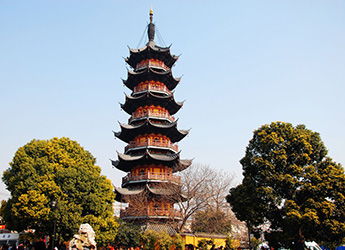
Standing in front of Longhua Temple, Longhua Pagoda is one of Shanghai’s most recognizable ancient landmarks.
The pagoda is a 40-meter-high brick and wood structure with seven octagonal levels. Each floor features traditional eaves, and small bells hang from the corners, producing gentle sounds when touched by the wind.
The brick structure of the pagoda is believed to date back to 977 during the Song Dynasty, while the wooden staircases and roofs were added or rebuilt later. As the largest of Shanghai’s 16 ancient pagodas, Longhua Pagoda represents the elegance of traditional Chinese Buddhist architecture.
Buddhist Statues and Cultural Treasures
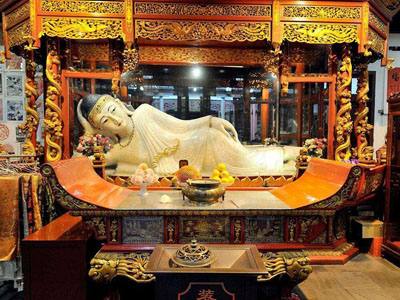
Longhua Temple is especially famous for its statues of Maitreya Buddha. Among the most important are:
* A statue representing Maitreya Buddha in his Bodhisattva form
* A statue of Maitreya Buddha’s earthly incarnation, known as the “Cloth Bag Monk” (Budai Monk)
Another highlight is the Hall of 500 Golden Arhats, located near the Grand Hall. The hall contains hundreds of golden statues arranged in rows, creating a spectacular contrast with the quiet courtyard, burning incense, and traditional Buddhist surroundings.
Longhua Temple Fair
Longhua Temple is also famous for its traditional temple fair, which has a history of more than 400 years.
Held on the third day of the third month according to the lunar calendar, the fair is one of Shanghai’s most popular folk cultural events. During the festival, visitors can enjoy traditional customs, local snacks, handicrafts, and the beautiful spring scenery, especially the blooming peach blossoms around the temple.
Bell Tower and New Year Bell-Ringing Tradition
The Bell Tower and Drum Tower are located beside the main axis of the temple complex.
Inside the Bell Tower is a large bronze bell weighing about 3,000 kilograms, cast in 1894 during the Qing Dynasty.
On New Year’s Eve, it is a traditional custom to strike the bell 108 times to welcome the new year. This Buddhist tradition symbolizes the removal of worldly troubles and the beginning of a peaceful year. Visitors can also participate in this special ceremony by ringing the bell.
Why Visit Longhua Temple?
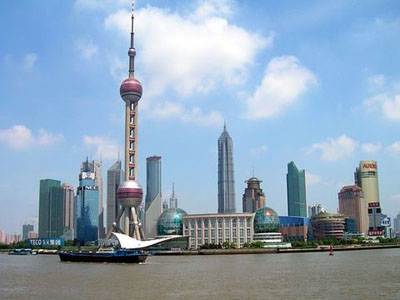
As the oldest and largest Buddhist temple in Shanghai, Longhua Temple offers a unique opportunity to experience the city’s ancient spiritual heritage. From the magnificent Longhua Pagoda and historic Buddhist halls to traditional festivals and peaceful gardens, the temple provides a fascinating contrast to Shanghai’s modern skyline.
For travelers interested in Chinese Buddhism, traditional architecture, and local culture, Longhua Temple is one of the most meaningful cultural attractions in Shanghai.