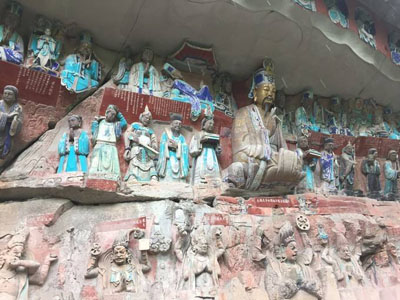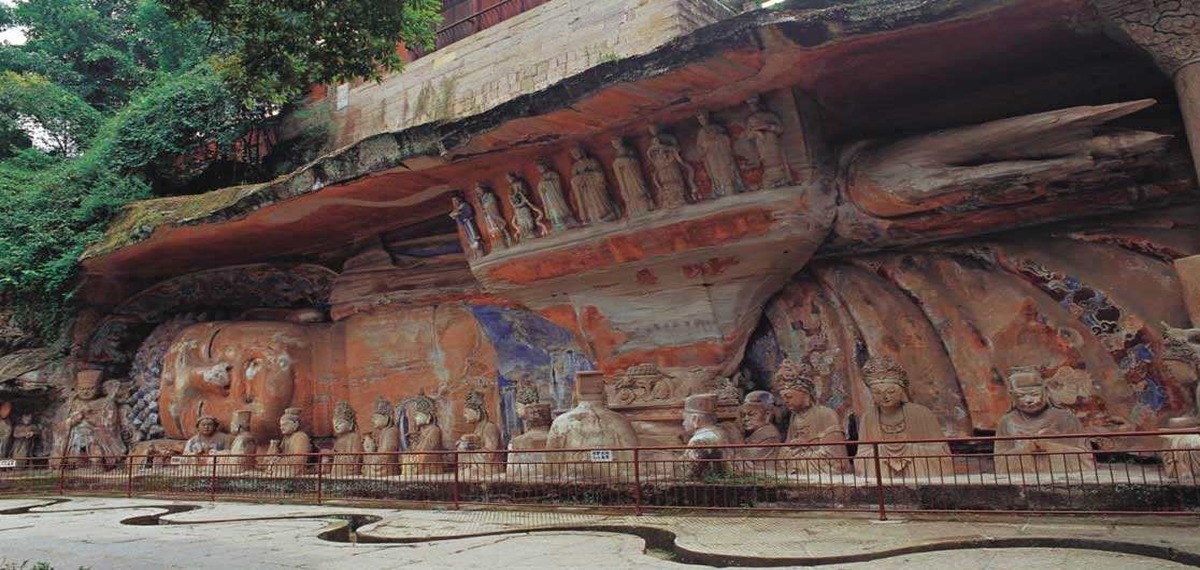
Located in Dazu District of Chongqing, the Dazu Rock Carvings are among the greatest achievements of ancient Chinese grotto art. Listed as a UNESCO World Heritage Site in 1999, the Dazu Rock Carvings are famous for their exquisite craftsmanship, rich cultural themes, and unique combination of Buddhist, Taoist, and Confucian traditions.
Dating from the late Tang Dynasty (618–907) to the Southern Song Dynasty (1127–1279), the Dazu Rock Carvings represent the highest artistic achievement of Chinese cliff sculpture during the late period of grotto development. Unlike earlier grotto sites in China, Dazu demonstrates a strong local character by combining religious beliefs with everyday life, social values, and traditional Chinese culture.
Today, the Dazu Rock Carvings are recognized alongside China’s most famous grotto sites, including the Mogao Grottoes in Dunhuang, Yungang Grottoes, Longmen Grottoes, and Maijishan Grottoes, making them one of the most important cultural attractions in China.
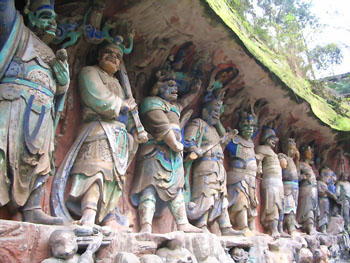 History of Dazu Rock Carvings
The construction of the Dazu Rock Carvings began in 650 during the early Tang Dynasty and continued for more than 1,000 years until the 17th century. The most significant development took place from the late 9th century onward, when grotto art in northern China began to decline.
The major carving activities lasted for more than 250 years, especially from the late Tang Dynasty through the Five Dynasties period and into the Southern Song Dynasty.
The Dazu Rock Carvings include:
* Around 50,000 statues
* More than 100,000 Chinese inscriptions
* 75 protected cliff sculpture sites
Among them, the cliff carvings at Baoding Mountain, Beishan Mountain, Nanshan Mountain, Shimen Mountain, and Shizhuan Mountain are the most famous and best preserved.
The earliest written record of the Dazu Rock Carvings is the Wei Jun Jing Bei Stele, carved in 895 during the Tang Dynasty. Another important inscription was created during the Song Dynasty by Cai Jing, featuring ancient and contemporary Chinese writing styles.
Cultural Significance of Dazu Rock Carvings
The Dazu Rock Carvings are not only masterpieces of stone sculpture but also valuable records of ancient Chinese society, religion, philosophy, and artistic development.
Unlike earlier grottoes that mainly focused on Buddhist themes, Dazu reflects the integration of:
* Buddhism
* Taoism
* Confucianism
* Traditional Chinese social values
The sculptures express important cultural ideas such as:
* Filial piety
* Loyalty
* Morality
* Respect for tradition
* Harmony between humans and nature
The statues depict not only religious figures but also scenes from everyday life, including historical stories, social customs, and human emotions. This strong connection between religion and ordinary life makes Dazu unique among China’s grotto heritage sites.
 Artistic Features of Dazu Rock Carvings
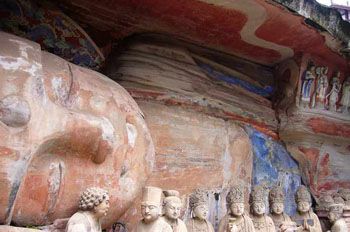
The artists of Dazu did not simply copy traditional religious images. Instead, they created sculptures full of emotion, movement, and human characteristics.
The carvings demonstrate:
* Outstanding stone-carving techniques
* Realistic expressions and gestures
* Dynamic human figures
* Creative religious interpretations
* Strong local Chinese artistic styles
Through these innovations, Dazu represents the completion of the localization of Chinese grotto art and marks a major turning point in the development of ancient Chinese sculpture.
Main Attractions of Dazu Rock Carvings
The Dazu Rock Carvings consist of several important sculpture areas. Among them, Baoding Mountain and Beishan Mountain are the most famous and popular with visitors.
Baoding Mountain Rock Carvings
Located about 15 kilometers northeast of Dazu’s central area, Baoding Mountain Rock Carvings are considered the finest masterpiece of Dazu grotto art.
Centered around Shengshou Temple, the site includes the Large Buddha Bay and Small Buddha Bay, containing nearly 10,000 Buddhist statues.
Created under the leadership of the Southern Song Dynasty monk and master sculptor Zhao Zhifeng, the project lasted for more than 70 years.
The carvings extend along a cliff more than 500 meters long, forming a continuous artistic narrative. The statues combine religious symbolism with realistic human emotions, making Buddhist stories easier for ordinary people to understand.
The most famous sculpture is the Guanyin (Bodhisattva of Compassion) statue, often regarded as a masterpiece of Chinese Buddhist sculpture and a “national treasure.”
Beishan Rock Carvings
Located about 1.5 kilometers north of Dazu District, Beishan Rock Carvings are one of the earliest and best-preserved areas of Dazu.
The cliff sculptures extend for more than 300 meters and contain nearly 10,000 statues across 51 themes.
Beishan is particularly famous for its:
* Elegant Buddhist statues
* Beautiful clothing details
* Refined artistic style
* Exquisite Song Dynasty craftsmanship
The highlight is Cave No.136, the Wheel Sutra Cave, which is considered one of the finest examples of Song Dynasty stone carving.
The Guanyin statues inside the cave are especially admired for their graceful appearance, delicate details, and artistic beauty.
Shimen Mountain Rock Carvings
Located on Shimen Mountain in Shima Town, Shimen Mountain Rock Carvings are famous for their combination of Buddhist and Taoist themes.
Unlike other areas dominated by Buddhism, Shimen Mountain contains one of the largest collections of Buddhist and Taoist sculptures within the Dazu Rock Carvings.
The sculptures show a unique artistic style by combining the dignity of divine figures with realistic human expressions, creating an important example of religious art in ancient China.
Shizhuan Mountain Rock Carvings
Located in Fohui Village, Sanqu Town, about 20 kilometers from Dazu District, Shizhuan Mountain Rock Carvings are notable for their rare combination of Confucianism, Buddhism, and Taoism.
It is considered one of the earliest examples in China where these three major cultural traditions appear together in stone sculpture.
The most famous section is the Confucius and Ten Philosophers Niche, which is a rare representation of Confucian themes in Chinese grotto art.
Nanshan Rock Carvings
Located about 2 kilometers south of Dazu’s urban area, Nanshan Rock Carvings are the most representative Taoist sculpture site within the Dazu Rock Carvings.
Centered around the Sanqing Ancient Cave, the site contains 421 statues featuring Taoist deities and religious figures.
The carvings are known for:
* Fine craftsmanship
* Complete Taoist religious themes
* High historical and artistic value
Nanshan is regarded as one of the best-preserved and most concentrated examples of pure Taoist grotto art in China.
Visiting Dazu Rock Carvings Chongqing
The Dazu Rock Carvings Chongqing are a must-visit destination for travelers interested in Chinese history, art, religion, and cultural heritage.
With thousands of detailed sculptures carved into cliffs over centuries, Dazu offers visitors a rare opportunity to explore the creativity, beliefs, and daily life of ancient China.
For those visiting Chongqing, the Dazu Rock Carvings provide a fascinating cultural experience and a deeper understanding of China’s artistic traditions beyond the city’s modern attractions.