Journey to the West is one of the four great classical novels of Chinese literature and one of the best-known works of traditional Chinese fiction. Written by Wu Cheng'en during the Ming Dynasty in the 16th century, the novel combines mythology, folklore, religion, adventure, humor, and fantasy.
The popular video game Black Myth: Wukong draws heavily on the characters, mythology, and world of Journey to the West, introducing this legendary Chinese story to a new generation of audiences around the world.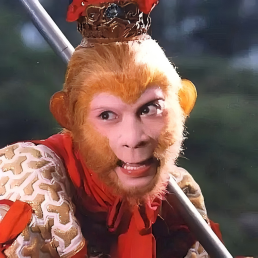
A Brief Introduction to the Story
The novel tells the story of Sun Wukong, also known as the Monkey King, who is born from a magical stone and later learns supernatural abilities from the immortal master Patriarch Subhuti. After gaining extraordinary powers, Wukong causes havoc in Heaven and challenges the authority of the celestial court.
He eventually meets Tang Sanzang, also known as Monk Tang, and becomes his disciple. Together with his fellow disciples Zhu Bajie (Zhu Wuneng), Sha Wujing, and the White Dragon Horse, Wukong accompanies Sanzang on a journey to the Western Regions to obtain Buddhist scriptures.
During their fourteen-year journey, the group encounters countless monsters, demons, dangers, and supernatural challenges. According to the traditional story, they endure 81 trials and tribulations before finally reaching the sacred land of Buddhism and obtaining the scriptures.
The novel was inspired in part by the historical journey of the Tang Dynasty monk Xuanzang, who traveled from China to India in the 7th century to study Buddhist teachings and bring scriptures back to China. Wu Cheng'en transformed this historical pilgrimage into a magnificent work of fantasy and mythology.
The Birth of Sun Wukong
According to the novel, on Mount Huaguo in Dongsheng Shenzhou stood a magical stone that had been nurtured for thousands of years by the essence of the sun and moon. One day, the stone split open and gave birth to a stone monkey.
The monkey was exceptionally intelligent and courageous. He discovered the Water Curtain Cave, a magnificent cave hidden behind a waterfall, and became the leader of the monkeys living on Mount Huaguo. He was subsequently honored as the Monkey King.
After living freely for many years, Wukong became troubled by the realization that even the strongest creatures eventually faced death. Determined to discover the secret of immortality, he traveled across the sea in search of an immortal master.
Eventually, he found Patriarch Subhuti at the Three Stars Cave and became his disciple. Subhuti gave him the name Sun Wukong and taught him extraordinary supernatural abilities, including the famous 72 transformations and the ability to travel great distances by riding a magical cloud.
Wukong returned to Mount Huaguo and used his new powers to defeat many demons. Numerous monster kings subsequently came to acknowledge him as their leader.
The Golden Cudgel and the Underworld
Wukong wanted a powerful weapon worthy of the Monkey King. He therefore traveled to the Dragon King's palace beneath the Eastern Sea and obtained the magical weapon known as the Ruyi Jingu Bang, or the Golden Cudgel. The weapon was originally a magical pillar used to measure the depths of the sea.
The Dragon Kings of the four seas also gave Wukong a suit of magical armor and other treasures.
Wukong's rebellious nature soon brought him into conflict with the rulers of the Underworld. When the officials of the Underworld came to take him because his allotted lifespan had supposedly ended, Wukong refused to accept his fate. He caused chaos in the Underworld and eventually erased his own name, as well as the names of the monkeys of Mount Huaguo, from the Book of Life and Death.
---
The Great Sage Equal to Heaven
The Dragon Kings and the King of the Underworld reported Wukong's actions to the Jade Emperor, ruler of Heaven.
To avoid a direct conflict, Taibai Jinxing (Venus) suggested that Wukong be recruited into the celestial bureaucracy. Wukong was given the low-ranking position of Bimawen, responsible for looking after the heavenly horses.
When Wukong discovered how insignificant the position was, he became furious and returned to Mount Huaguo. There he proclaimed himself the Great Sage Equal to Heaven, or Qitian Dasheng.
The Jade Emperor sent celestial troops to capture him, but Wukong repeatedly defeated them.
Eventually, the celestial court offered Wukong a more prestigious title and gave him a palace in Heaven. Since he had little official work to perform, however, he spent his time making friends throughout the heavenly realm, regardless of their social status.
The Jade Emperor eventually appointed him guardian of the Peach Garden, where magical peaches that granted longevity were cultivated.
---
The Peach Banquet and the Battle in Heaven
The Queen Mother of the West (Xi Wangmu) planned a grand banquet featuring the magical peaches but did not invite Wukong. Angered by this, Wukong ate the ripest peaches in the garden.
He then entered the banquet, where he ate the celestial food and drank the heavenly wine. Still intoxicated, he wandered into the palace of Taishang Laojun, the deified form of Laozi, and consumed the immortal pills being refined there.
Realizing that he had caused a tremendous disturbance, Wukong fled back to Mount Huaguo.
The Jade Emperor sent an army of 100,000 celestial soldiers to capture him, but they were unable to defeat him. Guanyin Bodhisattva then recommended the Jade Emperor's nephew, Erlang Shen, a powerful celestial warrior, to confront Wukong.
Wukong and Erlang Shen engaged in a spectacular battle of transformations and supernatural powers. Neither could easily defeat the other. With assistance from Taishang Laojun, however, Wukong was finally captured.
The Jade Emperor ordered his execution, but ordinary weapons, fire, and lightning could not harm him. Taishang Laojun therefore placed Wukong inside the Bagua Furnace for 49 days.
Instead of destroying him, the furnace further strengthened Wukong. His body became virtually indestructible, and his eyes gained the ability to see through disguises and recognize demons in their transformed forms.
When the 49 days were over, Wukong escaped from the furnace and once again caused chaos in Heaven.
Finally, the Jade Emperor appealed to Tathagata Buddha (Sakyamuni) for help.
Tathagata challenged Wukong to escape from his palm. Confident in his supernatural powers, Wukong flew as far as he could, believing that he had reached the end of the universe. But when he returned, he discovered that he had never left Tathagata's hand.
Tathagata then transformed his palm into a vast mountain and imprisoned Wukong beneath Five-Elements Mountain (Wuxing Shan).
Wukong remained trapped there for 500 years.
---
The Pilgrimage to the West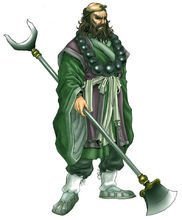
Five centuries later, the Tang Dynasty monk Xuanzang, known in the novel as Tang Sanzang or Monk Tang, was chosen to travel westward to obtain Buddhist scriptures.
Before the journey began, several of his future companions had already been destined to join him.
Sha Wujing, also known as Monk Sandy, had once been a celestial general. After breaking a precious celestial vessel, he was banished to the mortal world and became a supernatural being living near the Flowing Sands River.
Zhu Bajie, originally known as Zhu Wuneng, had once been a celestial marshal. After offending the heavenly authorities, he was banished to Earth and eventually became a pig-like monster.
The White Dragon Horse was actually a dragon prince from the Western Sea. After violating celestial law, he was punished and later transformed into the horse that carried Tang Sanzang during his pilgrimage.
When Guanyin passed Five-Elements Mountain, she encountered Wukong. She promised him freedom if he agreed to protect Tang Sanzang on his journey to the West.
---
Tang Sanzang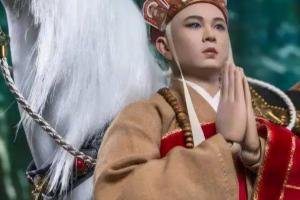
Tang Sanzang is based on the historical monk Xuanzang, who traveled to India during the Tang Dynasty.
In the novel's legendary version of his life, Sanzang was the reincarnation of Jinchanzi, a disciple of Tathagata Buddha. Because he violated Buddhist teachings, he was sent into the human world and reincarnated repeatedly.
After a series of extraordinary events, he eventually became a Buddhist monk and was raised at a temple. His journey ultimately led him to Chang'an, where he was selected to undertake the pilgrimage to the West.
After the Tang emperor experienced a supernatural encounter involving the Underworld, he decided to sponsor a major Buddhist ceremony. Guanyin appeared and explained that the most profound Buddhist scriptures were located far to the west.
Sanzang volunteered to undertake the dangerous journey.
The Tang emperor regarded Sanzang as a spiritual brother and entrusted him with the mission of bringing the Buddhist scriptures back to China. Thus began one of the greatest journeys in Chinese literary history.
---
Sun Wukong Becomes Tang Sanzang's Disciple
When Sanzang reached Five-Elements Mountain, he heard Wukong calling for help from beneath the mountain.
Following Wukong's instructions, Sanzang climbed the mountain and removed the sacred seal that had been placed there by Tathagata Buddha. The mountain was released, and Wukong finally regained his freedom.
Keeping his promise to Guanyin, Wukong became Sanzang's disciple and protector.
Along the journey, Sanzang was joined by Zhu Bajie, Sha Wujing, and the White Dragon Horse. Together, the five began their long pilgrimage to the West.
---
The Eighty-One Trials
The journey was filled with danger. Wukong and his companions encountered numerous demons, monsters, spirits, and supernatural beings who attempted to capture Tang Sanzang because they believed that consuming his flesh would grant immortality.
Among the many enemies were the Elder of Guanyin Temple, the Tiger Vanguard, the Yellow Wind Demon, Red Boy, the Bull Demon King, the Water Buffalo Demon, the Princess Iron Fan, the Yellowbrow Monster, the Hundred-Eyed Demon, and the Seven Spider Spirits.
Each encounter became a separate adventure, testing the courage, loyalty, wisdom, and cooperation of the pilgrims.
Although Wukong was exceptionally powerful, his greatest strength was not simply his supernatural ability. His loyalty to his master and his determination to protect the pilgrimage ultimately enabled the group to overcome one challenge after another.
---
Arrival in the Western Paradise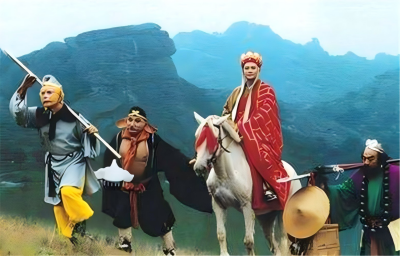
After 14 years of travel, Tang Sanzang, Sun Wukong, Zhu Bajie, Sha Wujing, and the White Dragon Horse finally reached Lingshan, the sacred realm associated with the Buddhas.
They met Tathagata Buddha and received the Buddhist scriptures they had traveled so far to obtain. The scriptures were then carried back to Chang'an.
Upon their return, the Tang emperor welcomed them with great honor and asked Sanzang to preach and recite the scriptures.
After completing their earthly mission, Sanzang and his companions returned to the Western Paradise to receive their spiritual rewards from Tathagata.
Tang Sanzang was honored as the Buddha of Sandalwood Merit and Virtue.
Sun Wukong became the Victorious Fighting Buddha.
Zhu Bajie was given a heavenly title associated with the purification and protection of the Buddhist teachings.
Sha Wujing became a Golden Arhat.
The White Dragon Horse was transformed into a Dragon-Horse Bodhisattva and received a place among the Buddhist guardians.
Thus, after overcoming countless dangers and completing the eighty-one trials, the pilgrims finally fulfilled their mission. Their journey became one of the most enduring legends in Chinese literature and popular culture.