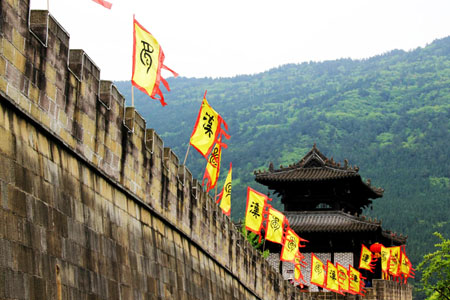
The Huanghuacheng section of the Great Wall, also known as the Water Great Wall, is located in Huairou District, approximately 60 kilometers (37 miles) north of central Beijing. It takes its name from the abundant yellow flowers (huanghua in Chinese) that bloom across the surrounding mountains in summer.
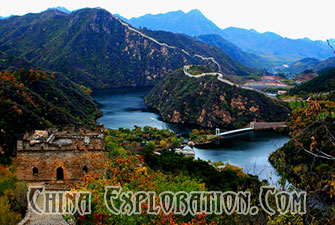
What makes Huanghuacheng particularly spectacular is the unusual combination of ancient walls, rugged mountains, and clear reservoir waters. Three sections of the Great Wall are partially submerged in the Xishuiyu Reservoir, creating one of the most distinctive landscapes along the Great Wall. The dramatic scenery and relatively peaceful atmosphere make Huanghuacheng an excellent choice for travelers looking for a less crowded and more adventurous Great Wall experience.
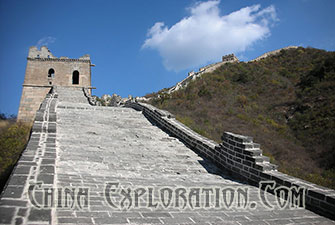
The wall was constructed during the Ming Dynasty, particularly during the reign of the Yongle Emperor, as part of the defensive system protecting Beijing and the nearby Ming imperial tombs. The section stretches for approximately 14 kilometers (8.7 miles), following mountain ridges and descending toward the reservoir before rising again along the surrounding peaks.
Local tradition tells a story about General Cai Kai, who was responsible for overseeing the construction. According to the legend, the emperor was initially dissatisfied with the project and Cai Kai was executed after being accused of poor workmanship. When the emperor later discovered how strong and well-built the wall actually was, he regretted the decision and ordered a tomb and memorial tablet to be built in Cai Kai's honor.
The Great Wall Underwater
The submerged sections of Huanghuacheng are not the result of ancient builders deliberately constructing a wall underwater. In 1974, the modern Xishuiyu Reservoir was constructed, causing the water level to rise and flooding several low-lying sections of the Ming Great Wall. Today, portions of the historic wall can be seen emerging from or disappearing beneath the reservoir, creating a remarkable combination of ancient architecture and modern engineering.
The surrounding landscape is equally fascinating. Centuries-old chestnut trees, some believed to be more than 500 years old, grow along the mountains near the Great Wall. These trees are associated with the communities that once lived and worked around the frontier fortifications. In summer, yellow flowers cover the hillsides and add vibrant color to the weathered stone and brick walls.
Unlike the heavily restored sections near Beijing, Huanghuacheng retains a more rugged and natural atmosphere. Hiking along its mountain ridges offers changing views of the wall, forested slopes, and reservoir below, making it one of the most scenic and distinctive sections of the Great Wall around Beijing.