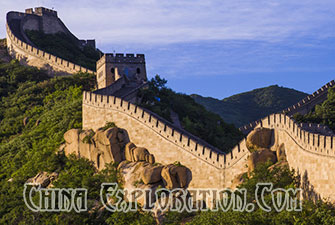
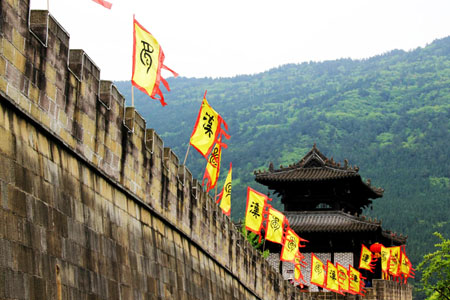
The Badaling Great Wall, one of the best-preserved and most representative sections of the Ming Great Wall, was constructed and extensively fortified during the Ming Dynasty, with major work completed around 1502. Once a strategically important military stronghold, it is now one of the most famous sections of the Great Wall and a must-see attraction near Beijing.
Badaling is located in Yanqing District, approximately 70 kilometers (43 miles) northwest of central Beijing. Winding across rugged mountain ridges at elevations of around 1,000 meters (3,281 feet), the wall creates a spectacular landscape as it rises and falls with the surrounding terrain.
Badaling has welcomed numerous international leaders and distinguished visitors, including former U.S. President Richard Nixon and former British Prime Minister Margaret Thatcher. In 1987, the Great Wall was inscribed on the UNESCO World Heritage List as part of the Great Wall of China, recognizing its outstanding historical and cultural significance.
As an important military stronghold, the Badaling section was built particularly high, wide, and solid. The preserved section extends for approximately 3.7 kilometers (2.3 miles) and is reinforced by numerous watchtowers and defensive structures. The wall reaches about 8.5 meters (28 feet) in height and is approximately 6.5 meters (21 feet) wide at its base, narrowing toward the top.
The exterior was constructed mainly with large stone blocks and bricks, with layers of earth and gravel forming the inner structure. The broad brick-paved top of the wall served as a roadway for soldiers and military supplies and was wide enough to allow several people to walk side by side. Parapets and crenellated battlements provided protection for soldiers while allowing them to observe and attack approaching enemies.
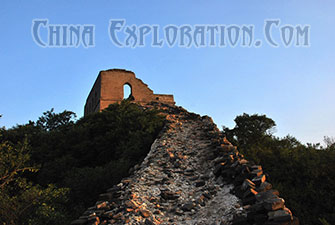
Watchtowers and defensive platforms were strategically positioned along the wall. These structures served multiple purposes, including observation, shelter, storage, and defense. Beacon towers were also used to transmit signals over long distances, allowing warnings of enemy movements to be rapidly communicated to nearby garrisons.
The Badaling Great Wall ceased to function as an active military defense system after the Qing Dynasty established control over China in the 17th century. Today, it is one of China's most visited historical landmarks and an important symbol of Chinese civilization.
Visitors can also explore attractions such as the Great Wall Museum of China, which introduces the history, construction, military role, and cultural significance of the Great Wall. Together with its dramatic mountain scenery and impressive architecture, Badaling offers an excellent introduction to the history and heritage of the Great Wall.