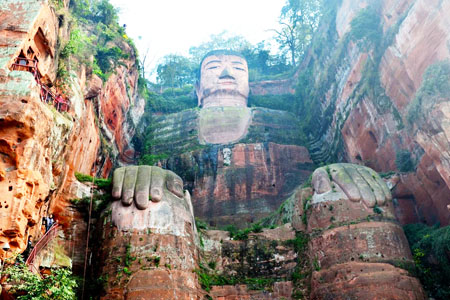
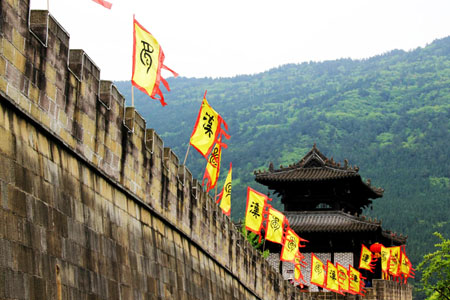
Pengzu, whose surname was Qian and given name Keng, is a legendary figure in ancient Chinese culture. According to traditional accounts, he was a great-grandson of Emperor Zhuanxu, one of the legendary Three Sovereigns and Five Emperors. He was also revered in Daoist tradition as a master of health preservation and longevity.
Ancient texts describe Pengzu as an exceptionally long-lived man. Legend holds that he lived for more than 800 years, from the reign of Emperor Yao through the Xia, Shang, and Zhou dynasties. He is also said to have served at the Shang court as a keeper of the imperial archives and later held a ministerial position.
Traditional stories credit Pengzu with developing a comprehensive system of health preservation that combined diet, physical exercise, breathing practices, regulation of qi, and other techniques. He was said to have studied under the Daoist master Yin Shouzi and later lived in seclusion on Wuyi Mountain before returning to Pengzu Mountain in his later years.
According to these traditions, Pengzu adapted his practices to changes in the natural and social environment and developed methods covering clothing, food, housing, transportation, exercise, and medicinal care. These practices later became an important part of the cultural traditions associated with longevity and health preservation in China.
Pengzu Culture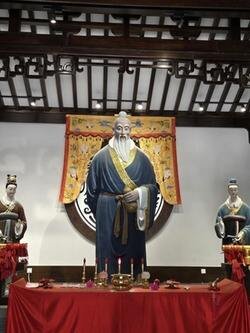
Pengzu culture encompasses a range of traditional beliefs and practices associated with longevity, health preservation, cuisine, physical exercise, and Daoist cultivation. Fragments of practices attributed to Pengzu can be found in later Daoist and medical literature.
Traditionally, Pengzu's methods are broadly divided into cultivation, guiding exercises, breathing techniques, dietary practices, and what ancient texts describe as “bedroom techniques.” Together, they reflect an ancient Chinese understanding of maintaining harmony between the body, mind, diet, and natural environment.
Pengzu and Chinese Culinary Culture
Pengzu is traditionally regarded as an important ancestor of Chinese culinary culture. According to legend, he prepared a delicious pheasant soup, or wild chicken soup, for Emperor Yao. The story says that Emperor Yao was so impressed by the dish that Pengzu became renowned for his culinary skills.
Pheasant soup is sometimes described in traditional accounts as one of the earliest recorded dishes in Chinese literature. Because of this legend, Pengzu has long been honored in Chinese culinary culture as an ancestor of chefs and a symbol of the origins of Chinese cooking.
Pengzu and Martial Arts Culture
Pengzu is also associated with the early development of traditional Chinese physical exercises and martial arts. According to legend, more than 4,000 years ago he developed a system of guiding exercises designed to regulate qi and promote physical flexibility and health.
These practices are traditionally known as Daoyin, or guiding exercises, and are considered among the earliest forms of Chinese health-oriented physical cultivation. Later generations developed a variety of exercises and martial arts traditions, including the Five Animal Exercises, Yijinjing, Baduanjin, and Taijiquan. Although direct historical links between these later systems and Pengzu cannot be established with certainty, Pengzu remains an important symbolic figure in the traditional history of Chinese health exercises.
Pengzu's Daoyin and Qi-Guiding Exercises
Pengzu Daoyin, also known as Pengzu Qi-Guiding Exercises, is traditionally regarded as an early form of Daoyin practice and an important part of the cultural heritage associated with Pengzu Mountain.
The exercises emphasize coordinated movement, breathing, relaxation, and the traditional concept of regulating qi. At Pengzu Mountain Scenic Area, visitors can experience a modern presentation of these traditional exercises at designated practice areas.
The Pengzu Daoyin system practiced today consists of nine relatively simple movements, traditionally organized into three sections: longevity and health-preservation exercises, therapeutic exercises, and exercises associated with the legend of Pengzu's attainment of immortality.
Pengzu Dietary Therapy
Dietary therapy is another important element of Pengzu culture. Traditional Pengzu dietary practices emphasize maintaining harmony within the body through appropriate food and medicinal ingredients.
The main principles include balancing the five flavors, the traditional belief that food and medicine share a common origin, and eating in moderation. These ideas reflect broader traditions of Chinese dietary culture, in which food is viewed not only as nourishment but also as an important means of maintaining physical balance and well-being.
Pengzu and Traditional Sexual Health Practices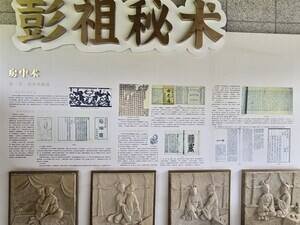
Pengzu is also associated in traditional literature with ancient Chinese ideas concerning sexual health and longevity. These practices, sometimes referred to as Pengzu's sexual arts or techniques for harmonizing qi between partners, were traditionally linked with the preservation of vital essence and the cultivation of health.
Ancient Chinese texts on this subject often combined sexual practices with broader concepts of qi, breathing, health preservation, and longevity. Some traditions attributed to Pengzu emphasize moderation, harmony between partners, and the balance of yin and yang.
Later works, including the Su Nü Jing (Classic of the Plain Girl), contain ideas associated with this broader tradition. Some passages emphasize mutual desire, emotional harmony, and consideration of both partners, reflecting an aspect of ancient Chinese thought in which sexual relations were viewed as part of a larger system of physical and spiritual cultivation.
Today, these practices are primarily studied as part of the history of Chinese medicine, Daoist culture, and traditional concepts of sexuality and longevity. They should be understood within their historical and cultural context rather than as scientifically established methods of extending lifespan.
Pengzu and the Culture of Longevity
Whether viewed as a historical figure, a legendary immortal, or a cultural symbol, Pengzu occupies a unique position in Chinese tradition. Stories about his extraordinary longevity have inspired generations of Chinese people to explore the relationship between diet, exercise, breathing, meditation, and harmony with nature.
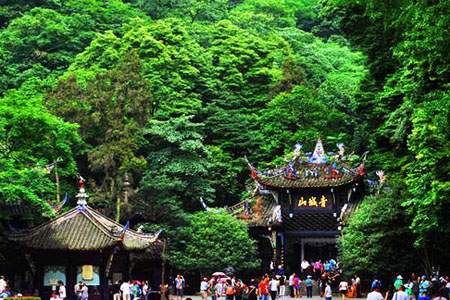
Pengzu Mountain preserves many of these traditions and provides visitors with an opportunity to explore the cultural heritage surrounding one of China's most enduring legends of longevity.