The Mid-Autumn Festival, also known as the Moon Festival or Mooncake Festival, is one of the most important traditional festivals in China. It falls on the 15th day of the eighth month of the Chinese lunar calendar, when the moon is traditionally believed to be at its fullest and brightest.
Since ancient times, the festival has been associated with moon worship, moon appreciation, eating mooncakes, carrying lanterns, admiring osmanthus flowers, and drinking osmanthus wine. Above all, it is a festival of family reunion. People gather with their families, enjoy a meal together, eat mooncakes, and admire the full moon. For those who cannot return home, the bright moon often evokes memories of their hometown and loved ones.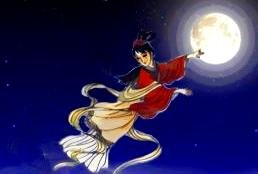
The Legend of Chang'e Flying to the Moon
One of the most famous legends associated with the Mid-Autumn Festival is the story of Chang'e flying to the moon, a well-known tale in Chinese mythology.
According to legend, Chang'e was originally a goddess in heaven. She came down to Earth with her husband, Hou Yi, a heroic archer. At that time, ten suns appeared in the sky simultaneously, scorching the earth and causing great suffering. Hou Yi shot down nine of them and left only one sun to provide light and warmth.
Because of this act, Hou Yi was punished and could no longer return to heaven. He and Chang'e therefore lived on Earth as ordinary people. Over time, Chang'e became unhappy with their mortal life and longed to return to heaven.
Hou Yi eventually obtained an elixir of immortality from the Queen Mother of the West. He intended to share it with Chang'e so that they could remain together forever. However, while Hou Yi was away, Chang'e swallowed the elixir. She became immortal and flew toward the moon.
Rather than returning to heaven, Chang'e found herself alone in the Moon Palace. According to the legend, her only companions were a jade rabbit and an osmanthus tree. She deeply regretted leaving her husband and longed to see him again.
Moved by their love and separation, the Queen Mother of the West allowed Chang'e to return to Earth once a year, on the night of the 15th day of the eighth lunar month, when the moon was full.
According to another version of the legend, Chang'e appeared to Hou Yi in a dream and told him to make round cakes resembling the full moon and place them in the northwest corner of their home while calling her name. That night, Chang'e descended from the moon and reunited with her husband. The story is traditionally associated with the origin of the custom of making and eating moon-shaped cakes, or mooncakes, during the festival.
The Harvest Festival
The Mid-Autumn Festival is also closely connected with agricultural traditions. The eighth lunar month generally falls during the harvest season, when many crops have ripened. In ancient times, people celebrated the harvest and expressed gratitude for favorable weather and agricultural abundance.
The full moon also became a natural symbol of completeness and reunion. Its round shape is associated with wholeness, while the reunion of family members reflects the same idea of completeness.
Mooncakes and Family Reunion
Mooncakes are the most iconic food associated with the festival. Traditionally round in shape, they symbolize the full moon and family unity. Modern mooncakes come in many varieties, with fillings ranging from lotus seed paste and salted egg yolks to red bean paste, nuts, fruits, and other regional specialties.
During the festival, families often exchange mooncakes as gifts and gather for a festive dinner. In Chinese culture, sharing a round mooncake beneath a full moon has become a powerful symbol of family affection and togetherness.
The Spirit of the Mid-Autumn Festival
Although the customs surrounding the Mid-Autumn Festival have changed over thousands of years, its central themes have remained remarkably consistent. The festival expresses people's love for their families, longing for their hometowns, appreciation of the harvest, and hopes for happiness and prosperity.
Today, the Mid-Autumn Festival remains one of the most cherished traditional celebrations in China. For Chinese people around the world, the full moon on the 15th night of the eighth lunar month continues to serve as a symbol of reunion, love, and the enduring bonds between family members.