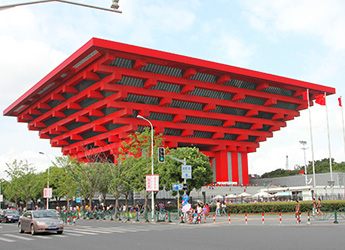
Located in the former China Pavilion of the 2010 Shanghai World Expo, the China Art Palace (China Art Museum) is one of the largest and most influential art museums in China. It is dedicated to collecting, preserving, researching, and exhibiting modern and contemporary Chinese art.
Covering an area of approximately 64,000 square meters, the museum features 27 exhibition halls showcasing the evolution of Chinese art from the early 20th century to the present day. Through its extensive collections and international exhibitions, China Art Palace provides visitors with a comprehensive understanding of Chinese artistic development and cultural heritage.
The museum’s collection mainly includes outstanding works from government-owned art institutions and museums, reflecting the origins, transformation, and achievements of modern Chinese art.
A Landmark of Chinese Modern Art
The China Art Palace was designed as a cultural landmark that combines traditional Chinese artistic spirit with modern architectural concepts. Its grand exhibition spaces allow visitors to explore different periods and styles of Chinese art, including traditional painting, oil painting, sculpture, multimedia art, and contemporary creations.
The museum’s permanent and temporary exhibitions present both Chinese masterpieces and international artworks, creating a platform for cultural exchange between China and the world.
Highlights of China Art Palace
Riverside Scene at Qingming Festival Multimedia Exhibition
One of the most popular attractions in China Art Palace is the digital recreation of “Along the River During the Qingming Festival” (Qingming Shanghe Tu).
This multimedia exhibition was originally the highlight of the China Pavilion during the 2010 Shanghai World Expo and remains one of the museum’s most impressive displays. Through advanced digital technology, the famous ancient scroll painting is brought to life, allowing visitors to experience the daily life, streets, and landscapes of the Northern Song Dynasty in an immersive way.
The exhibition is located in Hall 5 and requires a separate admission ticket.
Shanghai Brightness Exhibition
The “Shanghai Brightness” Exhibition presents around 600 artworks tracing the origins and development of modern Chinese art. It highlights Shanghai’s important role as a center of artistic 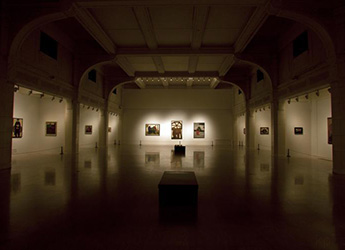 innovation and cultural exchange.
Masters’ Hall
The Masters’ Hall displays hundreds of works by some of China’s most influential modern artists, including:
* Lin Fengmian
* Guan Liang
* Wu Guanzhong
Their works demonstrate the combination of traditional Chinese aesthetics and Western artistic techniques.
International Art Exhibitions
China Art Palace also hosts international exhibitions featuring masterpieces from around the world. Previous exhibitions have included works from famous European museums, such as exhibitions focusing on French artists and artistic movements.
These international programs make the museum an important bridge between Chinese and global art.
Exhibition Layout
The museum is arranged vertically, with exhibition halls distributed across different floors. Visitors usually begin from the upper floors and gradually move downward:
* Exhibition Halls 1–6: Modern Chinese art exhibitions and major collections
* Exhibition Halls 7–10: Special exhibitions and themed displays
* Exhibition Halls 11–13: International art exhibitions
* Exhibition Halls 14–24: Contemporary Chinese artists and modern artworks
* Exhibition Halls 25–27: Exhibitions introducing the development of modern and contemporary Chinese art
This layout allows visitors to follow the historical development of Chinese art from past to present.
Visiting China Art Palace
For travelers interested in Chinese culture, history, and art, China Art Palace is a must-visit attraction in Shanghai. It offers a unique opportunity to explore the creativity of Chinese artists and understand the cultural changes that have shaped modern China.
Located in the Pudong area near the Huangpu River, the museum is also close to other important cultural attractions, making it an excellent stop for visitors exploring Shanghai’s modern landmarks.