 Zhongnan Mountain (终南山), also known as Taiyi Mountain (太乙山) or Zhounan Mountain (周南山), is one of the most famous sections of the Qinling Mountains in Shaanxi Province, China. Stretching from Meixian County near Baoji City in the west to Lantian County near Xi’an in the east, Zhongnan Mountain has been regarded for centuries as a sacred landscape combining natural beauty, Taoist philosophy, and Chinese cultural heritage.
Located south of Xi’an, the mountain is famous for its deep valleys, spectacular cliffs, peaceful forests, and ancient temples. It has long been honored as “The No.1 Blessed Land Under Heaven” and is considered one of the most important birthplaces of Taoism in China.
The main peak of Zhongnan Mountain, located in Zhouzhi County, reaches an elevation of approximately 2,604 meters.
The Natural Beauty of Zhongnan Mountain
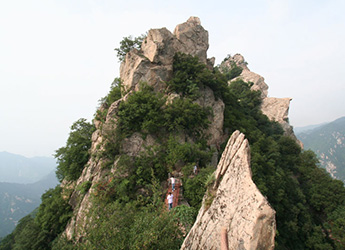
Zhongnan Mountain is known for its magnificent mountain scenery and tranquil environment.
The landscape features:
* Deep mountain valleys
* Steep cliffs
* Ancient forests
* Clear streams
* Hidden paths and caves
Unlike many famous mountains in China that attract visitors mainly for their dramatic peaks, Zhongnan Mountain is admired for its peaceful atmosphere and spiritual character.
For thousands of years, scholars, poets, monks, and Taoist practitioners have traveled here seeking inspiration and enlightenment.
Zhongnan Mountain and Chinese Culture
Zhongnan Mountain has played an important role in Chinese history and literature.
A famous Chinese saying compares longevity to the evergreen pine trees of Zhongnan Mountain:
“Longevity seems to be the immortal pine tree of South Mountain.”
In this expression, the “South Mountain” refers to Zhongnan Mountain, symbolizing eternal life, wisdom, and harmony with nature.
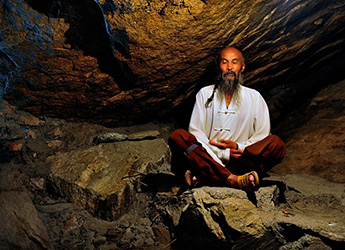
The mountain has also been a traditional retreat for hermits and scholars. Many ancient Chinese intellectuals chose Zhongnan Mountain as a place for meditation, self-cultivation, and philosophical study.
 The Birthplace of Taoism
Zhongnan Mountain is considered one of the most important sacred places of Taoism (Daoism), one of China’s major philosophical and religious traditions.
According to Taoist legend, the connection between Zhongnan Mountain and Taoism began with Laozi (老子), the founder of Taoism and the author traditionally associated with the Dao De Jing (Tao Te Ching).
During the Warring States period, Yin Xi (尹喜), also known as Wenshi Zhenren in Taoist tradition, served as the guardian of Hangu Pass. One day, he observed a mysterious purple cloud appearing from the east and predicted that a great sage would soon pass through the region.
Shortly afterward, Laozi appeared riding a blue ox. Yin Xi welcomed Laozi and requested his teachings. Laozi then wrote the Dao De Jing, one of the most influential philosophical works in Chinese history.
According to tradition, the place where Laozi taught the Dao De Jing is located in today’s Sutra-Narration Center area of Zhongnan Mountain.
Taoist Temples and Historical Heritage
Because of its connection with Laozi, Zhongnan Mountain became a major center of Taoist activities.
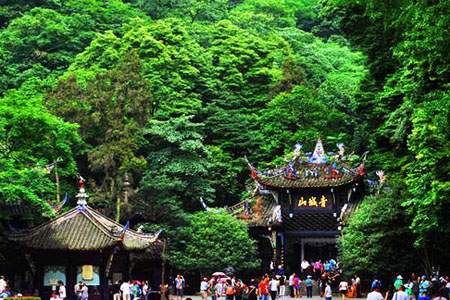
Throughout different dynasties, numerous Taoist temples and architectural complexes were built or restored here.
During the Qin Dynasty, Emperor Qin Shi Huang is said to have built a memorial structure honoring Laozi near the area where Laozi taught.
During the Han Dynasty, Emperor Wu of Han also established a memorial site dedicated to Laozi.
The Tang Dynasty marked the golden age of Taoism in Zhongnan Mountain. Since the Tang imperial family shared the surname Li, the same surname traditionally associated with Laozi, emperors greatly respected and supported Taoism.
Large-scale Taoist complexes were constructed, including important halls and pavilions such as:
* Wenshi Hall
* Sanqing Hall
* Jingyang Tower
* Yanqing Tower
* Xuanmen Hall
These buildings formed the center of Taoist architecture in Zhongnan Mountain.
Important Taoist Buildings
Among the historical structures of Zhongnan Mountain, the Sutra Buildings are among the most important.
The main buildings include:
* Memorial Hall of Laozi
* Doulao Hall
* Jiuku Hall
* Linggong Hall
Additional halls include:
* Taibai Hall
* Four Saints Hall
Traditional architectural elements such as the Bell Tower and Drum Tower stand on both sides of the entrance, reflecting the typical layout of ancient Chinese religious complexes.
Zhongnan Mountain and Taoist Hermit Culture
For centuries, Zhongnan Mountain has been famous as a destination for Taoist hermits and spiritual seekers.
The mountain’s remote valleys and peaceful forests created an ideal environment for practicing meditation and studying philosophy.
Even today, Zhongnan Mountain remains closely associated with the traditional Chinese idea of living in harmony with nature.
Visitors can explore:
* Ancient Taoist temples
* Historic cultural relics
* Mountain trails
* Traditional villages
* Beautiful natural scenery
Why Visit Zhongnan Mountain?
Zhongnan Mountain offers a unique combination of natural landscapes, ancient history, and Taoist culture.
For travelers visiting Xi’an and Shaanxi Province, it provides an opportunity to discover a quieter side of Chinese civilization beyond famous historical attractions.
Whether you are interested in Taoist philosophy, Chinese mythology, mountain scenery, or cultural heritage, Zhongnan Mountain offers a fascinating journey into the spiritual heart of China.