Xianyang (咸阳, Xiányáng) is an ancient city in Shaanxi Province and one of the most important historical destinations in China. Located on the northern bank of the Wei River, only a few kilometers west of Xi’an, Xianyang was the capital of the powerful Qin Dynasty (221–206 BC) and played a crucial role in the unification of China.
As the birthplace of the first centralized empire in Chinese history, Xianyang preserves a remarkable legacy of the Qin civilization. With its archaeological sites, ancient imperial tombs, and close connection with Emperor Qin Shi Huang, the city offers travelers a deeper understanding of China’s early imperial history.
Today, Xianyang is part of the Xi’an metropolitan area and has developed into an important cultural, economic, and industrial center in northwest China.
The Ancient Capital of the Qin Empire
The history of Xianyang dates back more than 2,000 years. During the Western Zhou Dynasty, the area was already an important settlement. In 350 BC, during the Warring States Period, Duke Xiao of Qin moved the capital of the Qin state to Xianyang after reforms introduced by the famous statesman Shang Yang.
The name “Xianyang” reflects the city’s unique geographical location. It was built south of the Jiuzong Mountains and north of the Wei River. According to traditional Chinese philosophy, both locations represent the “yang” (sunny) side, giving rise to the meaning of “Xianyang,” or “complete yang.”
For more than 140 years, Xianyang served as the political and cultural center of the Qin state. In 221 BC, Qin King Ying Zheng, later known as Qin Shi Huang, defeated the other six major states and established the first unified empire in Chinese history. Xianyang then became the first imperial capital of China.
Xianyang and Emperor Qin Shi Huang
Under Qin Shi Huang, Xianyang was transformed into a magnificent imperial capital. The emperor expanded the city beyond its original walls and built numerous palaces along the Wei River, many of which were designed to represent the order of the heavens on earth.
Historical records describe a vast network of more than 300 palaces connected by elevated roads. Among the most famous structures was the enormous Epang Palace (阿房宫), which symbolized the power and ambition of the Qin Empire.
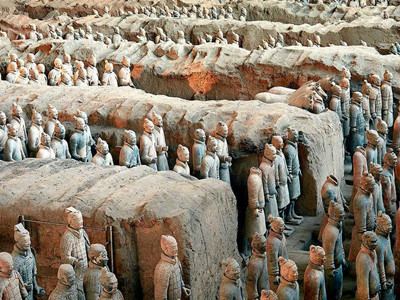
At the same time, Qin Shi Huang began constructing his famous mausoleum near Xianyang, including the world-renowned Terracotta Army, one of the greatest archaeological discoveries in human history.
The construction of massive palaces, the imperial tomb, and other large-scale projects required enormous resources and labor. These pressures contributed to social unrest, which eventually led to the collapse of the Qin Dynasty.
The Fall of Qin and the Destruction of Xianyang
After Qin Shi Huang’s death in 210 BC, rebellions broke out throughout the empire. In 207 BC, the last Qin ruler, King Ziying, surrendered to rebel leader Liu Bang.
Although Liu Bang initially captured Xianyang, he later lost control of the city to another powerful rebel leader, Xiang Yu. In 206 BC, Xiang Yu destroyed and burned Xianyang, ending the glory of the Qin capital.
The destruction of the city also resulted in the loss of many valuable historical documents, including rare texts stored in the imperial library.
After defeating Xiang Yu, Liu Bang founded the Han Dynasty and established a new capital called Chang’an near the former Qin capital. Chang’an later became one of the greatest cities of ancient China and the starting point of the Silk Road.
Archaeological Discoveries in Xianyang
Since the 1950s, archaeologists have conducted extensive excavations in Xianyang, uncovering numerous remains from the Qin Dynasty.
Important discoveries include:
* Ancient palace foundations
* Royal workshops
* Qin Dynasty tombs
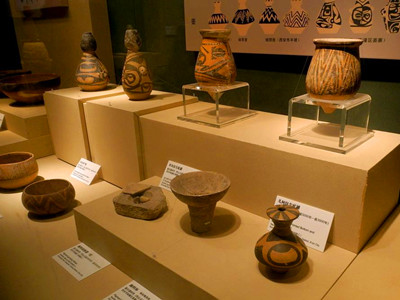
* Cultural relics and artifacts
These archaeological findings provide valuable information about the political system, architecture, craftsmanship, and daily life of the Qin Empire.
Nearby areas also contain important Han Dynasty historical sites, including imperial mausoleums and ancient settlements.
Why Visit Xianyang?
Xianyang is an essential destination for travelers interested in Chinese history and ancient civilizations. As the capital of the Qin Dynasty and the city that witnessed the rise of China’s first emperor, it offers a unique journey into the origins of imperial China.
Located near Xi’an, Xianyang can be easily combined with visits to the Terracotta Army, Qin Shi Huang’s Mausoleum, and other famous Shaanxi historical attractions.
For visitors exploring northwest China, Xianyang provides a fascinating opportunity to discover the foundations of Chinese civilization and experience the legacy of one of China’s most influential dynasties.