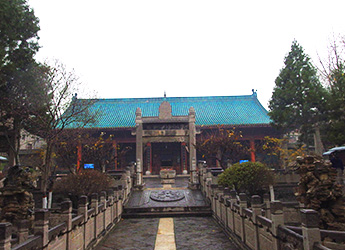
Xi’an Great Mosque (西安大清真寺) is one of the oldest and most famous mosques in China. Located in the historic Muslim Quarter of Xi’an, Shaanxi Province, the mosque is a remarkable example of the cultural exchange between Chinese civilization and Islamic traditions.
Unlike many traditional Islamic mosques around the world, Xi’an Great Mosque combines Islamic religious functions with traditional Chinese architectural styles, creating a unique cultural landmark in China.
With a history of more than 1,200 years, the mosque remains an active place of worship and an important historical attraction for visitors exploring the ancient city of Xi’an.
History of Xi’an Great Mosque
The earliest mosque on this site was built during the Tang Dynasty (618–907 AD), when Xi’an (then known as Chang’an) was the capital of China and the eastern starting point of the ancient Silk Road.
During the Tang Dynasty, many foreign merchants, diplomats, and travelers arrived in Chang’an through the Silk Road. Among them were Muslim traders from Central Asia and Persia, who contributed to the development of Islam in China.
The current architectural complex was mainly developed during the Ming Dynasty (1368–1644), with further renovations carried out during the Qing Dynasty.
According to local tradition, the mosque is associated with Zheng He (Cheng Ho, 1371–1433), the famous Ming Dynasty navigator and admiral who came from a Muslim family.
Traditional Chinese Architecture with Islamic Heritage
Xi’an Great Mosque covers an area approximately 48 meters wide and 248 meters long. Unlike Middle Eastern mosques, which usually feature domes and tall minarets, the mosque is designed in the style of a traditional Chinese temple.
The entire complex follows a long east-west axis and consists of:
* Five courtyards
* Decorative gates
* Pavilions
* Gardens
* Prayer halls
Although the buildings appear Chinese in style, their Islamic identity can be recognized through:
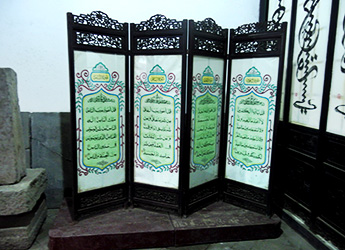
* Arabic and Chinese calligraphy
* Islamic decorative patterns
* The orientation toward Mecca
* Religious facilities used for Muslim worship
This unique combination reflects the long history of cultural integration along the Silk Road.
 The Five Courtyards of Xi’an Great Mosque
The mosque complex is arranged through five peaceful courtyards, each featuring important architectural structures.
First Courtyard
The first courtyard welcomes visitors with traditional Chinese gates, gardens, and historical buildings.
The architectural style resembles a classical Chinese temple, creating a calm and elegant atmosphere.
Second and Third Courtyards
The third courtyard contains one of the mosque’s most distinctive structures:
Xing Xin Ting (Pavilion for Introspection), also known as Sheng Xin Lou (Tower of the Visiting Heart).
Standing more than 10 meters high, this octagonal brick tower has three stories and wooden balconies. It originally served both as a moon-watching pavilion and as a structure similar to a traditional Islamic minaret.
The tower features:
* Blue glazed roof tiles
* Chinese-style wooden decorations
* Dragon-shaped ornaments
* Interior paintings of lotus flowers
Fourth Courtyard: Phoenix Pavilion
The fourth courtyard is home to the Feng Hua Ting (Phoenix Pavilion), built during the Qing Dynasty.
The pavilion is named after its phoenix-like shape, with extended roof wings resembling a flying bird. Its exterior follows Chinese architectural traditions, while the interior contains Islamic-style wooden structures.
The courtyard also includes lecture halls used for religious education.
Fifth Courtyard
The final courtyard is located behind the prayer hall and contains two small artificial hills.
These hills were traditionally used for ceremonial moon observation, an important practice in Islamic religious life.
The Prayer Hall
The prayer hall is the most important building in the mosque complex and remains an active place of worship.
Covering approximately 1,270 square meters, the hall is divided into three sections:
* Entrance porch
* Main prayer area
* Qibla hall facing Mecca
The interior is decorated with:
* Beautiful wooden carvings
* Quranic inscriptions
* Traditional Chinese artistic elements
Non-Muslim visitors are usually allowed to admire the architecture and exterior areas but cannot enter the main prayer space during religious activities.
Xi’an Great Mosque and the Silk Road
Xi’an Great Mosque represents the historical connection between China and the Islamic world.
During the Tang Dynasty, Chang’an was one of the largest and most international cities in the world. Muslim merchants and communities played an important role in trade and cultural exchange along the Silk Road.
Today, the mosque continues to symbolize the peaceful coexistence of different cultures and religions in Chinese history.
Visiting Xi’an Great Mosque
Located inside the famous Muslim Quarter, the mosque is surrounded by traditional markets, local restaurants, and historic streets.
Visitors can combine a trip to the mosque with:
* Muslim Quarter food streets
* Drum Tower
* Bell Tower
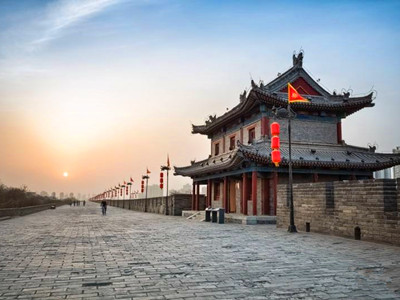
* Xi’an City Wall
The combination of ancient architecture, religious history, and local culture makes Xi’an Great Mosque one of the most fascinating cultural attractions in Xi’an.
Why Visit Xi’an Great Mosque?
Xi’an Great Mosque offers travelers a rare opportunity to experience the meeting point of Chinese and Islamic civilizations.
With its peaceful courtyards, elegant Chinese architecture, and deep Silk Road history, the mosque provides a unique perspective on Xi’an’s multicultural heritage.
For visitors interested in history, architecture, religion, and cultural exchange, Xi’an Great Mosque is an unforgettable destination in the ancient capital of China.