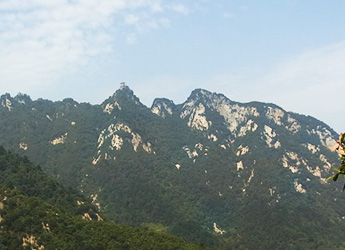
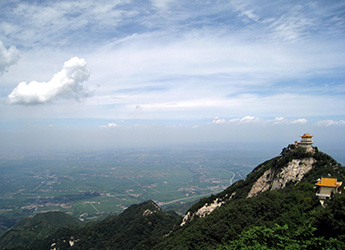
Located about 30 kilometers south of Xi’an and 8 kilometers east of Ziwu Town in Chang’an District, South Wutai Mountain (Nan Wutai Shan) is one of the most famous scenic areas and Buddhist cultural sites in the Zhongnan Mountains. Rising to an altitude of 1,688 meters, it is renowned for its spectacular mountain landscapes, rich biodiversity, and historic Buddhist temples.
The name “Wutai” means “five terraces,” referring to the mountain’s five main peaks: Datai Peak, Wenshu Peak, Qingliang Peak, Lingying Peak, and Sheshen Peak. It is called South Wutai Mountain to distinguish it from the better-known Wutai Mountain in Tongchuan, located north of Xi’an.
As part of the Zhongnan Mountain National Forest Park, South Wutai Mountain has become a popular summer retreat, offering visitors a refreshing escape with cool mountain air, lush forests, clear streams, and peaceful religious sites.
Natural Scenery and Biodiversity
South Wutai Mountain features beautiful scenery throughout the year. Looking upward from the foot of the mountain, the five peaks resemble a traditional Chinese writing brush holder standing together, creating a magnificent natural landscape.
The hiking route extends approximately 12.5 kilometers, beginning from Bamboo Valley near the entrance of Datai Peak. Along the way, visitors can enjoy numerous streams, valleys, forests, and unique rock formations. The mountain is often described as a natural botanical garden, home to more than 1,000 species of plants, including rare and valuable species such as:
* Cyathea species, known as a living fossil plant
* Ophioglossum thermale
* Buckeye trees
* Magnolia biondii Pamp.
The area is also rich in traditional Chinese medicinal herbs, making it important not only for tourism but also for ecological research.
Famous Natural Attractions
Flowing Stream Rock
Flowing Stream Rock is located about 1 kilometer from the mountain entrance. The area was once home to Flowing Stream Temple and is famous for its beautiful waterfall.
The waterfall drops approximately 12 meters from the cliff, resembling a long silver ribbon flowing through the mountains. Especially in summer, the cool mist from the waterfall provides visitors with a refreshing experience and a pleasant break during hiking.
 Lover Trees
Near the bamboo forest stand two ancient oak trees that appear to embrace each other like a loving couple. Known as the Lover Trees, they symbolize faithful love and harmony, attracting visitors who wish to appreciate this romantic natural landmark.
Rhinoceros Rock
Located near Solitary Pine Tower in the middle section of the mountain, Rhinoceros Rock is a fascinating natural formation shaped like a sleeping rhinoceros beside the cliff.
The appearance of the rock changes depending on the viewing angle, making it one of the most interesting geological features of South Wutai Mountain.
Buddhist Temples of South Wutai Mountain
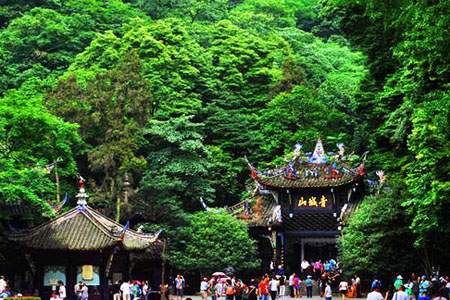
Influenced by centuries of Buddhist culture, South Wutai Mountain contains many temples built among the forests and valleys. These historic temples combine religious significance with the beauty of the surrounding landscape.
Sacred Longevity Temple (Shengshou Temple)
Shengshou Temple is the largest and oldest temple on South Wutai Mountain. Located in Taisi Valley, it was originally built between 601 and 604 during the Sui Dynasty (581–618 AD).
Over the past 1,400 years, the temple has been destroyed and rebuilt several times. Today, it covers an area of about 9,000 square meters and remains one of the most important Buddhist sites in the region.
Within the temple stands the Sacred Longevity Pagoda, a seven-story square Buddhist tower measuring 23 meters in height. It is considered the earliest surviving Buddhist pagoda in Xi’an and is believed by some scholars to have influenced the architectural style of the famous Big Wild Goose Pagoda.
The temple also features ancient stone inscriptions, historical monuments, and tall larch trees donated by former Japanese Prime Minister Tanaka Kakuei, adding to its cultural significance.
Maitreya Temple
Located at the foot of South Wutai Mountain, Maitreya Temple is believed to have been built during the Sui Dynasty. Surrounded by green mountains, the temple offers a peaceful and secluded atmosphere.
Visitors entering the temple can enjoy the beauty of Chinese parasol trees, weeping willows, and colorful flowers. The temple complex contains five main halls dedicated to Buddhist figures, with walls decorated with carved Arhat statues and beautiful paintings.
White Clothes Temple
Dedicated to Guanyin (Avalokitesvara), the Buddhist deity associated with compassion and mercy, White Clothes Temple is named after the traditional image of Guanyin wearing white robes.
The temple is believed to date back to the Sui Dynasty. Hidden among forests and bamboo groves, it can be reached by passing Flowing Stream Rock and walking through the bamboo forest from Guojiang Tower. The peaceful surroundings create a sense of tranquility and harmony with nature.
Travel Tips
* Location: Chang’an District, Xi’an, Shaanxi Province
* Distance from Xi’an City Center: About 30 km
* Altitude: 1,688 meters
* Best Time to Visit: Spring, summer, and autumn are ideal for hiking and enjoying natural scenery.
* Transportation: The ticket office is about 10 km from the mountain entrance. Visitors can take a shuttle bus for about CNY 15. Hiking from the ticket office to the entrance usually takes around 2–3 hours.
* Accommodation: Visitors can stay and dine at Shengbaoquan Villa and Solitary Pine Tower inside the scenic area.
South Wutai Mountain Temple Fair
Date: Usually held from June 1st to June 19th according to the Chinese lunar calendar
Activities: Buddhist ceremonies, traditional religious activities, temple visits, and prayers for family happiness and health. Visitors from across China and overseas come to participate in this important cultural event.