Located in Qian County, Shaanxi Province, about 85 kilometers northwest of Xi’an, the Qianling Mausoleum is one of the most important imperial tombs of the Tang Dynasty (618–907 AD). Known as the “Mausoleum of the Heavenly Hexagram,” it is the final resting place of Emperor Gaozong of Tang and Empress Wu Zetian, the only officially recognized female emperor in Chinese history.
During the 7th century, while much of Europe was experiencing the aftermath of the Roman Empire’s decline, China entered a remarkable period of prosperity under the Tang Dynasty. Among the 20 Tang emperors, 18 were buried in mausoleums scattered across the Guanzhong Plain, an area often called China’s “Valley of the Kings.” Qianling Mausoleum is considered one of the finest examples of Tang imperial burial architecture.
Location and Layout of Qianling Mausoleum
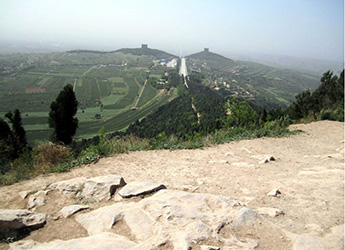
The Qianling Mausoleum is situated on Liangshan Mountain, a limestone mountain surrounded by the natural landscapes of Leopard Valley to the east and Sand Canyon to the west.
The mountain originally had three peaks:
* The northern peak, the highest, contains the main tomb of Qianling Mausoleum
* Two southern peaks face each other and are lower in elevation
Because the southern peaks resemble the shape of female breasts, they are traditionally known as Naitoushan (Nipple Hills).
Like other Chinese imperial mausoleums, Qianling was designed as a large underground and above-ground complex. The surface area once included:
* Grand ceremonial gates
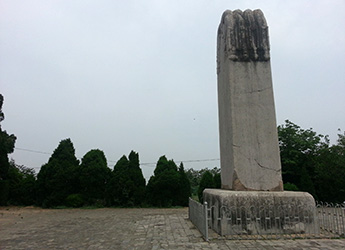
* A long spirit way lined with stone statues
* Memorial halls
* Chapels and shrines
* Lodges and administrative buildings
* Imperial living quarters symbolically used by the deceased rulers
The design reflected the ancient Chinese belief that emperors continued their royal lives in the afterlife.
 History of Qianling Mausoleum
Construction of Qianling Mausoleum began after Emperor Gaozong’s death and was completed in 684 AD. The project is believed to have taken approximately 40–50 years.
The mausoleum complex contains the tombs of members of the royal Li family, including:
* Emperor Gaozong of Tang (628–683 AD)
* Empress Wu Zetian (624–705 AD)
Empress Wu Zetian was one of the most extraordinary figures in Chinese history. After Emperor Gaozong’s death, she gained political power, established the short-lived Zhou Dynasty, and became the only woman in Chinese history to rule China as emperor.
In addition to the main imperial tombs, the Qianling complex contains 17 accompanying tombs belonging to members of the royal family, high-ranking officials, and military leaders.
Five of these satellite tombs have been excavated, including the tombs of:
* Princess Yongtai
* Prince Yide
* Princess Changle
* A Tang Dynasty chancellor
* A general of the Left Guard
These excavations revealed magnificent murals, pottery figures, gold and jade objects, and other valuable Tang Dynasty relics.
Tang Dynasty Stone Statues and Murals
Qianling Mausoleum is especially famous for its impressive above-ground stone sculptures and underground murals.
Along the spirit way stand numerous stone statues, including:
* Stone lions
* Winged horses
* Officials
* Foreign envoys
* Guardian figures
These sculptures reflect the international character and cultural confidence of the Tang Dynasty, when Chang’an (modern Xi’an) was the center of a vast and cosmopolitan empire.
Inside the excavated satellite tombs, visitors can see beautifully preserved murals depicting:
* Palace attendants
* Court ceremonies
* Royal life
* Hunting scenes
* Foreign diplomatic exchanges
These artworks provide valuable information about Tang society, clothing, architecture, and customs.
The Mystery of Excavating Qianling Mausoleum
One of the most debated issues surrounding Qianling Mausoleum is whether the unopened main tomb should be excavated.
Unlike many ancient imperial tombs in China, Qianling Mausoleum is believed to be the only Tang imperial mausoleum that has not been successfully looted. This has led many archaeologists and historians to hope that the underground chambers may still contain extraordinary treasures.
Supporters of excavation argue that the tomb could provide important discoveries, including:
* Royal burial objects
* Ancient documents
* Artwork
* Ceramics
* Architectural remains
* Evidence about Tang imperial traditions
The richness discovered in the five excavated satellite tombs has increased expectations that the main tomb may contain even greater historical treasures.
Why the Tomb Has Not Been Excavated
However, many experts believe that the tomb should remain untouched until better preservation technology becomes available.
The main concerns include:
Preservation Challenges
Once underground artifacts are exposed to air, humidity, and light, they may quickly deteriorate. Ancient murals, textiles, wooden objects, and organic materials are especially fragile.
Limited Conservation Technology
Some scholars argue that current archaeological and conservation methods may not yet be sufficient to protect all discoveries from irreversible damage.
Uncertainty About Remaining Treasures
Although Qianling is considered unlooted, some researchers believe that previous surveys have not completely ruled out possible damage or hidden disturbances.
Historical records also mention that Emperor Gaozong encouraged simplicity in imperial burials, meaning the tomb may not necessarily contain as many treasures as expected.
A Timeless Historical Treasure
Today, Qianling Mausoleum remains one of the most fascinating historical attractions near Xi’an. Its grand stone sculptures, connection with Emperor Gaozong and Wu Zetian, and mysterious unopened underground chambers continue to attract visitors and researchers from around the world.
Whether the tomb should be excavated or preserved for future generations remains an ongoing historical debate. For travelers, Qianling offers a rare opportunity to experience the grandeur, mystery, and cultural achievements of China’s golden Tang Dynasty.