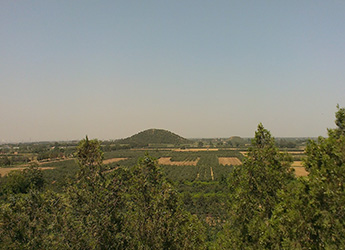
Located in Maoling Village, Nanwei Town on the Weibei Plateau, about 40 kilometers north of Xi’an, Maoling Mausoleum is the grand tomb of Emperor Wu of the Western Han Dynasty (206 BC–8 AD). As the largest imperial mausoleum of the Western Han Dynasty, it represents the power, prosperity, and cultural achievements of one of China’s most influential historical periods.
Built on a magnificent scale, Maoling Mausoleum is an important historical attraction in Shaanxi Province and offers visitors a fascinating insight into the life, achievements, and burial traditions of ancient Chinese emperors.
History of Emperor Wu and Maoling Mausoleum
Emperor Wu of Han (156–87 BC), whose personal name was Liu Che, was the seventh emperor of the Western Han Dynasty. He was the son of Emperor Jingdi and is regarded as one of the greatest emperors in Chinese history.
During his 54-year reign, Emperor Wu greatly strengthened the Han Empire, expanded its territory, promoted economic development, and enhanced China’s political influence. His military campaigns extended Han control into new regions, while his policies helped establish a powerful and prosperous empire.
In the second year of his reign, Emperor Wu began construction of Maoling Mausoleum. The enormous project continued for 53 years, lasting almost his entire reign.
Architecture and Layout of Maoling Mausoleum
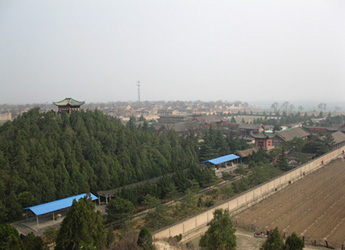
Maoling Mausoleum was designed as a grand imperial burial complex. The main structure is square and consists of an inner city, outer city, and surrounding walls.
The main dimensions include:
* East–west wall length: approximately 431 meters
* North–south wall length: approximately 415 meters
* Wall foundation width: about 5.8 meters
* Four gates located in the center of each wall
* Burial mound height: approximately 46.5 meters
* Burial mound length: about 231 meters from east to west and 234 meters from north to south
The enormous scale reflects the supreme status of Emperor Wu and the strength of the Western Han Empire.
 Luxurious Burial Treasures
According to historical records, Maoling Mausoleum contained an extraordinary collection of burial objects. The tomb was filled with valuable items, including:
* Gold and silver objects
* Jade artifacts
* Precious vessels
* Models of birds and animals
* Figures of cattle, horses, tigers, and leopards
Historical texts record that nearly 290 kinds of animals were represented among the burial objects.
Among the most remarkable treasures were:
* A jade box
* A jade walking stick presented by the King of Tang Qu
* A golden box containing 30 volumes of books personally read by Emperor Wu
When Emperor Wu was buried, the quantity of funerary objects was so large that they reportedly filled the coffin chamber completely, leaving almost no space remaining.
Satellite Tombs and Cultural Relics
Around Maoling Mausoleum are numerous satellite tombs belonging to imperial relatives, court officials, generals, and palace attendants. More than 20 tombs remain today, including those associated with famous historical figures such as:
* Wei Qing, a celebrated Han Dynasty general
* Huo Qubing, a legendary military commander
* Huo Guang, an influential Han official
* Jin Midi, a trusted court minister
Many valuable cultural relics have been discovered in these surrounding tombs, including:
* Black jade decorative objects carved with animal patterns
* Cloud-patterned rhinoceros-shaped bronze wine vessels
* Large roof tiles and bricks decorated with characters, dragons, red sparrows, and geometric patterns
In 1981, more than 230 precious artifacts were unearthed from the eastern satellite tombs, including:
* Gold-plated bronze horses
* Gold and silver-plated bamboo-shaped incense burners
* Bronze warming stoves
These discoveries provide important evidence of the craftsmanship, lifestyle, and artistic achievements of the Western Han Dynasty.
Maoling Mausoleum Museum
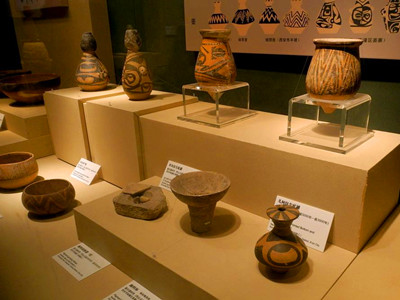
Today, hundreds of archaeological discoveries from Maoling Mausoleum are displayed at the Maoling Mausoleum Museum, allowing visitors to appreciate the artistic achievements and historical significance of the Western Han period.
With its impressive scale, rich archaeological discoveries, and connection with one of China’s most powerful emperors, Maoling Mausoleum is an essential historical attraction for travelers exploring Xi’an and Shaanxi’s ancient heritage.