 Located in Fufeng County, Shaanxi Province, about 120 kilometers west of Xi’an, Famen Temple (Famen Si) is one of the most famous Buddhist temples in China. Founded during the Eastern Han Dynasty (25–220 AD), the temple has played an important role in the spread of Buddhism for nearly two thousand years.
Famen Temple is especially famous because it houses the finger bone relic of Sakyamuni Buddha, making it one of the most sacred Buddhist pilgrimage sites in China. The temple complex also contains a remarkable Buddhist pagoda, a large underground palace, and a museum displaying thousands of precious cultural treasures from the Tang Dynasty.
Why Is Famen Temple Special?
The importance of Famen Temple comes from its unique combination of religious significance, architectural achievements, and historical treasures.
The temple is renowned for:
* Preserving the sacred finger bone relic of Sakyamuni Buddha
* Housing one of the world’s most important Buddhist relic sites
* Containing the largest known Buddhist underground palace discovered in China
* Displaying thousands of rare Tang Dynasty treasures
* Combining traditional Chinese Buddhist architecture with modern design
For centuries, emperors of the Tang Dynasty regarded Famen Temple as a royal Buddhist temple and frequently sent precious offerings to worship the Buddha relic.
Famen Temple Highlights
The main attractions of the Famen Temple Scenic Area include:
* The Famen Temple Pagoda
* The Famen Temple Museum
* The Famen Temple Dagoba (Relic Pagoda)
Together, these landmarks showcase the history, art, and spiritual traditions of Chinese Buddhism.
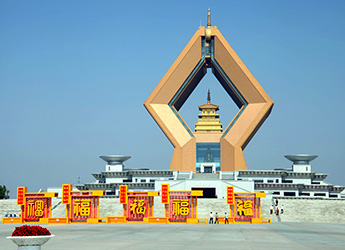
The Famen Temple Dagoba
The modern Dagoba is one of the most impressive structures in the scenic area. Designed to represent Buddhist philosophy, it combines traditional Buddhist architectural elements with modern construction techniques.
The building features:
* A modern glass curtain wall
* Traditional Buddhist decorative elements
* Mani jewel and lotus terrace designs
* Symbolic Buddhist architectural forms
The design reflects the harmony between ancient Buddhist traditions and contemporary architecture.
The Dagoba also serves as the sacred location where the finger bone relic of Sakyamuni Buddha and thousands of precious Buddhist offerings are preserved.
 The Famen Temple Pagoda
The original Famen Temple Pagoda has a long history and was traditionally considered an important symbol of the temple.
In 1987, during restoration work on the pagoda, archaeologists unexpectedly discovered an underground palace beneath the structure. The discovery became one of the greatest archaeological findings related to Chinese Buddhism.
The underground palace is considered the largest Buddhist underground palace ever discovered in China.
Inside, archaeologists found an extraordinary collection of cultural treasures, including:
* Gold and silver vessels
* Gemstones
* Colored glassware
* Porcelain
* Silk textiles
* Buddhist ritual objects
These discoveries provided valuable information about religious practices, craftsmanship, and royal life during the Tang Dynasty.
Famen Temple Museum
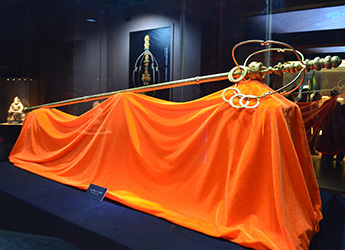
The Famen Temple Museum is a specialized Buddhist art museum dedicated to preserving, researching, and displaying the treasures discovered from the underground palace.
The museum collection includes:
* Gold and silver Buddhist offerings
* Glazed objects
* Porcelain artworks
* Silk products
* Ancient religious artifacts
Many of these treasures represent the highest level of craftsmanship achieved during the prosperous Tang Dynasty, when China was one of the world’s most influential civilizations.
Visiting Famen Temple
Today, Famen Temple is one of the most important Buddhist cultural attractions around Xi’an. It attracts pilgrims, historians, and travelers from around the world who come to admire its sacred relics, ancient architecture, and extraordinary archaeological discoveries.
For visitors interested in Chinese Buddhism, Tang Dynasty history, and ancient art, Famen Temple offers a unique journey into China’s spiritual and cultural heritage.