Located in Changle Fang, Xi’an, near the former site of the Tang Dynasty Xingqing Palace, the Eight Immortals Temple (Ba Xian An) is the largest and most influential Taoist temple in Xi’an. Famous for its connection with the legendary Eight Immortals of Chinese mythology, the temple is an important center of Taoist worship, cultural heritage, and traditional religious activities in Shaanxi Province.
With its historic halls, traditional Qing Dynasty architecture, colorful Taoist statues, and long religious traditions, Eight Immortals Temple offers visitors a deeper understanding of Chinese philosophy and folk beliefs.
Legend of the Eight Immortals
The Eight Immortals (Ba Xian) are among the most popular figures in Chinese mythology. Each immortal represents different aspects of human life and possesses unique supernatural abilities. According to traditional beliefs, their powers could be used to protect people, eliminate evil, and bring blessings.
The Eight Immortals include:
* Lü Dongbin (吕洞宾) – A famous Taoist immortal associated with wisdom and swordsmanship
* Zhongli Quan (钟离权) – A symbol of resurrection and transformation
* Zhang Guolao (张果老) – Known for riding a donkey backward
* He Xiangu (何仙姑) – The only female immortal among the group
* Lan Caihe (蓝采和) – Associated with music and wandering life
* Han Xiangzi (韩湘子) – A master of the flute
* Cao Guojiu (曹国舅) – A member of the imperial family
* Li Tieguai (铁拐李) – Recognized by his iron crutch
The temple is named after these legendary figures and remains a popular pilgrimage destination for Taoist believers.
History of Eight Immortals Temple
Eight Immortals Temple was originally established during the Song Dynasty (960–1279 AD). According to legend, the temple was built on the site where a scholar encountered the Eight Immortals.
Throughout history, the temple was reconstructed and expanded during the:
* Yuan Dynasty
* Ming Dynasty
* Qing Dynasty
Most of the existing buildings reflect the architectural style of the Qing Dynasty.
The temple stands on land that was once part of the Tang Dynasty Xingqing Palace area, connecting it with Xi’an’s long imperial and cultural history.
Architectural Features
At the entrance of the temple, visitors can see a screen wall engraved with the words:
“Wan Gu Chang Qing” (万古长青)
meaning “everlasting prosperity and eternal vitality.”
The entrance area includes:
* Mountain gate
* Archways
* Screen walls
* Bell Tower
* Drum Tower
The Bell Tower and Drum Tower stand on both sides of the main entrance, following traditional Chinese temple design.
The temple complex is arranged into three major sections, each containing important Taoist halls and religious spaces.
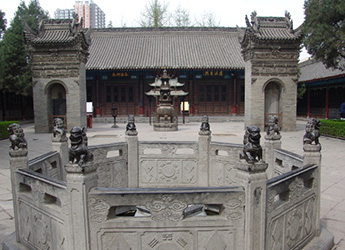 First Section: Entrance Area and Main Halls
The first section includes the main entrance structures and several important halls.
After entering the gate, visitors can see the Bell Tower and Drum Tower on the left and right sides, with the Bridge of Meeting Immortals located in the center courtyard.
According to legend, this bridge commemorates Wang Chongyang, the founder of the Quanzhen School of Taoism, who achieved enlightenment through his encounter with Lü Dongbin, one of the Eight Immortals.
Inside the Linggong Hall, visitors can see the colorful statue of Yulingguan, a Taoist guardian deity, accompanied by General Green Dragon and General White Tiger.
Second Section: Eight Immortals Hall
The second section is considered the heart of the temple complex.
The main attraction here is the Eight Immortals Hall, where important Taoist ceremonies and religious activities are held.
Inside the hall are colorful clay sculptures representing:
* Emperor Donghua, an important Taoist deity
* The Eight Immortals
The hall preserves the spiritual atmosphere of traditional Taoist worship and is one of the most important places in the temple.
Third Section: Doumu Hall and Other Sacred Sites
The third section begins with the Doumu Hall, which features calligraphy associated with Empress Dowager Cixi of the Qing Dynasty.
The hall worships Doumu, the “Mother of the Big Dipper,” who is considered a powerful Taoist goddess.
The eastern courtyard contains several additional religious buildings, including:
* Luzu Cave
* Hall of the King of Medicine
* Taibai Hall
These halls reflect the diversity of Taoist beliefs and the worship of different deities.
Taoist Festivals and Activities
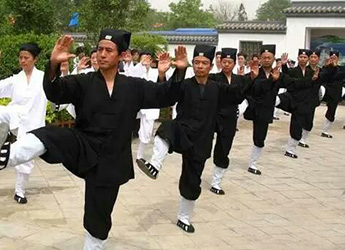
As the largest Taoist temple in Xi’an, Eight Immortals Temple remains an active religious site.
Important events include:
* Double Ninth Festival Taoist ceremonies
* Temple fair held on the 15th day of the fourth lunar month
During festivals, Taoist priests conduct traditional rituals, and visitors can experience folk customs, religious performances, and local cultural activities.
Visiting Eight Immortals Temple
Eight Immortals Temple is an excellent destination for travelers interested in:
* Taoist philosophy
* Chinese mythology
* Traditional architecture
* Religious culture
* Local customs
Compared with Xi’an’s famous imperial attractions, this temple offers a quieter and more authentic cultural experience. A visit here provides a chance to explore the spiritual traditions that have shaped Chinese civilization for centuries.