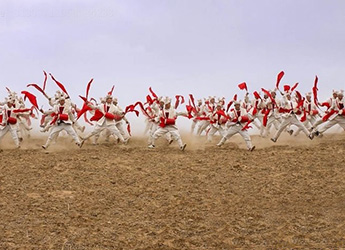
The Ansai Waist Drum Dance (Ansai Yaogu) is one of the most famous traditional folk performances in northern Shaanxi Province. Known for its powerful rhythms, energetic movements, and passionate expressions, the dance represents the bold and optimistic spirit of the people living on the Loess Plateau.
Originally connected with ancient rituals, military traditions, and agricultural celebrations, Ansai Waist Drum Dance has developed into an important symbol of Chinese folk culture and is now performed during festivals, celebrations, and cultural events.
History and Cultural Background
During winter, young villagers in northern Shaanxi traditionally begin practicing yangge dance and waist drum performances to celebrate the upcoming Spring Festival and Lantern Festival.
On the first day of the lunar New Year, after enjoying a family meal, performers visit households to offer New Year blessings. Wearing colorful costumes and waving red silk ribbons, dancers perform in courtyards while villagers welcome them with firecrackers and homemade rice wine.
The combination of:
* Drumbeats
* Songs
* Dancing
* Firecrackers
* Festival greetings
creates a lively and joyful atmosphere throughout the villages.
The yangge dance has a history of more than 2,000 years. Originally performed as a religious ritual to pray for good fortune and drive away evil spirits, it gradually developed into a popular folk entertainment performed during festivals and agricultural seasons.
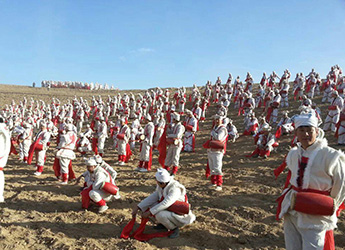 The Unique Charm of Ansai Waist Drum Dance
The highlight of the performance is the waist drum dance itself.
During the dance, performers tie a small red drum around their waist and hold drumsticks decorated with red silk. While beating the drums, they perform powerful movements including:
* Jumping
* Spinning
* Running formations
* Strong arm movements
* Rhythmic footwork
The deep and exciting drum sounds combined with energetic movements express the straightforward, passionate, and fearless character of northern Shaanxi villagers.
At the climax of the performance, dancers jump high into the air while beating the drums and shouting “Haihai!”, creating an unforgettable display of strength and enthusiasm.
Different Styles of Waist Drum Dance
Although waist drum performances are popular throughout northern Shaanxi, different regions have developed their own styles.
Ansai Waist Drum Dance
The Ansai style is famous for:
* Powerful and vigorous movements
* Fast rhythms
* Large group formations
* Strong emotional expression
The performance emphasizes energy and teamwork, reflecting the open and courageous personality of the people of the Loess Plateau.
Luochuan Waist Drum Dance
The Luochuan style has its own unique characteristics.
Performers usually use larger drums, sometimes as big as washbasins, with long and thin drumsticks. They wear traditional warrior-style costumes, including:
* White battle robes
* Head towels
* Back flags
The costumes often feature patterns inspired by ancient bronze vessels.
The dancers move back and forth in military formations, jumping and striking the drums like soldiers preparing for battle.
Ancient Origins of Chinese Drum Culture
Drums have a long history in China. Archaeological discoveries, including animal-skin drums found at the Yinxu ruins in Anyang, Henan Province, show that drums existed more than 3,000 years ago.
In ancient China, drums were used for many purposes:
* Religious ceremonies
* Military commands
* Warning signals
* Timekeeping
* Entertainment
The waist drum traditions of northern Shaanxi are believed to have developed from these ancient practices.
Origins of the Waist Drum Dance
There are several theories about the origin of the northern Shaanxi waist drum.
One theory suggests that waist drums were once military tools used by soldiers stationed near frontier areas. Drums helped soldiers:
* Send signals
* Train troops
* Coordinate movements during battles
This theory is supported by the fact that waist drum performances are especially popular near the ancient Great Wall regions, and dancers often wear warrior-style costumes with military formations.
Another theory connects the dance with local shepherds. Living on the vast Loess Plateau, shepherds used sheepskin drums to entertain themselves during lonely days. Over time, drumming developed into a community activity used to pray for good harvests, favorable weather, and a happy life.
Cultural Significance
Today, Ansai Waist Drum Dance is more than a performance—it is a symbol of the history, resilience, and cultural identity of northern Shaanxi.
Its powerful rhythms represent:
* The strength of the Loess Plateau people
* The spirit of unity and courage
* The celebration of life and nature
For visitors interested in Chinese folk traditions, Ansai Waist Drum Dance offers a unique opportunity to experience the passion and vitality of rural Shaanxi culture.