Ejina Banner Euphrates Poplar Forest – China's Golden Desert Wonderland
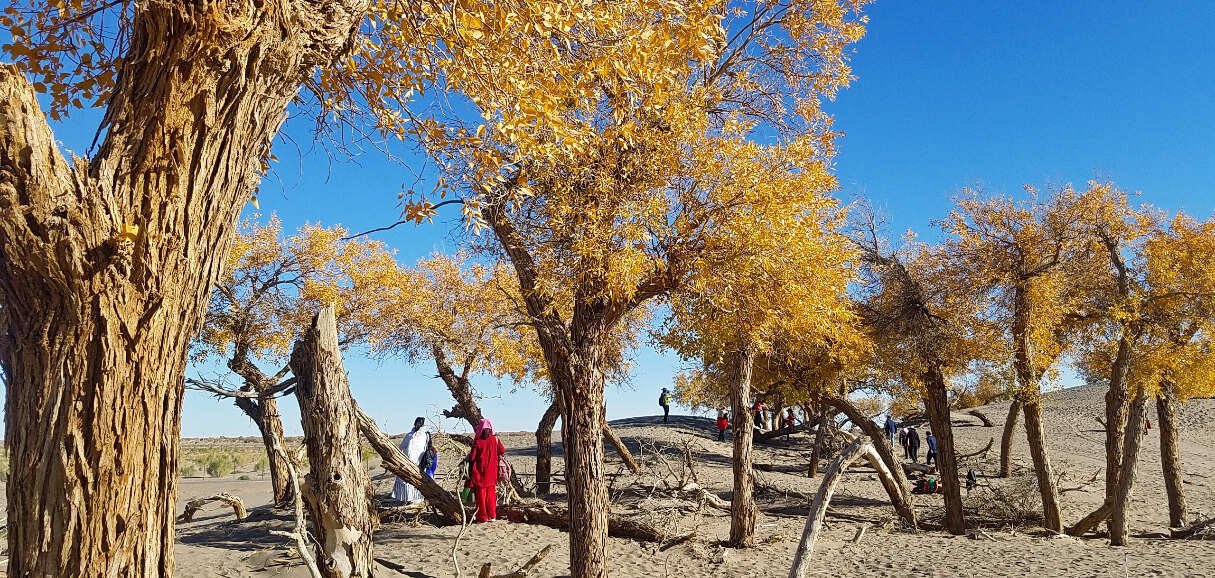
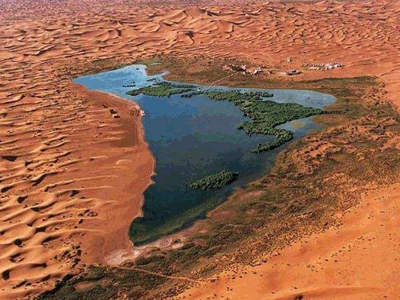
The Ejina Banner Euphrates Poplar Forest is one of the world's last three remaining natural forests of Populus euphratica (Euphrates Poplar), making it one of the most spectacular autumn destinations in China. Located in Ejina Banner (Ejina Qi) in western Inner Mongolia, this extraordinary forest transforms into a sea of brilliant gold every autumn, attracting photographers and nature lovers from around the world.
The town of Dalaihubu, the administrative center of Ejina Banner, serves as the perfect base for exploring the forest. The densest and most beautiful groves stretch along the Ejin River, where eight bridges cross the water. Among them, the Second Bridge, Fourth Bridge, and Eighth Bridge are the most popular locations for capturing breathtaking photographs of the golden poplar trees reflected in the tranquil river, especially during sunrise and sunset.
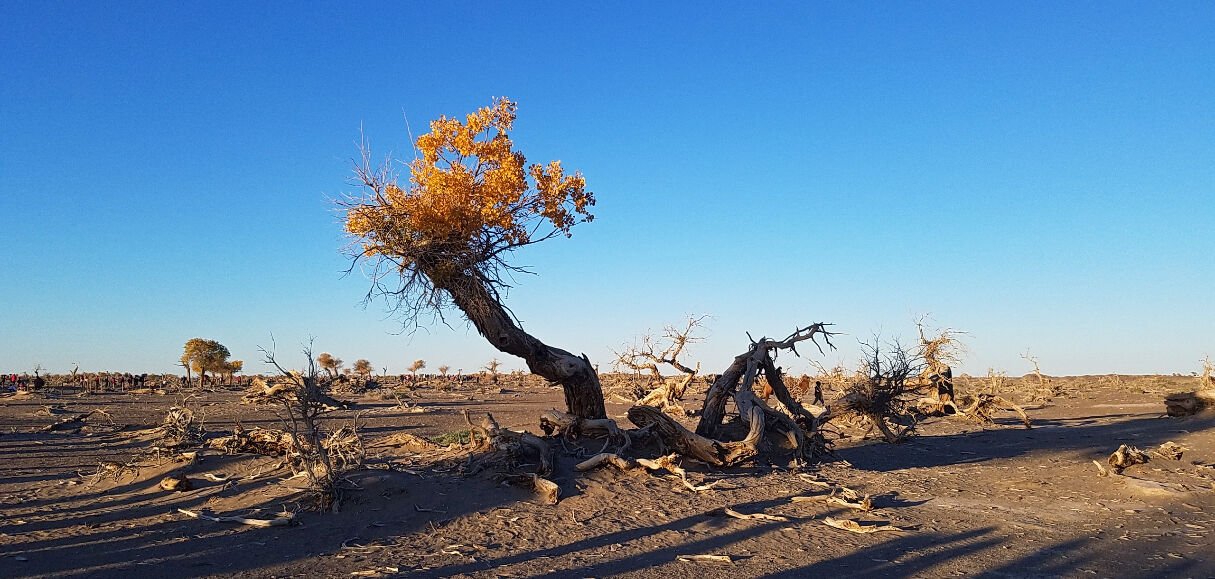
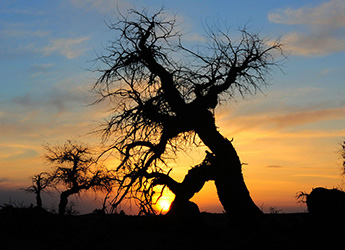
Known as the Euphrates Poplar or Desert Poplar, Populus euphratica is one of nature's most resilient trees. Although it thrives near rivers and desert oases, it can withstand extreme drought, freezing winters, salty soils, fierce winds, and sandstorms. Its twisted trunks, weathered branches, and remarkable endurance have made it a powerful symbol of life in the harsh desert environment.
A famous Chinese saying perfectly captures its legendary resilience:
"It lives for a thousand years without dying; after death it stands for another thousand years without falling; after falling it remains for another thousand years without decaying."
This poetic expression reflects the tree's extraordinary vitality and explains why the Euphrates Poplar has become a symbol of perseverance, strength, and eternal life.
The Euphrates Poplar is a medium-sized deciduous tree that typically reaches up to 15 meters in height. Its trunk is often twisted and irregular, covered with thick olive-green bark, while its heartwood gradually darkens from deep red to nearly black with age. The tree's leaves vary greatly in shape, adding further character to these unique forests. During autumn, the foliage turns brilliant shades of golden yellow, creating one of China's most dazzling natural spectacles.
The species is naturally distributed across a vast region stretching from North Africa, through the Middle East and Central Asia, to western China. It thrives in river valleys, floodplains, and desert oases, where it grows alongside willows, tamarisks, and mulberry trees. Unfortunately, much of its natural habitat has disappeared due to overexploitation and environmental change, making the protected forests of Ejina Banner increasingly valuable.
Beyond its ecological importance, the Euphrates Poplar also plays a significant role in combating desertification. Its extensive root system helps stabilize sandy soils, reduce wind erosion, improve saline land, and provide shelterbelts in arid regions. The tree also supplies timber, livestock fodder, and raw materials for paper production, while its bark has traditionally been used in herbal medicine.
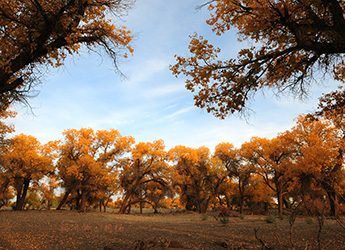
Every autumn, usually from late September to late October, the Ejina Euphrates Poplar Forest reaches its peak beauty. Endless golden trees contrast dramatically against blue skies, winding rivers, and the vast Gobi Desert, creating one of the most unforgettable landscapes along China's ancient Silk Road.
For photographers, nature enthusiasts, and travelers seeking extraordinary scenery, the Ejina Banner Euphrates Poplar Forest offers a once-in-a-lifetime opportunity to experience one of the world's most beautiful desert forests and witness the timeless spirit of the legendary "Tree of Life."