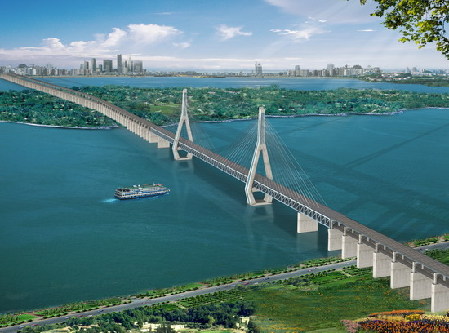
The Nanjing Yangtze River Bridge is one of the most iconic landmarks in Nanjing, Jiangsu Province, and holds a special place in the history of China’s bridge construction. It was the third major bridge built across the Yangtze River after the Wuhan Yangtze River Bridge and Chongqing Baishatuo Yangtze River Bridge, and was once the second longest bridge of its kind in the world.
More than just a transportation facility, the Nanjing Yangtze River Bridge represents an important milestone in modern Chinese engineering. It was the first bridge over the Yangtze River designed and constructed entirely through China’s own technical capabilities, making it a symbol of national confidence, engineering achievement, and perseverance.
A Historic Achievement in Chinese Engineering
Construction of the Nanjing Yangtze River Bridge began on January 18, 1960. Designed as a double-deck road-and-rail truss bridge, it was built to connect northern and southern China by providing both railway and highway transportation across the Yangtze River.
The railway bridge was officially opened to traffic in September 1968, followed by the opening of the highway bridge in December of the same year. The completion of the bridge marked a significant achievement in China’s infrastructure development and became a source of pride for the Chinese people.
Structure and Design of Nanjing Yangtze River Bridge
The Nanjing Yangtze River Bridge consists of a main bridge and approach bridges. The main bridge stretches approximately 1,577 meters across the Yangtze River, while the approach road bridges extend about 3,012 meters in total.
The upper deck is a highway bridge measuring about 19.5 meters wide, allowing four vehicles to travel side by side. The lower deck is a double-track railway bridge with a total length of approximately 6,772 meters and a width of 14 meters, providing enough space for two trains traveling in opposite directions.
At both ends of the bridge stand two impressive bridge towers, each around 70 meters high. Visitors can take an elevator to the top of one of the towers to enjoy panoramic views of the Yangtze River and the city of Nanjing.
Iconic Features of Nanjing Yangtze River Bridge
One of the most distinctive features of the bridge is the three red flags displayed on top of the bridge towers. These flags symbolize important historical themes of the late 1950s, including the People’s Commune, the Great Leap Forward, and the General Line of Socialist Construction.
The bridge is also decorated with 150 pairs of white magnolia-shaped street lamps, arranged neatly along the roadway. When illuminated at night, the lights create a beautiful and memorable view, making the bridge one of Nanjing’s most recognizable night scenes.
Why Visit Nanjing Yangtze River Bridge?
The Nanjing Yangtze River Bridge is not only an important transportation hub but also a cultural landmark reflecting China’s modern history and engineering achievements. Standing beside the mighty Yangtze River, visitors can appreciate the scale of this historic structure while learning about its significance in China’s development.
For travelers exploring Nanjing, the bridge offers a unique opportunity to experience a combination of architecture, history, and local culture. It is often visited together with other famous attractions such as the Sun Yat-sen Mausoleum, Ming Xiaoling Mausoleum, Confucius Temple, and Nanjing City Wall.
Whether viewed during the day or illuminated at night, the Nanjing Yangtze River Bridge remains one of the most remarkable symbols of Nanjing and an unforgettable landmark along the Yangtze River.