 Located in Jingzhou City, Hubei Province, Jingzhou Ancient City (also known as Jiangling City) is one of China’s most famous historical and cultural cities. With a history of more than 2,000 years, Jingzhou has played an important role in Chinese history, especially during the Three Kingdoms period (220–280 AD).
The ancient city is renowned for its well-preserved city walls, historical relics, and deep connection with legendary figures such as Guan Yu, one of the most famous generals of the Three Kingdoms era.
History of Jingzhou Ancient City
Jingzhou was originally established during the Qin and Han Dynasties. The brick city walls were first constructed during the Five Dynasties period, and the city underwent several reconstructions and repairs during the Song, Yuan, and Qing Dynasties.
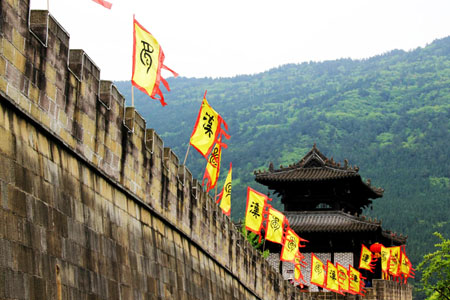
The city walls visitors see today were mainly rebuilt according to the style of the Ming Dynasty city walls during the third year of the Shunzhi Emperor’s reign in the Qing Dynasty (AD 1646).
Over the centuries, many cultural attractions and scenic spots have been developed around the ancient city walls, allowing visitors to experience the historical charm of Jingzhou.
Jingzhou Ancient City Wall – A Remarkable Historical Structure
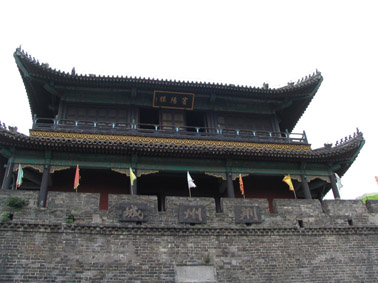
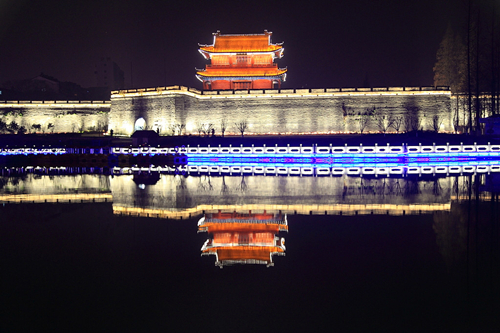
The Jingzhou Ancient City Wall is one of the best-preserved ancient city walls in China. Built with a combination of limestone, bricks, and earth, the wall represents the traditional defensive architecture of ancient Chinese cities.
The current city wall features:
* Total circumference: 11.28 kilometers
* Length from east to west: 3.75 kilometers
* Width from south to north: 1.2 kilometers
* Height: 8.83 meters
* Battlements: 4,567
* Fortresses: 26
* Soldier hideouts: 6
* Towers: 6
Walking along the ancient city wall, visitors can enjoy views of the historic city while imagining the military importance Jingzhou once held.
 Three Kingdoms Heritage in Jingzhou
Jingzhou is closely associated with the legendary stories of the Three Kingdoms period. Many historical sites and cultural relics remain throughout the city.
Among the famous Three Kingdoms-related attractions are:
* Large iron cooking pots and horse mangers believed to have been used by Guan Yu’s soldiers
* Zhijia Mountain, where soldiers reportedly abandoned their weapons during General Lü Meng’s surprise attack on Jingzhou
These sites provide visitors with a chance to explore the stories and legends that made Jingzhou famous in Chinese history.
Jingzhou Museum – A Treasure House of Ancient Relics
Thanks to its long history, Jingzhou preserves a large number of valuable cultural relics. The Jingzhou Museum houses more than 3,000 historical artifacts, making it one of the most important museums in Hubei Province.
The museum’s most famous treasure is the Sword of Goujian, discovered in northern Jingzhou in 1965.
The sword belonged to King Goujian of Yue, a ruler from the Warring States Period (475–221 BC). It is considered one of the most remarkable ancient swords ever discovered in China.
The sword features:
* Delicate diamond-shaped patterns
* A decorative inlay of kallaite (turquoise-like gemstone)
* Three-colored glass decoration
* An extremely sharp blade that remains well preserved after more than two thousand years
This extraordinary artifact reflects the advanced craftsmanship and metallurgical skills of ancient China.
Why Visit Jingzhou Ancient City?
With its ancient city walls, Three Kingdoms legends, and priceless historical relics, Jingzhou Ancient City is a must-visit destination for travelers interested in Chinese history and culture.
From walking along the centuries-old city walls to exploring the treasures of Jingzhou Museum, visitors can experience the rich heritage of one of China’s most important historical cities.
For travelers exploring Hubei Province, Three Kingdoms culture, and ancient Chinese architecture, Jingzhou offers a fascinating journey through more than two millennia of history.