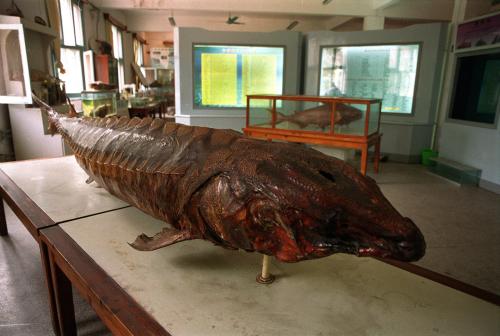
 Located in Yichang, Hubei Province, the Chinese Sturgeon Museum is an important educational and research center dedicated to protecting one of the world’s oldest fish species – the Chinese sturgeon.
The museum was established in 1993 by the Chinese Sturgeon Research Institute, an organization focused on the conservation, scientific research, and artificial breeding of Chinese sturgeon.
Through exhibitions and educational displays, the museum introduces visitors to the life, history, and protection of this rare species, making it an important destination for travelers interested in wildlife, ecology, and the natural environment of the Yangtze River.
Chinese Sturgeon – The “Living Fossil” of the Yangtze River
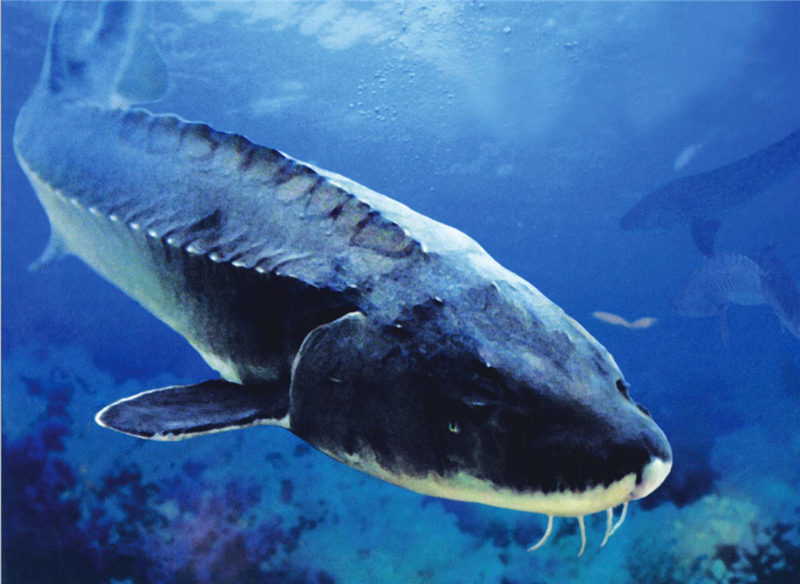
The Chinese sturgeon (Acipenser sinensis) is one of the oldest surviving fish species on Earth, with a history dating back approximately 140 million years.
Because of its ancient origins and unchanged biological characteristics, it is often called a “living fossil.”
The Chinese sturgeon is one of the largest freshwater fish in China and is known for its impressive size and long lifespan.
An adult Chinese sturgeon can:
* Grow more than 4 meters (13 feet) in length
* Weigh over 500 kilograms (1,100 pounds)
* Live for many decades
Female Chinese sturgeon usually reach maturity after more than 14 years and can produce hundreds of thousands to more than one million eggs during a breeding season.
However, due to natural survival challenges, habitat changes, and human activities, the population of Chinese sturgeon has declined significantly, making conservation efforts extremely important.
 Migration Journey of Chinese Sturgeon in the Yangtze River
The Chinese sturgeon is a migratory fish that spends part of its life in the sea and returns to the Yangtze River to reproduce.
Historically, Chinese sturgeon migrated from coastal waters near the Yangtze River estuary to the upper reaches of the river during the summer and autumn seasons to lay eggs in their traditional spawning areas.
However, the construction of the Gezhouba Water Conservancy Project in the 1980s created barriers along their migration route.
As a result, Chinese sturgeon lost access to important spawning grounds, causing serious challenges for the survival and reproduction of the species.
Chinese Sturgeon Conservation Efforts
To protect this rare species, the Chinese government established specialized research institutions to study Chinese sturgeon breeding, reproduction, and conservation.
Since the 1980s, scientists have carried out important protection programs, including:
* Artificial breeding research
* Scientific monitoring
* Releasing young sturgeon into the Yangtze River
* Habitat protection initiatives
Since 1984, millions of young Chinese sturgeon have been released into the Yangtze River to help restore wild populations.
In 1988, Chinese sturgeon was officially classified as a nationally protected animal species, receiving stronger legal protection.
What to See at the Chinese Sturgeon Museum
 Visitors to the Chinese Sturgeon Museum can learn about:
* The evolution and biology of Chinese sturgeon
* The life cycle of this ancient fish
* The ecological importance of the Yangtze River
* Conservation and breeding programs
* The challenges facing endangered aquatic species
The museum is especially meaningful for families, students, nature lovers, and travelers interested in environmental protection.
Why Visit the Chinese Sturgeon Museum?
The Chinese Sturgeon Museum offers a rare opportunity to discover one of the most fascinating creatures in China’s natural history.
A visit here allows travelers to:
* See one of the world’s oldest fish species
* Learn about Yangtze River ecology
* Understand wildlife conservation efforts
* Discover the relationship between humans and nature
For visitors exploring Yichang and the Three Gorges region, the Chinese Sturgeon Museum provides an educational and memorable experience beyond traditional sightseeing.