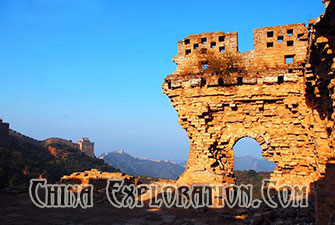
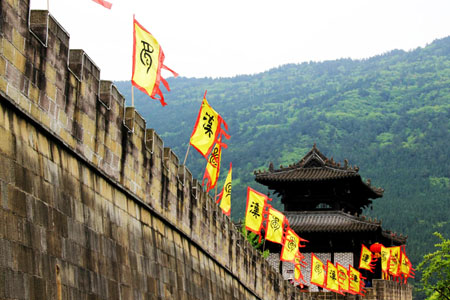
The Jinshanling Great Wall is located approximately 130 kilometers (81 miles) northeast of Beijing, on the border between Beijing Municipality and Hebei Province. Built across the ridges of Jinshan Mountain, a branch of the Yanshan Mountains, this approximately 10.5-kilometer (6.5-mile) section is renowned for its spectacular mountain scenery, well-preserved fortifications, and relatively authentic appearance. With limited restoration compared with more developed sections such as Badaling, Jinshanling has long been especially popular with international travelers and hiking enthusiasts.
Jinshanling was an important strategic passage in China's northern defense system. Shortly after the founding of the Ming Dynasty in 1368, fortifications were established here to help protect the capital from incursions from the north. Between 1567 and 1572, the wall underwent major reconstruction and strengthening under the direction of Qi Jiguang, one of the most accomplished military commanders of the Ming Dynasty. Additional passes, watchtowers, beacon towers, and other defensive structures transformed Jinshanling into a sophisticated military stronghold.
Unique Defensive Features
In addition to battlements, parapets, and embrasures for archers and firearms, Jinshanling is notable for its distinctive obstacle walls. These low defensive walls were constructed along sections of the wall's upper surface, particularly on slopes leading toward watchtowers. They provided an additional defensive position from which soldiers could continue fighting if attackers succeeded in reaching the main wall.
Another fascinating feature is the presence of inscribed bricks. Near Huding Tower, some bricks bear Chinese characters recording information such as the period of manufacture and the military unit responsible for producing or laying them. These markings provide valuable evidence about the organization and construction of the Ming frontier defenses.
Watchtowers of Jinshanling
One of the most impressive features of Jinshanling is its collection of watchtowers, which are distributed along the mountain ridges at strategic intervals. The towers vary in shape and internal design, including square, rectangular, and round structures. Their architectural details also differ, with variations in the number of embrasures, arches, stairways, and entrances.
Some towers contain conventional staircases, while others were accessed through openings in the roof using ladders. Depending on their location and design, the towers served as defensive positions, observation posts, storage areas, and accommodation for soldiers stationed along the frontier.
The combination of steep mountain terrain, winding walls, watchtowers, and changing elevations makes Jinshanling particularly attractive for hiking. The route provides dramatic views of the Great Wall stretching across successive ridges, while its relatively preserved condition offers a strong sense of the Ming Dynasty's original defensive landscape.
Jinshanling connects with the Simatai Great Wall to the east, forming one of the most famous hiking routes in the Beijing region. Depending on the current access arrangements, hikers can continue toward Simatai, making the area an excellent choice for travelers seeking a longer and more challenging Great Wall adventure.