Qigong is a traditional Chinese practice that combines gentle physical movements, breathing techniques, and focused mental concentration. Developed over centuries through the Chinese people's pursuit of health, longevity, and well-being, Qigong has become an important part of traditional Chinese culture and is closely associated with Traditional Chinese Medicine (TCM).
The word “Qi” is commonly translated as “vital energy” or “life energy,” while “Gong” means skill cultivated through practice. Qigong therefore refers to the practice of cultivating and regulating Qi through coordinated movement, breathing, and the mind.
Qigong has a long history and includes many different schools and styles. Traditional theories distinguish between internal Qi (neiqi), cultivated within the body, and external Qi (waiqi), which some practitioners traditionally believe can be transmitted beyond the body. Because these concepts are not directly observable in the same way as conventional physical processes, Qigong has often been regarded as mysterious in popular culture.
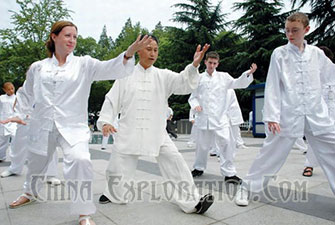
In practice, Qigong emphasizes the coordination of mind, body, posture, and breathing. Through regular practice, practitioners aim to relax the body, calm the mind, improve breathing, and develop greater awareness and control of bodily functions.
Modern Research on Qigong
Modern research has investigated how Qigong practice may influence several physiological systems. While research findings vary depending on the type of Qigong, training methods, and study design, several areas have received particular attention.
1. The Nervous and Muscular Systems
Studies have examined changes in brain activity during relaxed Qigong practice. Some research has reported changes in electroencephalogram (EEG) patterns associated with relaxation and reduced sensory responsiveness.
Qigong practice may also be accompanied by reduced muscle tension, slower heart rate, and changes in autonomic nervous system activity. These findings are generally consistent with a state of deep relaxation.
2. The Respiratory System
Breathing exercises are an important component of many forms of Qigong. During slow, controlled breathing, respiratory rate may decrease while breathing becomes deeper and more regular.
Many Qigong exercises emphasize abdominal or diaphragmatic breathing, which encourages gentle movement of the diaphragm and promotes greater awareness of the breathing process.
3. The Digestive System
Traditional Qigong practices often incorporate slow abdominal breathing and relaxed body movements. These exercises may influence the movement of the diaphragm and abdominal muscles and may support normal gastrointestinal activity.
Some studies have investigated the effects of Qigong on gastric and intestinal motility, although more high-quality research is needed to determine the extent and clinical significance of these effects.
Qigong Today
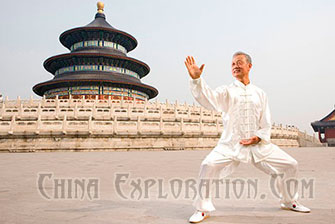
Today, Qigong is practiced in China and around the world as a form of traditional exercise, relaxation, meditation, and wellness practice. Some people practice it to improve flexibility, balance, breathing awareness, relaxation, and overall well-being.
Qigong represents an interesting meeting point between traditional Chinese philosophy, body cultivation, breathing practices, and modern interest in mind-body health. Whether practiced as a cultural tradition, gentle exercise, or meditative discipline, it offers visitors an opportunity to experience an important aspect of Chinese heritage firsthand.
Related Tours