The Yi people are one of China's major ethnic minority groups, with a population of around 10 million. They speak the Yi language and are mainly distributed across Yunnan, Sichuan, Guizhou, and Guangxi. Major Yi communities are found in Chuxiong, Honghe, Liangshan, Bijie, Liupanshui, and Anshun. Liangshan Yi Autonomous Prefecture in Sichuan is one of the largest and most important Yi settlement areas in China.
History of the Yi People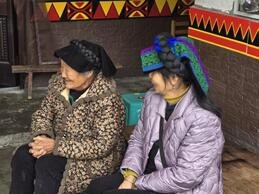
The Yi people have a long and complex history. Traditional historical accounts trace their ancestry to ancient Qiang-related peoples. From around the 2nd century BCE onward, ancestors of the Yi were active in areas around Dianchi Lake in Yunnan and Qiongdu, in the region of present-day Xichang in Sichuan.
Over the centuries, Yi communities developed distinctive political, social, religious, and cultural traditions. Their history was closely connected with the mountainous environments of southwestern China and with interaction among different ethnic groups in the region.
Traditional Social Structure in Liangshan
Before the establishment of the People's Republic of China, the social structure of the Liangshan Yi was characterized by highly developed systems of social hierarchy and hereditary relationships. Historical sources describe a society in which different groups possessed very different levels of political power, economic resources, and personal freedom.
The traditional hierarchy is commonly described using terms including Zimo, Nuohé, Qu Nuo, Ajia, and Jiasi. The exact meanings and historical characteristics of these categories varied across different periods and areas.
Zimo was associated with the highest hereditary ruling families and was sometimes connected with the institution of the tusi, or hereditary local rulers appointed or recognized by imperial governments.
Nuohé formed a powerful hereditary group that traditionally controlled land, livestock, and dependent laborers and enjoyed substantial political and economic privileges.
Qu Nuo occupied an intermediate position. Many were farmers with some access to land and property but remained subject to obligations toward more powerful families. Their position varied considerably from one community to another.
Ajia and Jiasi represented groups with much less economic and social independence. Historical records describe systems of dependency and forced labor, with some people lacking the freedom to change their place of residence or occupation.
The traditional Liangshan social system was therefore highly hierarchical, with relationships based on kinship, hereditary status, land ownership, and systems of dependency. It should be understood within its historical context rather than as a description of contemporary Yi society.
Democratic Reform
Major social changes took place in Yi areas during the 1950s. Beginning in 1956, the Chinese government introduced democratic reforms in Yi communities in Sichuan and Yunnan. The reforms were particularly significant in the Liangshan region.
By 1958, the traditional systems of hereditary privilege and slavery in the affected areas had been officially abolished. Land, livestock, houses, agricultural tools, and other property formerly controlled by slave-owning families were redistributed under the new political and economic system.
These reforms brought profound changes to the social structure, economy, political organization, and everyday life of the Yi people.
Yi Religious Culture
Traditional Yi religious beliefs include elements of nature worship, ancestor worship, animism, and totemic traditions. The natural environment, ancestors, and spiritual forces have historically played an important role in Yi religious life.
Traditional religious specialists include Bimo, who perform rituals, recite sacred texts, conduct ceremonies, and communicate with the spiritual world, and Suni, who are traditionally associated with shamanic practices. Buddhism and Daoism have also influenced some Yi communities, while Christianity and Catholicism have been introduced into certain areas in modern times.
Ancestor worship remains an important cultural tradition. Traditional beliefs hold that the souls of deceased family members continue to influence the lives of their descendants. In some Yi traditions, the soul is believed to have different aspects after death, with connections to the tomb, the ancestral realm, and the family home.
Bimo Culture
Bimo culture occupies a particularly important place in traditional Yi society. A Bimo is a religious specialist who performs ceremonies and preserves traditional knowledge.
Bimo may conduct rituals for important events, create and use ritual objects, recite sacred texts, perform ceremonies for ancestors and spirits, and preside over rituals associated with community relationships and disputes.
Bimo also traditionally served as important transmitters of Yi history, mythology, religious knowledge, customs, and oral traditions. In this sense, Bimo culture represents not only a religious tradition but also an important part of Yi intellectual and cultural heritage.
Traditional Dress and Adornment
The Yi people are divided into numerous regional communities, and their traditional costumes vary greatly. Differences in climate, geography, local customs, and economic conditions have produced distinctive styles of clothing and ornamentation.
Traditional Yi costumes feature a rich variety of fabrics, embroidery, colors, patterns, headdresses, jewelry, and decorative elements. Some patterns carry symbolic meanings associated with nature, ancestry, local identity, or traditional beliefs.
Today, traditional clothing remains particularly important during festivals, weddings, ceremonies, and other cultural celebrations.
Yi Architecture and Villages
Traditional Yi architecture also varies by region. In Liangshan, traditional houses commonly include tile-roofed dwellings, while Yi communities in Guizhou and northern and central Yunnan have developed forms of earthen houses, timber houses, watchtowers, and stone-slab houses. In Guangxi and eastern Yunnan, some Yi communities traditionally live in stilted houses.
Yi villages are often closely connected with clan and kinship structures. Settlements may be located on hillsides or in mountain valleys where the terrain provides suitable conditions for farming, access to water, and natural protection.
In high-altitude areas, settlements are often relatively scattered, while larger and more concentrated villages can be found in mountain valleys and river basins. Related families traditionally lived close to one another, creating village communities based on kinship and shared ancestry.
Yi Food and Drink
The traditional Yi diet reflects the agricultural environment of southwestern China. Common staple foods include potatoes, maize, buckwheat, and rice, supplemented by meat, beans, vegetables, and locally available wild plants.
Beef, mutton, pork, and chicken are important sources of meat. In traditional hospitality, serving meat to guests is an important expression of generosity, with beef often regarded as particularly prestigious.
Common legumes include soybeans, broad beans, and cowpeas. Traditional soybean preparations include dishes made by grinding soybeans into a paste and combining them with fermented soybean products and pickled vegetables.
Local herbs and wild plants are also used as seasonings, giving Yi cuisine distinctive regional flavors.
Yi Language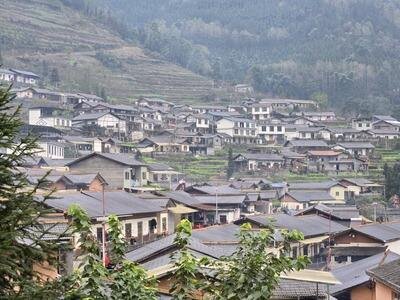
The Yi language belongs to the Lolo-Burmese branch of the Sino-Tibetan language family. It has several regional varieties and is closely associated with the cultural identity of the Yi people.
The Yi also have a distinctive traditional writing system known as Yi script, an important part of their cultural heritage. Religious texts, historical records, poetry, and other traditional knowledge were preserved using Yi writing.
Festivals of the Yi People
Festivals are an important expression of Yi cultural identity. They include agricultural celebrations, religious ceremonies, ancestor-worship festivals, commemorative events, harvest celebrations, and festivals centered on music, dance, sports, and social gatherings.
Among the best known are the Yi New Year and the Torch Festival.
Yi New Year
The Yi New Year is celebrated at different times in different regions, generally during the autumn or early winter according to local traditional calendars. Families prepare special foods, honor their ancestors, visit relatives, and participate in traditional singing, dancing, and other activities.
It is an important occasion for family reunions, expressing good wishes, and celebrating the year's harvest.
Torch Festival
The Torch Festival is one of the most famous traditional festivals of the Yi people. It is generally celebrated around the 24th day of the sixth month of the traditional lunar calendar, although the exact dates and customs vary by region.
During the festival, people dress in their finest traditional clothing and gather in open areas near their villages. Traditional activities can include singing, dancing, horse racing, wrestling, bullfighting, sheep fighting, and other folk competitions.
Animal sacrifices and ceremonies honoring ancestors may take place during the festival. At night, people carry burning torches through villages and fields. Traditionally, the fire symbolizes the driving away of pests and harmful influences and expresses wishes for health, prosperity, and a good harvest.
Love and Marriage
Today, marriage among the Yi is generally based on mutual affection and follows China's modern legal system of marriage. Traditional marriage customs, however, preserve many distinctive cultural elements.
Historical Yi marriage traditions varied considerably among regions and social groups. Some communities practiced marriage rules connected with clan, kinship, and social status, while certain forms of cousin marriage were prohibited and particular kinship relationships were preferred.
Traditional wedding ceremonies may include engagement rituals, the seeking of auspicious signs, singing, dancing, and various symbolic customs. In some communities, customs such as water splashing, face painting, crying songs, pre-wedding rituals, and post-wedding visits to the bride's family have been preserved as elements of cultural heritage.
Modern Yi weddings often combine traditional customs with contemporary wedding practices, reflecting the continuing evolution of Yi culture.
Burial Customs and Ancestral Worship
Burial customs vary among Yi communities and regions. Earth burial has traditionally been common in many areas.
The ancestral shrine is traditionally regarded as one of the most sacred spaces within the household. Family members may maintain ancestral tablets and make offerings of food and wine during festivals and important family occasions.
In some traditions, mourning and ancestral rituals continue for an extended period. After a prescribed period of mourning, further ceremonies may be held to honor the deceased and place ancestral memorial objects in a designated sacred location.
These customs reflect the central importance of family, ancestry, and continuity between generations in traditional Yi culture.
The Yi People Today
The Yi people have preserved a rich cultural heritage while participating fully in modern Chinese society. Traditional language, writing, music, dance, clothing, festivals, religious traditions, cuisine, architecture, and handicrafts continue to contribute to Yi cultural identity.
For travelers, the Yi regions of Sichuan, Yunnan, and Guizhou offer opportunities to experience distinctive mountain landscapes and explore the traditions of one of China's largest and most culturally diverse ethnic groups.