The History of China
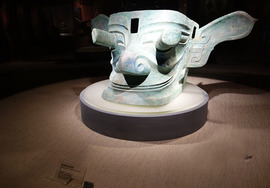
Chinese civilization occupies a unique place in world history because of its remarkable continuity over more than 4,000 years. Written records of Chinese history date back approximately 3,300 years, although archaeological discoveries indicate that complex cultures existed in China much earlier.
Traditionally, the Yellow River basin in northern China has been regarded as the cradle of Chinese civilization. However, archaeological discoveries in recent decades have broadened this view. Excavations along the Yangtze River basin and elsewhere have revealed evidence of ancient cultures flourishing more than 10,000 years ago, demonstrating that the origins of Chinese civilization were more diverse and geographically widespread than previously believed.
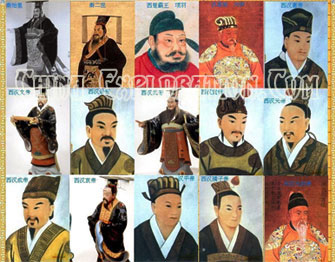
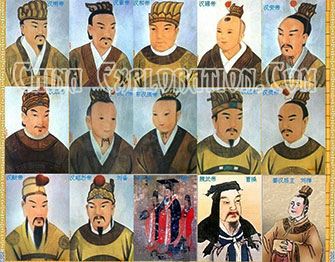
Until the twentieth century, Chinese historical writing largely focused on dynastic politics and court affairs. History was often used to provide rulers with precedents for governing the country and to justify their authority. Chinese historians traditionally portrayed history as a succession of dynasties, each following a recurring cycle of rise, achievement, decline, and replacement by a new ruling family.
One of the most distinctive characteristics of Chinese civilization has been its ability to absorb and integrate peoples from surrounding regions. Over the centuries, Confucian scholars became an important resource for administering an enormous and diverse country. Since China's economy was predominantly agricultural, political stability, population growth, and food production were central concerns of successive governments, leaving relatively little room for radical experimentation.
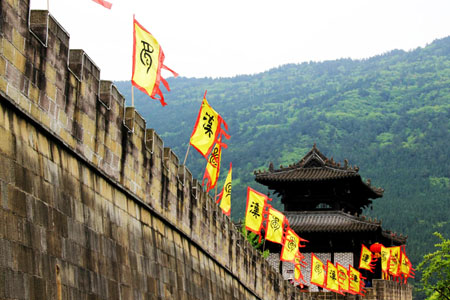
Another recurring theme throughout Chinese history has been the long struggle against threats from peoples living beyond China's northern, northeastern, and northwestern frontiers. In this context, the Great Wall served not only a military and defensive purpose but also became a powerful symbol of unity, helping to distinguish those considered to be “inside” from those regarded as “outside.”
The Great Wall also served practical purposes during periods of drought and famine. In some areas, defensive barriers could help prevent nomadic herds from entering cultivated river valleys and agricultural lands.
Foreign Rule and the Northern Frontier
In the thirteenth century, the Mongols from the northern steppes became the first foreign conquerors to establish rule over the whole of China. Although fundamentally a nomadic people, the Mongols adopted and influenced many aspects of Chinese civilization. Their conquest also reinforced the traditional Chinese perception of the northern frontier as a source of potential danger.
China came under foreign rule for a second major period in the mid-seventeenth century, when the Manchus, originating from the northeast, conquered China and established the Qing Dynasty (1644–1912).
For much of Chinese history, the foreign peoples encountered by Chinese rulers generally came from societies that were perceived as less developed than China. This contributed to the traditional Chinese conception of China as the center of the civilized world. From this worldview came the traditional name Zhongguo (中国), commonly translated as “Middle Kingdom” or “Central State.”
China and the Western World
To understand the difficulties that emerged in China's relations with the rapidly industrializing Western powers, it is important to consider several long-standing characteristics of Chinese society.
First, China had traditionally placed great importance on agriculture, which was regarded as the fundamental productive activity of the economy. Second, government administration was dominated by Confucian scholar-officials, whose education emphasized classical learning, moral cultivation, and effective administration. Traditionally, merchants occupied a relatively low position within the Confucian social hierarchy.
There was also a significant geographical and economic divide between northern China, where the imperial government was centered, and southern China, where maritime trade and commercial activity were particularly important.
For much of the early period of contact with Western powers, trade was conducted through southern Chinese merchants, particularly the Hong merchants in Guangzhou (Canton). As a result, direct political and diplomatic understanding between the Chinese imperial government and Western governments remained limited.
Lacking sufficient knowledge of the rapidly changing international environment, the Qing government initially assumed that relations with European countries could be conducted according to the traditional tributary system. This system had developed over centuries between the Chinese emperor and neighboring states that acknowledged, to varying degrees, China's political and cultural centrality.
However, the traditional system came into increasing conflict with the diplomatic and commercial practices of the expanding Western powers.
By the mid-nineteenth century, China's military defeats and the technological superiority of Western powers forced the Qing government to reconsider its traditional worldview. The Opium Wars, unequal treaties, foreign concessions, and growing foreign influence exposed the weakness of the imperial system and created fears of further territorial dismemberment.
China subsequently began a difficult process of reform and modernization, seeking to strengthen itself through Western technology, military reform, industrial development, and new educational institutions. These efforts, however, were unable to resolve the fundamental political and social problems facing the empire.
In 1911, the Xinhai Revolution brought down China's two-thousand-year-old imperial system. The Qing Dynasty collapsed in 1912, marking the end of dynastic rule and the beginning of a new era in Chinese history.