Wuhou Shrine Museum (武侯祠), commonly known as Wuhou Temple, is one of Chengdu's most important historical and cultural attractions. Located in central south of Chengdu city, Sichuan Province, this historic complex is dedicated to Zhuge Liang, the renowned strategist and Martial Marquis of Shu during the Three Kingdoms Period (220–280).
Zhuge Liang is remembered in Chinese history as a symbol of wisdom, loyalty, integrity, and devotion to his country. After his death, memorial temples dedicated to him were established in various parts of China, with Chengdu’s Wuhou Temple being one of the most famous.
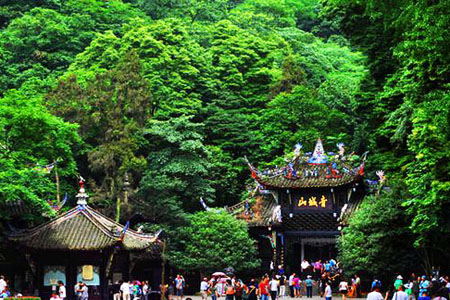
Surrounded by ancient cypress trees, traditional halls, stone inscriptions, and beautifully landscaped courtyards, Wuhou Shrine offers visitors an engaging introduction to one of the most celebrated periods in Chinese history. The complex reflects centuries of reverence for loyalty, wisdom, and strategic genius, values closely associated with the legendary stories of the Three Kingdoms.
Visitors can explore memorial halls, admire historic statues and inscriptions, and learn about the people and events that shaped the history of ancient China. The adjoining Jinli Ancient Street, with its traditional architecture, local snacks, handicrafts, and lively atmosphere, makes an excellent addition to a visit.
For travelers interested in Chinese history, classical literature, traditional architecture, and local culture, Wuhou Shrine is an essential stop on a Chengdu city tour.
History of Wuhou Temple
The exact date when Wuhou Temple was originally established remains uncertain. Historical records indicate that it was built near the temple dedicated to Liu Bei, the founding emperor of the Shu Han Kingdom.
During the early Ming Dynasty, the two temples were combined. As a result, the entrance bears the name “Zhaolie Temple of Han Dynasty,” referring to Liu Bei’s posthumous title, Zhaolie.
The present-day temple was rebuilt in 1672 during the Qing Dynasty. Its ancient cypress trees, traditional architecture, and red walls create a distinctive atmosphere that allows visitors to step back into the history of the Three Kingdoms.
Main Buildings
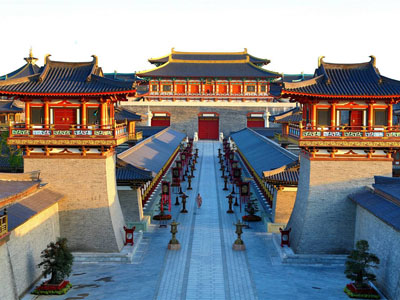
The main temple complex is arranged along a north-south axis and consists of five principal sections:
1. The Gate
2. The Second Gate
3. Hall of Liu Bei
4. Corridor
 5. Hall of Zhuge Liang
One of the most interesting features is the collection of clay statues of Liu Bei and his ministers, which depict important figures from the Shu Han Kingdom and provide visitors with a visual introduction to the political and military history of the Three Kingdoms.
The Triple-Success Stele
Among the many cultural relics preserved at Wuhou Temple, the most valuable is the famous Triple-Success Stele, erected in 809 during the Tang Dynasty.
The monumental stele measures approximately 367 centimeters high and 95 centimeters wide. It is called the “Triple-Success Stele” because it combines three remarkable achievements:
* An inscription written by Pei Du, a distinguished Tang Dynasty statesman
* Calligraphy by Liu Gongquan, one of the most celebrated calligraphers in Chinese history
* A description of Zhuge Liang’s character, achievements, and moral qualities
The stele is considered an important masterpiece combining history, literature, and calligraphy, making it one of the highlights of a visit to Wuhou Temple.
Zhuge Liang and Three Kingdoms Culture
Zhuge Liang has held a special place in Chinese culture for centuries. He is admired not only for his extraordinary intelligence and strategic ability but also for his loyalty, dedication, and sense of responsibility.
Visiting Wuhou Temple provides an opportunity to learn about the history of Shu Han, the Three Kingdoms, and the enduring cultural image of Zhuge Liang. The temple remains one of the best places in Chengdu to experience the historical and cultural legacy of the Three Kingdoms.